
In the race against sudden cardiac arrest, seconds define survival. As we enter a new era of medical technology, the shift toward miniaturized, highly durable automated external defibrillators (AEDs) is transforming emergency response. By integrating next-generation PCB design with advanced circuit protection, we are moving beyond bulky hardware toward seamless, intuitive, and hyper-reliable life-saving tools.
The Evolution of AED Portability
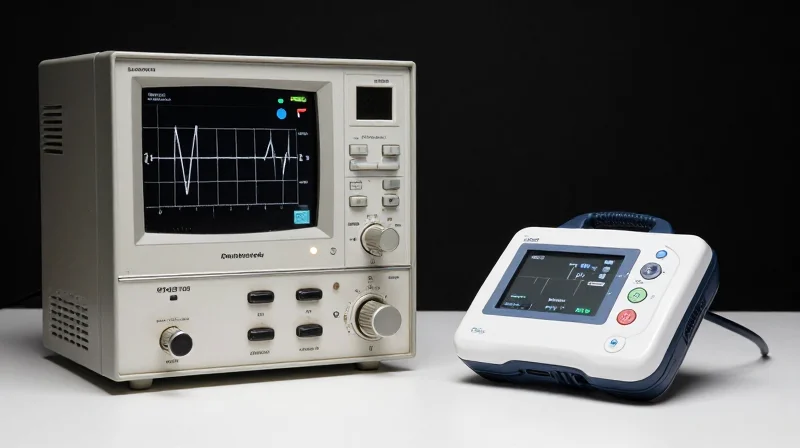
From Hospital Infrastructure to Point-of-Care Mobility
Historically, defibrillation was tethered to heavy, rack-mounted clinical systems requiring AC power and manual interpretation by specialized medical personnel. The evolution of the AED began with the transition toward miniaturization, necessitated by the need to bridge the 'out-of-hospital' cardiac arrest survival gap. This evolution was not merely physical; it required a fundamental shift in medical PCB design to accommodate sophisticated cardiac monitoring algorithms into smaller, battery-operated footprints.
Milestones in AED Miniaturization
| Era | Form Factor | Primary PCB Constraint | User Focus |
|---|---|---|---|
| 1970s-80s | Tabletop/Carts | High-voltage vacuum/transistor arrays | Trained paramedics |
| 1990s-00s | Briefcase-sized | Integration of SMD components | First responders/Police |
| 2010s-Present | Ultra-compact/Pocket | High-density interconnect (HDI) PCBs | Bystanders/Public use |
Technological Drivers of Portability
The relentless shrinking of AEDs is largely attributed to the evolution of medical-grade PCB architecture. By moving from through-hole technology to advanced surface-mount device (SMD) packaging and multi-layer rigid-flex boards, engineers have reduced the device weight by over 80% compared to legacy models. Furthermore, the migration from energy-intensive analog circuitry to low-power digital signal processing has extended battery life significantly while shrinking the overall battery footprint.
Common Questions on AED Advancements
- How does PCB design impact AED reliability?
Modern PCBs use thermal management and high-density signal integrity to ensure that the shock delivery circuit remains stable and accurate in extreme environmental conditions, ensuring reliability in portable form factors. - Why is the shift toward 'consumer-friendly' design significant?
Simplifying the internal electronic interface allows for intuitive voice-guided prompts and faster analysis times, which reduces the barriers for non-medical professionals to perform successful defibrillation.
Miniaturization Through Advanced PCB Design
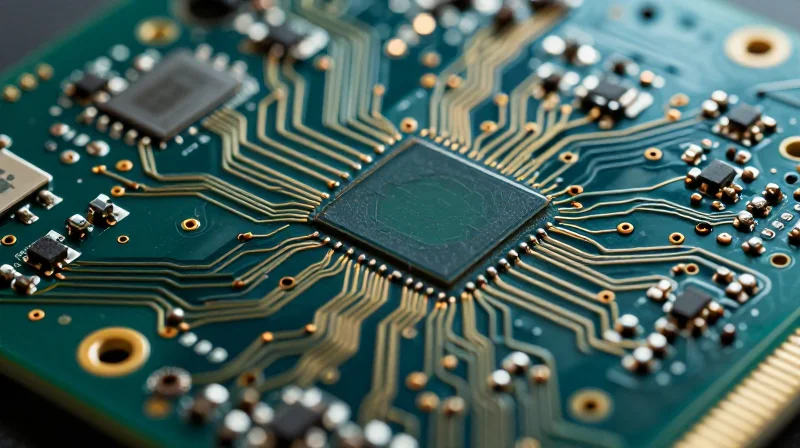
The Role of HDI in AED Shrinkage
High-Density Interconnect (HDI) PCBs serve as the backbone of modern miniaturization in portable medical devices. By utilizing advanced microvia technology and thinner dielectric materials, engineers can increase the number of components on a board while simultaneously reducing the total surface area. For AED manufacturers, this transition from traditional multi-layer boards to HDI architectures is critical to meeting the demand for 'grab-and-go' emergency equipment.
Comparison of PCB Technologies for AEDs
| Feature | Standard Multi-layer | HDI Technology |
|---|---|---|
| Via Structure | Through-hole | Microvias/Blind/Buried |
| Component Density | Low/Moderate | High |
| Signal Integrity | Moderate | Excellent (High Speed) |
| Physical Size | Bulky | Ultra-compact |
Maintaining Power Integrity in Miniaturized Designs
Reducing the PCB footprint presents a significant engineering challenge: managing high-voltage discharge and power delivery within a confined space. Advanced medical PCB design now relies on sophisticated power planes and strategic component placement to isolate sensitive logic control circuits from high-energy capacitor discharge paths. By optimizing copper weight and implementing thermal vias, designers ensure that even the smallest AED maintains the rigorous power requirements necessary to deliver a successful shock during a cardiac event.
Common Technical Considerations
- How does HDI affect AED reliability?
HDI allows for shorter signal paths, which minimizes electromagnetic interference and improves the stability of the device's diagnostic software. - Are thermal management constraints higher in smaller boards?
Yes, as components are placed closer together, efficient heat dissipation via thermal vias and advanced conductive materials becomes essential to prevent power degradation. - Can high-voltage components be miniaturized effectively?
While capacitors remain physically constrained by the physics of energy storage, PCB layout innovations allow for more efficient vertical stacking and integration with high-density control logic.
Next-Gen Circuit Protection for High-Voltage Reliability
Next-Gen Circuit Protection for High-Voltage Reliability
Modern portable Automated External Defibrillators (AEDs) must deliver high-energy therapeutic shocks while operating in environments plagued by electromagnetic interference (EMI) and potential transient surges. Protecting sensitive control circuitry—such as the microcontrollers governing ECG analysis and pulse timing—requires more than standard fuses; it necessitates robust Transient Voltage Suppression (TVS) diodes and multilayer integrated shielding architectures to ensure that the device remains operational during critical failure states.
Advanced TVS Integration Strategies
The integration of silicon-based TVS devices directly adjacent to high-voltage discharge paths minimizes parasitic inductance, allowing for near-instantaneous clamping of voltage spikes. As AEDs transition to lighter, high-energy-density battery technologies, the susceptibility to ground-bounce and transients increases. Implementing bidirectional TVS arrays at the PCB level protects internal low-voltage signal traces from the massive potential shifts caused by the capacitor discharge module.
| Protection Metric | Legacy Approach | Next-Gen Design |
|---|---|---|
| Transient Response | Slow (Passive components) | Sub-nanosecond (TVS/ESD diodes) |
| Shielding | Metal chassis enclosure | Integrated EMI board-level shields |
| Voltage Clamping | Inefficient varistors | High-precision low-clamping voltage arrays |
Frequently Asked Questions
- Why is board-level shielding essential for portable AEDs?
AEDs are often used in proximity to mobile devices and high-power radio equipment; board-level shields act as a Faraday cage for sensitive analog-to-digital converters, preventing signal noise from compromising ECG accuracy. - How does TVS diode placement affect AED reliability?
Placing TVS components as close to the entry point of the discharge circuit as possible ensures that voltage transients are suppressed before they can propagate through high-speed data buses and trigger logic errors.
Smart Sensor Integration and Real-Time Diagnostics

The Shift Toward Autonomous Health Monitoring
Modern AED reliability relies on the transition from manual, interval-based inspections to continuous, IoT-enabled diagnostic monitoring. By integrating low-power sensing arrays directly onto the PCB, manufacturers can achieve real-time health tracking of battery impedance, capacitor charging efficiency, and electrode integrity. This shift ensures that devices remain in a state of 'constant readiness,' mitigating the risk of failure during high-stress cardiac events.
Predictive Diagnostics vs. Reactive Checks
| Feature | Legacy AED Model | Smart IoT-Enabled AED |
|---|---|---|
| Inspection | Manual visual/audible checks | Automated remote telemetry |
| Data Delivery | None (Internal memory only) | Real-time alerts via cellular/Wi-Fi |
| Maintenance | Reactive (After failure) | Predictive (Pre-failure thresholds) |
| Connectivity | Isolated standalone unit | Integrated cloud diagnostics |
Implementation Challenges in PCB Design
Incorporating smart sensors introduces specific challenges for PCB designers, particularly concerning signal integrity and power consumption. Designers must isolate sensitive sensing circuits from the high-voltage discharge paths to prevent electromagnetic interference (EMI). Furthermore, the addition of wireless communication modules, such as BLE or LTE-M, requires optimized power management systems to ensure that monitoring functions do not deplete the battery life intended for emergency resuscitation.
Frequently Asked Questions
- How do sensors ensure battery reliability?
Sensors monitor internal resistance and discharge curves in real-time, sending alerts before battery health drops below the threshold required for a full shock delivery. - Does connectivity compromise device safety?
No; medical-grade PCB architecture employs air-gapped isolation layers, ensuring that diagnostic data transmission paths are electrically separated from the high-voltage therapy circuits. - What is the primary impact on medical logistics?
It allows fleet managers to monitor hundreds of AEDs simultaneously from a central dashboard, reducing labor costs and ensuring compliance with regulatory maintenance standards.
Material Science Innovations in Medical Hardware
Material Science Innovations in Medical Hardware
The evolution of portable AED technology hinges on the synergy between advanced medical PCBs and the protective chassis that encloses them. By utilizing aerospace-grade composite materials and specialized polymers, manufacturers are achieving unprecedented levels of impact resistance, heat dissipation, and moisture protection without adding unnecessary weight to the device.
Advanced Materials and Protective Properties
| Material Class | Key Property | Application in AED Design |
|---|---|---|
| Carbon-Fiber Composites | High Strength-to-Weight | Internal structural support for PCB chassis |
| Thermally Conductive Polymers | Heat Dissipation | Enclosures for high-voltage capacitor arrays |
| Elastomeric Overmolding | Shock Absorption | Peripheral sealing for impact and ingress protection |
Ensuring Reliability Under Stress
The integration of these materials allows for thinner, lighter AED enclosures that maintain military-grade durability. Beyond external protection, engineers are utilizing phase-change materials (PCMs) within the PCB substrate to manage thermal spikes during the rapid charging cycles required for high-energy defibrillation.
- How do modern materials protect delicate circuitry?
Advanced polymers and composite shells act as secondary shields, isolating internal PCB components from mechanical vibration, kinetic shock, and ingress of contaminants like dust or water. - Why is thermal management critical in AED hardware?
AEDs operate at high voltages; managing the heat generated during internal energy discharge is essential to prevent degradation of sensitive electronic components and ensure longevity. - What is the impact of weight reduction on field usability?
Lower device weight reduces responder fatigue during high-stress rescue scenarios, enabling quicker deployment and easier transport across diverse rescue terrains.
Improving User-Interface Through Embedded Systems
The evolution of portable AED technology relies heavily on the integration of high-performance microcontrollers (MCUs) that facilitate seamless user-interface (UI) experiences. By transitioning from simple analog circuits to sophisticated, embedded DSP (Digital Signal Processing) architectures, modern AEDs can now process real-time feedback from mechanical sensors with millisecond latency. This capability is critical for providing clear, actionable voice guidance and CPR coaching, effectively reducing the cognitive load on untrained rescuers during high-stress scenarios.
Optimizing Real-Time CPR Feedback
Modern AEDs utilize advanced accelerometer and impedance-based data processing to monitor chest compression depth and frequency. Embedded algorithms must handle this stream of data while concurrently managing audio output and visual cues, necessitating a balance between power efficiency and computational throughput.
| Feature | Legacy AED System | Modern Embedded AED |
|---|---|---|
| Voice Guidance | Static, pre-recorded loops | Adaptive, responsive to rhythm |
| Data Processing | Low-speed signal filtering | High-speed digital signal processing |
| UI Feedback | Simple LEDs | Visual depth gauges and haptics |
Key Questions on UI Integration
- How does multi-core processing assist the user?
Dedicated processing cores separate critical shock-delivery protocols from user-interface duties, ensuring that audio coaching continues uninterrupted even during complex waveform analysis. - What is the role of haptic feedback?
Integrated haptic motors provide a tactile pulse to the rescuer's hands or the device interface, offering a non-verbal rhythm guide that complements auditory cues in high-noise environments. - How is latency minimized?
Utilizing ARM Cortex-M series processors with hardware-level interrupt handling allows for near-zero latency, ensuring that the CPR coaching matches the rescuer's actual speed.
As we move toward a future of increasingly portable hardware, the synergy between PCB design and embedded firmware will continue to evolve. By leveraging edge computing directly on the AED motherboard, manufacturers can implement adaptive coaching algorithms that learn from sensor data, ensuring that every user, regardless of experience, can provide high-quality life-saving interventions.
Meeting Global Safety and Compliance Standards
The Architecture of Compliance
Navigating the regulatory landscape for portable AEDs is inherently complex, as these devices are categorized as Class III medical devices. Compliance is not a final milestone but a continuous design philosophy. Engineers must integrate IEC 60601-1 standards—which dictate general safety and essential performance—directly into the PCB routing and thermal management strategies. By employing a 'design-for-safety' methodology, manufacturers ensure that every trace, component selection, and signal path minimizes the risk of electrical leakage or failure in life-critical field environments.
Critical Compliance Pillars
| Standard | Primary Focus | Design Implication |
|---|---|---|
| IEC 60601-1 | General Safety | Creepage and clearance distances on PCB layout |
| IEC 60601-1-2 | Electromagnetic Compatibility | Shielding and differential signaling to prevent interference |
| ISO 14971 | Risk Management | Failure Mode and Effects Analysis (FMEA) documentation |
Navigating Global Market Hurdles
- How does PCB layout impact electromagnetic immunity?
To satisfy IEC 60601-1-2, PCB designs must feature multi-layer stack-ups with dedicated ground planes to contain electromagnetic emissions and prevent external interference from triggering false shock recommendations. - Why is traceability essential in medical PCB manufacturing?
Global regulations mandate strict traceability for every component. Utilizing digitized component lifecycle management (CLM) allows manufacturers to track batch numbers for every surface-mount device, ensuring rapid compliance response in the event of a field advisory. - What role does thermal management play in safety certification?
Thermal runaway represents a critical risk. Compliance standards necessitate robust heat dissipation designs, including thermal vias and conductive substrates, to ensure the device remains safe to touch even during intense energy discharge cycles.
In the modern era of portable AED tech, the integration of automated diagnostic circuits—which constantly verify internal health—acts as a secondary layer of compliance. By documenting these 'self-test' features during the certification process, manufacturers can provide evidence of device reliability that satisfies both FDA and EMA requirements, ultimately reducing time-to-market while guaranteeing patient and user safety.
Future Outlook: AI and Predictive Maintenance

The Shift to Predictive Cardiac Monitoring
The integration of AI into AED hardware represents a fundamental shift from episodic treatment to continuous health observation. By utilizing advanced machine learning algorithms processed on low-power, high-efficiency PCBs, next-generation AEDs can analyze ECG signals with greater precision, distinguishing between benign arrhythmias and life-threatening ventricular fibrillation in real-time. This capability reduces the 'time-to-shock' metric, which is the most critical variable in cardiac survival rates.
Technological Evolution in AED Logistics
| Feature | Current Standard | AI-Driven Future |
|---|---|---|
| Maintenance | Manual periodic check | Automated self-diagnostic alerts |
| Deployment | Static placement | Dynamic optimization via traffic AI |
| Data Analysis | Retrospective review | Proactive cardiac risk screening |
Smart City Integration and Rapid Response
In a smart city infrastructure, AI-enabled AEDs become nodes in a larger healthcare network. By leveraging 5G connectivity and edge computing, these devices can communicate with emergency dispatch centers to report local cardiac arrest clusters or predict high-demand periods based on historical data. This ensures that AEDs are not just located in fixed positions but are strategically re-allocated to areas where the statistical probability of a cardiac event is highest.
Frequently Asked Questions
- How does AI impact battery consumption on medical PCBs?
Modern AI-optimized microprocessors allow for 'always-on' sensing at ultra-low power states, ensuring that predictive features do not compromise the device's shelf life or emergency readiness. - Can AI truly predict a cardiac event before it occurs?
Current research focuses on identifying subtle electrophysiological markers in high-risk patients. While not a replacement for clinical diagnosis, AI can alert users to seek medical help if the AED detects pre-arrest rhythm patterns. - Does AI replace the need for regulatory compliance?
No; all AI-driven decision-making must adhere to strict IEC 60601-1 standards, ensuring that algorithmic interventions remain transparent and verifiable for safety certifications.
The convergence of miniaturization and sophisticated PCB protection marks a pivotal shift in emergency cardiac care. As these technologies continue to evolve, the barrier between professional-grade equipment and public-access life-savers will disappear. Stay ahead of the curve in medical engineering; contact our team of experts today to discuss how we can support your next project in innovative medical device design.
