
As the demand for less invasive surgical procedures accelerates, medical device engineers face a significant hurdle: how to pack high-density electronic intelligence into ever-shrinking footprints. Traditional rigid-flex PCBs have served the industry well, but the next generation of diagnostic and monitoring tools requires a paradigm shift toward advanced micro-flexible substrates. This article explores the technical drivers behind this transition and what it means for the future of patient-centric healthcare.
The Current State of Medical Device Miniaturization
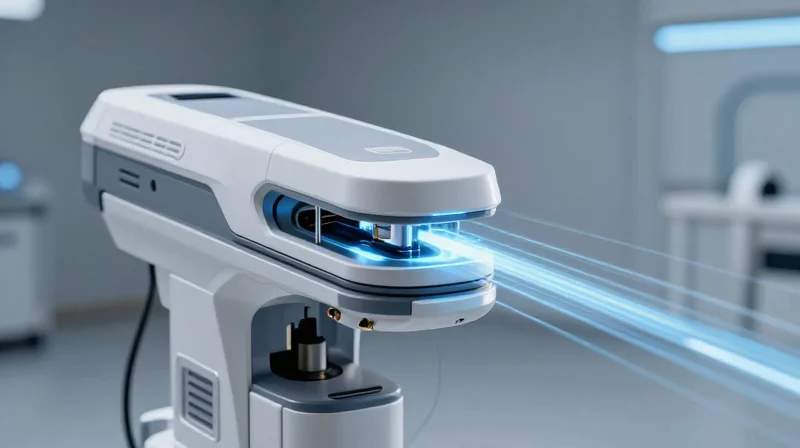
The Imperative for Miniaturization in Modern Healthcare
The demand for smaller medical devices is no longer a luxury but a clinical requirement. As healthcare shifts toward minimally invasive procedures—such as robotic surgery, portable point-of-care diagnostics, and implantable monitoring devices—the underlying electronics must shrink proportionally without sacrificing performance or reliability. This miniaturization allows for greater patient comfort, faster recovery times, and the ability to integrate high-resolution sensors into spaces previously inaccessible to traditional hardware.
Limitations of Legacy Rigid-Flex Architectures
Traditional rigid-flex PCBs have long been the standard for medical devices, combining the structural integrity of rigid boards with the connectivity of flexible circuits. However, as form factors tighten, legacy design approaches encounter significant hurdles. Rigid-flex assemblies are often bulky, requiring multi-layered stackups that increase thickness and struggle to conform to the complex, organic geometries required by modern medical instrumentation.
| Feature | Rigid-Flex PCB | Micro-Flexible PCB |
|---|---|---|
| Form Factor | Thick and bulky | Ultra-thin and low-profile |
| Conformability | Limited to specific hinges | Highly dynamic, 360-degree flex |
| Component Density | Moderate | Extreme |
| Ideal Use Case | Standard portable equipment | Implantables and small catheters |
Industry Challenges and Considerations
- Why is miniaturization creating heat management issues?
Smaller enclosures reduce the surface area available for passive thermal dissipation, necessitating more efficient circuit layouts and power management strategies. - What role does signal integrity play in micro-devices?
Shrinking trace widths and spacing in micro-flexible circuits can introduce signal noise and crosstalk, requiring advanced materials and precise manufacturing tolerances. - Are there regulatory impacts to moving to micro-flexible designs?
Transitioning to new material sets or ultra-thin substrates requires rigorous requalification and validation to ensure long-term biocompatibility and electrical safety standards.
Anatomy of Rigid-Flex: The Legacy Standard
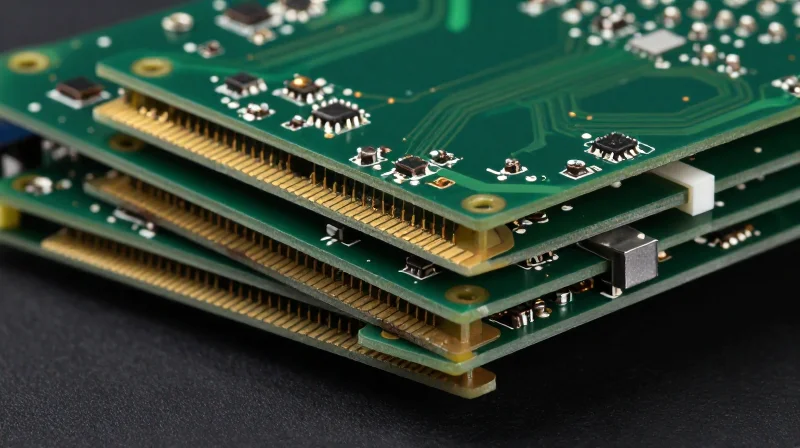
Core Architecture of Rigid-Flex Systems
Rigid-flex technology functions by integrating rigid FR-4 substrates with flexible polyimide layers, creating a hybrid assembly. In medical devices, this architecture is designed to minimize connector usage and improve signal integrity by eliminating discrete wiring harnesses. The construction typically involves embedding flexible circuits within a multi-layer rigid stack-up, allowing the device to bend during assembly while maintaining structural rigidity for component mounting.
Reliability and Structural Constraints
| Parameter | Legacy Rigid-Flex Characteristic | Medical Design Impact |
|---|---|---|
| Layer Count | High (8-20+ layers) | Increases bulk and limits portability |
| Bend Radius | Moderate/Large | Constrains miniaturization in tight housings |
| Mechanical Stress | Vulnerable at interface | Requires structural reinforcement |
- Why is rigid-flex still relevant in medical electronics?
It offers a proven, highly reliable method for connecting complex rigid sections without the mechanical failure points associated with wire-to-board connectors. - What are the primary physical limitations?
The transition zone between the rigid and flexible sections is a known weak point; heavy copper layers and bulky stiffeners often limit how small a device can realistically be. - Does it support high-density interconnect (HDI)?
While possible, the layering techniques for traditional rigid-flex are often less efficient than advanced micro-flexible alternatives, leading to increased stack-up thickness.
While legacy rigid-flex designs remain the workhorse for established medical imaging equipment, their inherent thickness and rigid-interface limitations present a bottleneck for the next generation of wearable sensors and endoscopic robotics. The transition from these robust, bulky assemblies to micro-flexible interconnects marks the critical pivot point in modern medical engineering.
The Rise of Micro-Flexible Substrates

Material Science Breakthroughs in Micro-Flex
The evolution of micro-flexible electronics is fundamentally driven by the transition from standard polyimide materials to advanced thin-film substrates like Liquid Crystal Polymer (LCP) and specialized thermoplastic elastomers. Unlike legacy rigid-flex assemblies which rely on adhesive-heavy laminates, modern micro-flexible substrates utilize direct metallization processes and ultra-thin copper deposition. This allows for significantly tighter trace widths and spacing, typically in the range of 25-50 micrometers, which is essential for the integration of high-density interconnects (HDI) required by modern medical sensors and imaging probes.
Technical Comparison: Traditional vs. Micro-Flexible
| Feature | Traditional Rigid-Flex | Micro-Flexible |
|---|---|---|
| Minimum Trace/Space | 75-100 μm | 25-50 μm |
| Bending Radius | Moderate | Ultra-tight (dynamic) |
| Substrate Profile | Multilayer bulky | Ultra-thin monolith |
| Signal Integrity | High loss at frequency | Low dielectric loss |
Key Advantages for Medical Visualization
- Enhanced Biocompatibility
Advanced polymers used in micro-flex substrates exhibit superior moisture absorption rates and are better suited for repeated sterilization cycles without structural degradation. - Improved Signal Density
The ability to integrate high-density components on a flexible plane allows for smaller camera modules and catheter-based imaging systems that provide higher resolution data streams. - Dynamic Flex Life
Engineered for thousands of flex cycles, these substrates maintain integrity in high-movement environments, such as robotic surgery arms or wearable diagnostics.
Manufacturing Considerations
Manufacturing micro-flexible circuits requires clean-room environments and specialized roll-to-roll (R2R) processing equipment to maintain precision at the micro-scale. The lack of heavy bonding adhesives reduces the thermal mass of the assembly, which aids in high-frequency signal performance. However, designers must account for the mechanical strain limits of thinner dielectric layers during component assembly, often necessitating customized SMT reflow profiles to ensure solder joint reliability on the more compliant substrate.
Technological Advantages: Why Micro-Flex Wins
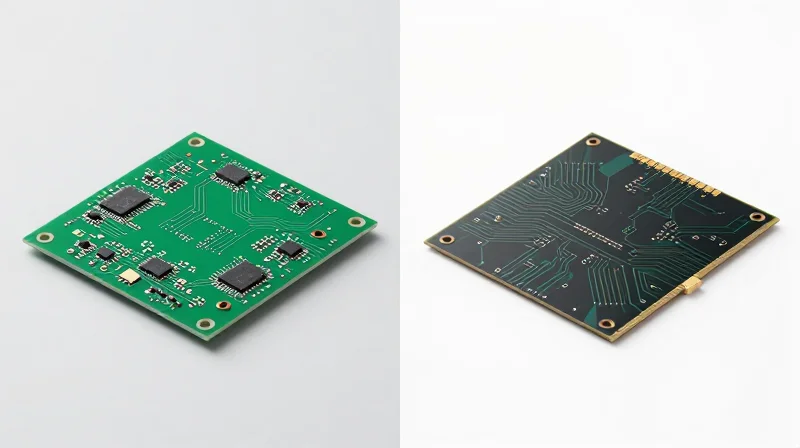
The Engineering Shift: Why Micro-Flex Wins
Micro-flexible PCBs represent a paradigm shift in medical instrumentation by utilizing advanced polyimide materials and additive manufacturing processes that eliminate the bulk associated with traditional reinforcement layers. Unlike rigid-flex designs, which rely on localized stiffeners that impede thermal management and increase volumetric profile, micro-flex circuits are engineered for high-density interconnects that maintain signal fidelity even under constant mechanical stress.
| Performance Metric | Traditional Rigid-Flex | Modern Micro-Flex |
|---|---|---|
| Signal Integrity | Prone to impedance mismatch at layer transitions | Optimized, continuous signal paths |
| Form Factor | Bulkier, limited by stiffener integration | Ultra-thin, conforming to complex geometry |
| Dynamic Bending | Risk of delamination at transition points | High cycle endurance, no brittle interfaces |
| Thermal Management | Localized heat traps due to rigid layers | Efficient heat dissipation through thin substrate |
Key Performance Advantages
- Enhanced Signal Integrity
Micro-flex technology utilizes ultra-low-profile copper and advanced dielectric materials to minimize signal attenuation, ensuring reliable data transmission in high-speed medical imaging applications. - Weight and Volume Reduction
By removing the redundant epoxy-glass prepregs required in rigid-flex, micro-flex reduces total device mass by up to 40%, essential for portable and wearable diagnostics. - Mechanical Longevity
The absence of rigid-to-flex transitions eliminates the most common failure points found in legacy boards, allowing for billions of cycles in wearable sensors and surgical robotics.
Implementation Insight
Transitioning to micro-flexible substrates requires a design approach focused on dynamic stress analysis rather than static PCB layout. Engineers must account for the elastic properties of thinner substrates during assembly, but the resulting gains in device ergonomics and clinical reliability justify the shift for all modern high-performance medical systems.
Enhancing Patient Outcomes Through High-Density Integration
Improving Patient Comfort Through Miniaturization
The shift from rigid-flex to high-density micro-flexible electronics allows for a significant reduction in the physical profile of medical devices. By leveraging ultra-thin substrates and high-density interconnect (HDI) technologies, engineers can create sensors that conform to the natural contours of the human body. This reduction in device bulk directly translates to enhanced patient compliance, reduced tissue irritation during long-term monitoring, and a more comfortable diagnostic experience.
Advanced Catheter-Based Interventions
Micro-flexible PCBs are the enabling technology for next-generation minimally invasive procedures. Unlike traditional rigid-flex circuits, which can introduce stiff zones that impede navigation, micro-flex circuits provide superior bend radii and flexibility. This allows for the integration of high-resolution imaging sensors and advanced mapping electronics directly into the distal tips of catheters, providing clinicians with unprecedented real-time visual feedback.
| Feature | Rigid-Flex | Micro-Flexible |
|---|---|---|
| Form Factor | Bulkier | Ultra-Compact |
| Conformability | Low | High |
| Clinical Application | External Monitoring | Invasive/Intracardiac |
| Integration Density | Moderate | Ultra-High |
Frequently Asked Questions
- How does micro-flex technology affect procedural safety?
The increased flexibility and reduced profile minimize trauma to vascular walls and sensitive tissue during catheter navigation, significantly lowering the risk of procedural complications. - Can these circuits handle high-resolution imaging data?
Yes. Advanced micro-flex architectures support high-speed signal integrity, enabling the transmission of high-definition video and data required for precise diagnostic imaging.
Manufacturing and Reliability Challenges

Manufacturing Hurdles in Micro-Scale Integration
Transitioning from traditional rigid-flex to micro-flexible PCBs introduces significant fabrication complexities, primarily centered on precision and material sensitivity. As circuit densities increase to support miniature medical sensors, standard etching and drilling techniques often prove inadequate. The requirement for tighter pitch tolerances and thinner copper traces demands high-level cleanroom environments to prevent microscopic contaminants from triggering latent failures in life-critical diagnostic equipment.
| Challenge Factor | Rigid-Flex (Legacy) | Micro-Flexible (Advanced) |
|---|---|---|
| Trace/Space Resolution | 75-100 μm | 15-25 μm |
| Substrate Handling | Standard Automated | Specialized Tension-Control |
| Inspection | Manual/Low-Mag AOI | Automated 3D X-Ray/High-Mag AOI |
Ensuring Long-Term Reliability
Reliability in medical micro-flex circuits is measured by the endurance of interconnects under repeated mechanical stress. Unlike static rigid-flex designs, micro-flexible circuits used in endoscopes or catheters undergo continuous bending, torsion, and thermal cycling. This necessitates a move toward adhesive-less laminates and specialized coverlay materials to prevent delamination during long-term sterilization cycles.
- How does micro-flex handle sterilization stress?
Modern micro-flexible circuits utilize high-Tg polyimides and adhesive-less bonding to ensure structural integrity during repeated autoclave and chemical sterilization processes. - Why is trace oxidation a greater risk in micro-flex?
Because micro-traces have smaller surface areas, any degree of environmental oxidation leads to a disproportionate increase in impedance and potential signal discontinuity. - What testing protocol ensures zero-defect delivery?
High-density micro-flex requires 100% automated optical inspection (AOI) combined with electrical flying-probe testing for connectivity and dedicated thermal shock stress-screening.
Designing for Compliance and Regulatory Standards
Regulatory Challenges in Miniaturized Electronics
As medical visualization devices transition from traditional rigid-flex to high-density micro-flexible PCBs, the regulatory landscape becomes increasingly complex. Regulators like the FDA and bodies enforcing ISO 13485 prioritize the long-term reliability of these components within the human body. The primary compliance hurdle lies in demonstrating that the mechanical flexibility and high circuit density of micro-flex materials do not introduce failure modes such as trace fatigue, delamination, or signal degradation over the device's operational lifecycle.
Comparative Regulatory Standards for PCB Technologies
| Requirement Area | Traditional Rigid-Flex | Micro-Flexible PCB |
|---|---|---|
| Material Biocompatibility | Established ISO 10993 baseline | Requires new testing for thinner substrates |
| Mechanical Stress Test | Standard IPC-6013 Class 3 | Requires custom cycle-fatigue validation |
| Thermal Management | Convective airflow focus | Focus on heat dissipation in tiny footprints |
Key Considerations for FDA and ISO Compliance
- How do micro-flexible circuits impact risk management?
The transition to micro-flex requires a re-evaluation of Failure Mode and Effects Analysis (FMEA), specifically addressing potential short-circuits caused by high-density routing and the unique wear patterns of hyper-flexible substrates. - What evidence is required for sterilization compatibility?
Manufacturers must prove that thin-film polymers and advanced adhesives used in micro-flex boards can withstand repeated exposure to Ethylene Oxide (EtO) or autoclave sterilization without compromising insulation resistance or structural integrity. - Why is traceability critical for modern PCB design?
With increasing density, component-level tracking becomes difficult. Implementing automated optical inspection (AOI) data logs is essential to provide the traceability documentation required for regulatory audits.
Ultimately, compliance is not an endpoint but a continuous design process. By integrating Design for Manufacturing (DFM) and Design for Reliability (DFR) protocols early in the micro-flex development cycle, medical device engineers can effectively mitigate regulatory risks while pushing the boundaries of medical visualization technology.
The Economic Impact of Moving to Micro-Flexible Tech
The Economic Paradigm Shift: From Component Costs to System Value
Adopting micro-flexible PCB technology demands a departure from traditional unit-cost evaluation. While the per-unit price of micro-flexible circuits is often higher than rigid-flex alternatives due to specialized materials and high-density manufacturing processes, the economic benefit manifests through system-level consolidation. By reducing device footprint and enabling more complex functionality in a smaller volume, manufacturers can command higher market premiums for devices that offer superior ergonomics and minimally invasive capabilities.
| Economic Metric | Traditional Rigid-Flex | Micro-Flexible Tech |
|---|---|---|
| Unit Manufacturing Cost | Moderate | High |
| System Miniaturization Potential | Low to Moderate | Very High |
| Time-to-Market | Faster (Standardized) | Slower (High R&D) |
| Long-term Innovation Yield | Incremental | Exponential |
ROI Considerations for Medical OEMs
For medical OEMs, the investment in micro-flexible tech is essentially a hedge against technological obsolescence. The ability to integrate advanced sensors directly onto flexible substrates reduces the need for cumbersome cabling and bulky external connectors, which in turn reduces mechanical failure points and associated field service costs. Furthermore, the aesthetic and functional appeal of sleeker devices often leads to faster clinical adoption rates.
- Does micro-flexible tech reduce total cost of ownership?
Yes, through improved reliability and fewer mechanical repairs, the reduction in clinical failures can offset the higher initial acquisition cost over the product's lifecycle. - Why is the initial R&D investment higher?
Micro-flexible design requires advanced signal integrity modeling and specialized manufacturing partnerships that necessitate a steeper learning curve and tighter design-for-manufacturability cycles. - How does this affect competitive positioning?
Devices utilizing this technology can achieve form factors that competitors using rigid-flex cannot, creating a significant barrier to entry and enabling leadership in specific medical niches like wearable diagnostics.
The transition from rigid-flex to micro-flexible substrates is not merely a design update; it is an architectural necessity for the next generation of life-saving medical technology. By embracing these advancements, engineers can move beyond the physical constraints of legacy boards to create smaller, more capable devices that improve clinical outcomes. Contact our engineering team today to learn how we can integrate micro-flexible technology into your next high-performance medical device project.
