
In the high-stakes world of medical device manufacturing, your PCBA (Printed Circuit Board Assembly) partner is the backbone of your product's reliability. Choosing the wrong manufacturer can lead to catastrophic delays, component shortages, and, most importantly, failure to meet stringent regulatory standards. This guide provides a battle-tested framework for vetting the right partner to ensure your digital thermometer hits the market with precision and scalability.
Evaluating Technical Expertise in Medical-Grade PCBA
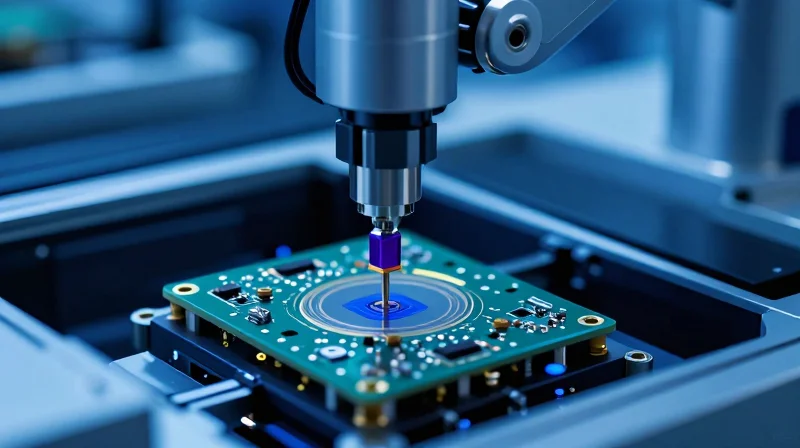
Evaluating Precision SMT Capabilities
Digital thermometers rely on extremely sensitive NTC thermistors or infrared sensors that are highly susceptible to thermal stress and mounting errors. Your manufacturing partner must demonstrate mastery of fine-pitch SMT assembly, specifically the ability to maintain consistent solder paste application and reflow profiles that prevent component warping or accuracy degradation.
Key Indicators of Manufacturing Competence
| Capability Category | Requirement | Impact on Production |
|---|---|---|
| Placement Accuracy | ±0.03mm or better | Ensures sensor alignment for consistent readings. |
| AOI Integration | Automated Optical Inspection | Detects micro-solder bridges invisible to the naked eye. |
| Reflow Profiling | Multi-zone closed loop | Prevents thermal damage to sensitive sensor silicon. |
Quality Standards and Medical Compliance
Medical-grade production is not merely about assembling parts; it is about traceability and compliance. A qualified partner must demonstrate ISO 13485 certification and a robust ESD (Electrostatic Discharge) control program to protect sensitive sensor inputs during assembly.
Frequently Asked Questions
- Why is ISO 13485 essential for high-volume thermometer production?
ISO 13485 confirms that the manufacturer maintains a specialized Quality Management System designed specifically for the rigorous documentation and risk management required for medical devices. - How does moisture sensitivity level (MSL) affect sensor mounting?
Sensitive medical sensors often have low MSL ratings. If a partner lacks controlled storage environments (dry cabinets), components may fail during reflow due to popcorn effects, leading to high scrap rates. - Is in-circuit testing (ICT) sufficient for digital thermometers?
While ICT confirms electrical continuity, functional testing (FCT) is mandatory for thermometers to verify sensor accuracy against calibrated thermal blackbodies.
Navigating Regulatory Compliance and Certifications

The Essential Regulatory Framework
For digital thermometers, the PCBA is the brain of the device, directly impacting measurement accuracy and safety. Partnering with a manufacturer that lacks established medical certifications introduces unacceptable legal and operational risks. Compliance is not merely a checklist; it is the infrastructure that guarantees repeatable high-quality output for mass production.
| Certification/Standard | Significance for Digital Thermometers |
|---|---|
| ISO 13485 | Global standard for medical device quality management systems; essential for design and manufacture. |
| FDA 21 CFR Part 820 | Mandatory for devices sold in the US; dictates current Good Manufacturing Practices (cGMP). |
| ISO 14971 | Ensures risk management processes are integrated throughout the entire production lifecycle. |
Regulatory Due Diligence FAQ
- Why is ISO 13485 non-negotiable?
It specifically addresses the regulatory requirements for medical devices, ensuring that every batch of thermometers produced is consistent, reliable, and documented for traceability. - Does the PCBA partner need FDA registration?
While the OEM is often the legal manufacturer, the PCBA partner must be able to support FDA audits by providing complete Device History Records (DHR) and maintaining compliant manufacturing environments. - How does certification impact mass production?
Certified partners have validated processes that reduce the likelihood of defective units entering the supply chain, which is critical when scaling to tens of thousands of units.
When auditing potential partners, request evidence of their most recent third-party audit reports. A transparent manufacturer will readily provide their quality manual and proof of certification. Prioritize those who demonstrate a 'culture of compliance' rather than those who simply hold the documents on file.
Assessing Supply Chain Resilience and Component Sourcing
Verifying Procurement Strategy and Vendor Relationships
A reliable PCBA partner must possess more than just assembly equipment; they require a sophisticated supply chain ecosystem. For digital thermometers, which rely on specific thermistor sensors and microcontrollers, you must assess whether your partner manages risk through diversified procurement channels rather than relying on a single distributor.
Strategic Sourcing Capability Indicators
| Indicator | Why It Matters for Mass Production | Verification Method |
|---|---|---|
| Distributor Tiers | Access to authorized vs. broker markets ensures component authenticity. | Request list of authorized distribution partners. |
| Global Sourcing Reach | Mitigates regional supply shocks and geopolitical risks. | Inquire about regional purchasing hubs. |
| Buffer Stock Programs | Protects against sudden spikes in demand or lead-time volatility. | Review VMI (Vendor Managed Inventory) agreements. |
Frequently Asked Questions on Supply Chain Resilience
- How do I know if my PCBA partner has sufficient purchasing power?
Look for partners who demonstrate a consistent 'buy-volume' for common medical-grade components. High-volume partners often negotiate better pricing and priority allocation during shortages. - What is the danger of relying on non-authorized brokers?
Brokers may introduce counterfeit or sub-standard components into your supply chain. In medical devices, this poses significant quality risks and potential regulatory non-compliance. - Should I manage the Bill of Materials (BOM) sourcing myself?
Ideally, your partner should handle it, but you should retain 'Design Authority.' This means you approve any component substitutions, ensuring that alternatives meet the required precision standards for thermometers.
To ensure long-term success, mandate a transparent supply chain audit. Verify that your partner uses a robust Enterprise Resource Planning (ERP) system to track component lot numbers, expiration dates, and traceability back to the original manufacturer.
Scalability: Transitioning from Prototype to Mass Production

Scalability: Transitioning from Prototype to Mass Production
The transition from a successful prototype to a high-volume manufacturing run is the most significant hurdle in the product lifecycle. Scaling involves moving from low-volume, high-touch manual assembly to automated, high-speed processes. A reliable PCBA partner must possess the industrial capacity to increase throughput while simultaneously lowering the per-unit cost through optimized production flows and economies of scale.
Key Indicators of Production Scalability
| Capacity Metric | High-Volume Indicator | Red Flag |
|---|---|---|
| Automation Level | Automated Pick-and-Place with AOI | Reliance on manual soldering/assembly |
| Production Throughput | Flexible, multi-line capacity | Single-line constraints |
| Supply Chain | Direct manufacturer relationships | Reliance on spot-market brokers |
| Cost Structure | Lean methodologies and optimized BOM | Static, high-margin unit pricing |
Strategic Considerations for Scaling
- How does volume impact manufacturing processes?
Moving to mass production demands a shift toward Automated Optical Inspection (AOI) and In-Circuit Testing (ICT). Ensure your partner has the capacity to program test fixtures that validate every unit as it exits the reflow oven, which is essential for medical-grade thermometers. - Why is 'Design for Manufacturing' (DFM) vital at this stage?
During the prototype stage, cost is rarely the primary focus. Your partner should offer DFM feedback that identifies component substitutions or panelization strategies that reduce material waste and cycle time in mass production. - How can a partner protect against sudden demand surges?
A scalable partner utilizes long-term agreements (LTAs) with component distributors and keeps a 'buffer' of long-lead-time items. This prevents a successful product launch from stalling due to component shortages.
Ultimately, your PCBA partner must treat your transition to mass production as a collaborative project, not just a service transaction. Look for manufacturers that provide real-time production dashboards, transparent inventory reporting, and a clear roadmap for cost reductions that correlate with your volume growth.
Rigorous Quality Control (QC) and Testing Protocols
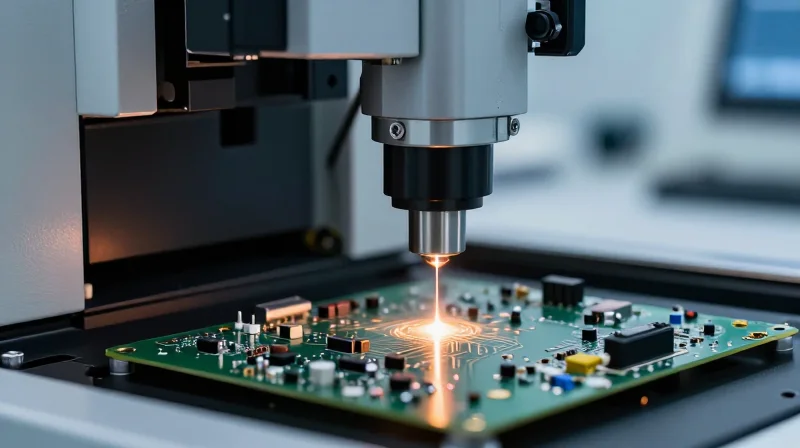
For medical devices like digital thermometers, quality control is not merely a final inspection step; it is a comprehensive, data-driven methodology integrated into every phase of the PCBA manufacturing process. To achieve zero-defect outcomes, a premier manufacturing partner must deploy a redundant testing strategy that identifies faults early in the assembly lifecycle, thereby minimizing waste and ensuring the highest level of patient safety.
Core Testing Methodologies for PCBA Reliability
| Testing Protocol | Primary Objective | Detection Capability |
|---|---|---|
| AOI (Automated Optical Inspection) | Surface mount verification | Missing components, misalignment, solder bridges |
| ICT (In-Circuit Testing) | Electrical continuity | Short circuits, open circuits, component value tolerance |
| FCT (Functional Testing) | End-product verification | Thermal sensor accuracy, firmware execution, UI responsiveness |
Critical Quality Assurance Questions
- How does the partner handle non-conforming material?
A high-tier partner must have a documented Non-Conformance Report (NCR) process to quarantine, analyze, and root-cause any defective units immediately. - Is the testing equipment calibrated to NIST standards?
For medical thermometers, all testing apparatus must have traceable calibration records to ensure that the thermal sensing accuracy remains consistent across every batch. - Do you perform real-time data logging for every serial number?
Traceability is critical; ensure your partner logs test results per unit so that individual device performance can be audited against production batches.
Ensuring Long-Term Stability
Beyond standard automated tests, high-volume production requires environmental stress screening (ESS) to verify PCBA performance under varying thermal conditions. By selecting a partner that integrates these rigorous protocols directly into their manufacturing execution system (MES), you transition from simple production to scalable, medical-grade quality assurance.
Geographic Considerations and Lead Time Management
Evaluating Geographic Proximity vs. Offshore Economics
Choosing the right location for your digital thermometer production depends on your tolerance for lead time variability versus the necessity for absolute cost minimization. While local partners offer superior communication and reduced shipping friction, offshore partners provide the economies of scale required for high-volume consumer health electronics.
| Factor | Local Manufacturing | Offshore Manufacturing |
|---|---|---|
| Lead Time | Short (Days/Weeks) | Long (Months/Sea Freight) |
| Unit Cost | Higher due to labor | Lower due to volume/scale |
| Communication | Real-time/Same timezone | Asynchronous/Timezone gaps |
| Logistics Risk | Low (Domestic stability) | High (Port/Geopolitical/Transit) |
Mitigating Lead Time Risks
Regardless of location, successful high-volume production hinges on rigorous supply chain visibility. If utilizing an offshore partner, you must implement a safety stock strategy and mandate that your PCBA partner utilizes a vendor-managed inventory (VMI) system to hedge against unpredictable ocean transit times.
- How do we manage time-zone differences with offshore partners?
Establish a 'follow-the-sun' communication protocol. Designate specific overlap windows for video calls and use centralized project management software to ensure real-time documentation updates. - What is the impact of shipping on total cost of ownership (TCO)?
TCO must include not just the BOM price, but also logistics costs, import duties, insurance, and the hidden cost of capital tied up in inventory currently sitting on cargo ships. - When is local assembly the better choice?
Local assembly is optimal during the initial mass production ramp-up phase where rapid design iterations are required, or for high-complexity thermometers where frequent on-site engineering collaboration is critical.
Transparency and Communication: The Partnership Factor
The Necessity of Radical Transparency
In high-volume PCBA manufacturing, information asymmetry is a leading cause of project delays and quality degradation. A truly professional partner operates as an extension of your internal engineering team, providing real-time visibility into production status, supply chain bottlenecks, and technical deviations. Transparency must extend beyond weekly status meetings to include accessible, live data regarding component procurement and line throughput.
Communication Frameworks for Scaling
To manage the complexities of mass-producing precision medical devices like digital thermometers, both parties must adopt standardized digital collaboration tools. Reliance on fragmented email chains often leads to version control issues in bill of materials (BOM) management or engineering change orders (ECOs).
| Communication Method | Best For | Risk Mitigation |
|---|---|---|
| Cloud-based PLM | BOM & Revision Control | Prevents manufacturing errors |
| Live Dashboard | Real-time Yield Data | Identifies defects instantly |
| Dedicated PM Portal | Task Tracking | Ensures timeline adherence |
Frequently Asked Questions on Partnership Dynamics
- Why is real-time yield reporting critical?
For digital thermometers, precision is paramount. Real-time yield reporting allows you to catch sensor calibration drifts or soldering inconsistencies before thousands of units are compromised. - How should Engineering Change Orders be handled?
A competent partner uses a formal, documented ECO process that requires dual-party approval to ensure that every change is captured, tested, and validated against current production requirements. - What indicates a lack of transparency?
Frequent resistance to disclosing component sourcing, vague responses regarding QA test failures, or siloed project information are primary red flags that signal potential scaling issues.
Analyzing Cost Structure and Long-Term Value

Moving Beyond the Unit Price
When sourcing a PCBA partner for high-volume digital thermometers, initial unit quotes are often deceptive. True cost efficiency is found in the Total Cost of Ownership (TCO), which accounts for yields, material traceability, and the hidden expenses of rework. A partner that offers the lowest upfront price may end up being the most expensive option if their defect rates trigger field failures or excessive scrap during assembly.
| Cost Driver | Short-Term Focus | Long-Term Value |
|---|---|---|
| Component Sourcing | Lowest cost component | Supply chain resilience and original parts |
| Quality Control | Minimal inspection | Integrated AOI/ICT testing protocols |
| Failure Costs | Warranty reserves | Yield optimization to prevent defects |
Identifying Hidden Operational Risks
Selecting a partner requires a deep dive into their operational reliability. You must evaluate how the manufacturer handles supply chain volatility and whether their facility investments align with your scaling requirements. Relying on a partner that lacks robust ERP systems or transparent logistics tracking can lead to costly delays that dwarf any initial savings on PCB fabrication.
- How do I calculate the true cost of a PCBA partner?
Include the cost per unit, plus shipping, tariff impacts, expected defect rates, inventory management costs, and the expense of engineering support for design-for-manufacturing (DFM) adjustments. - Why is 'Design for Manufacturing' (DFM) critical for long-term value?
Proactive DFM analysis during the early stages reduces component waste, speeds up assembly cycles, and significantly lowers the cost of production by preventing design-related manufacturing issues. - What indicators suggest a manufacturer will provide long-term stability?
Look for low employee turnover, consistent investment in automated assembly equipment, ISO certification, and a demonstrated ability to maintain stable lead times during supply chain disruptions.
Selecting a PCBA partner is a foundational decision that impacts every aspect of your product's lifecycle, from initial assembly to end-user satisfaction. By prioritizing technical capability and transparent communication, you minimize risk and secure your brand's reputation in the medical device sector. Ready to scale your production? Contact our expert team today to discuss how we can bring your digital thermometer project to life with precision and efficiency.
