
The era of the rattling keychain is fading, replaced by the silent precision of biometric authentication. As smart home demands skyrocket, product managers and engineers face a pivotal choice: iterate on legacy mechanical designs or leap into the future of encrypted PCB architectures. This analysis explores the technical shift redefining home security.
The Death of Mechanical Redundancy
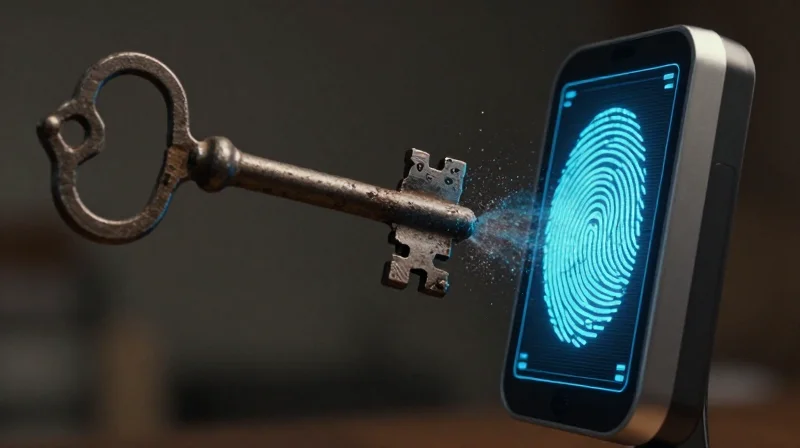
The Inherent Fragility of Mechanical Access
Mechanical redundancy, once the gold standard of security, is now the primary point of failure in modern access infrastructure. Traditional locksets relying on physical pins and tumblers are fundamentally limited by their inability to log entry data, their susceptibility to physical manipulation (such as lock picking or bumping), and the logistical nightmare of credential management. As the industry shifts toward smarter integrated circuits, these legacy systems are increasingly viewed as liabilities rather than assets.
| Feature | Legacy Mechanical System | Biometric Smart PCBA |
|---|---|---|
| Audit Trail | None | Real-time logging |
| Access Revocation | Requires lock re-keying | Instant digital invalidation |
| Vulnerability | Physical picking/duplication | Encryption/spoofing risks |
| User Convenience | Physical key maintenance | Touch-based authentication |
Redundancy as a Security Liability
Mechanical override features, often built into biometric smart locks to provide a 'failsafe,' frequently act as a backdoor for unauthorized entry. By maintaining a physical keyway, manufacturers are essentially creating a hardware-level vulnerability that bypasses the high-security biometric authentication. In professional security architecture, the elimination of this physical access point is necessary to achieve a zero-trust environment.
- Why is the mechanical key considered a legacy liability?
Mechanical keys lack tracking capabilities, are easily duplicated, and cannot be revoked remotely, forcing a total hardware replacement if a key is lost or stolen. - How do biometric PCBs mitigate legacy risks?
Biometric integration allows for individual-specific access control, where rights are granted or revoked via firmware updates, completely removing the need for physical metal keys. - Does removing mechanical overrides compromise safety?
While eliminating physical overrides requires robust power management and backup battery systems, it closes the most significant physical security loophole, making the system far more resistant to forced entry and unauthorized duplication.
Core Architecture: The Rise of Specialized Biometric PCBA
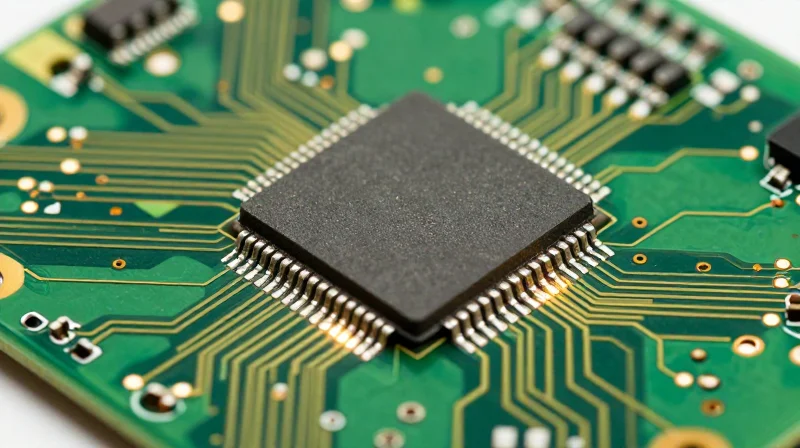
From General Purpose to Specialized Biometric Integration
The evolution of smart lock hardware is defined by the shift toward dedicated biometric PCBA design. Unlike legacy boards that treated biometric input as an optional peripheral, modern PCBAs treat it as a primary compute task, incorporating dedicated hardware accelerators for image processing and local neural inference.
Comparative Analysis: PCBA Architectural Shifts
| Architecture Feature | Legacy Systems | Modern Biometric PCBA |
|---|---|---|
| Processing Core | 8/16-bit Microcontroller | 32-bit ARM Cortex M4/M7/A-series |
| Storage | External EEPROM | Secure Element (eSE) / TEE |
| Biometric Logic | Software-level matching | Hardware-accelerated NPU/DSP |
| Encryption | Basic obfuscation | AES-256 with hardware-accelerated TLS |
Technical FAQ: Advanced Biometric Integration
- How does local biometric processing improve security?
By utilizing a Trusted Execution Environment (TEE) on the PCBA, biometric templates remain encrypted on-chip, ensuring that sensitive data never leaves the hardware to be intercepted during transmission. - Why is NPU integration critical for facial recognition?
Facial recognition requires high-throughput matrix multiplication. An onboard Neural Processing Unit (NPU) handles these operations with 10x the power efficiency of a standard CPU, allowing for sub-second authentication on battery-powered locks. - What challenges do developers face with compact PCBA designs?
Thermal dissipation and EMI shielding are the primary challenges. As biometric modules integrate high-frequency signals for capacitive sensing and high-speed memory buses, designers must employ multi-layer PCB stacks with integrated ground planes to prevent interference.
Security at the Edge: Encrypted Data Handling
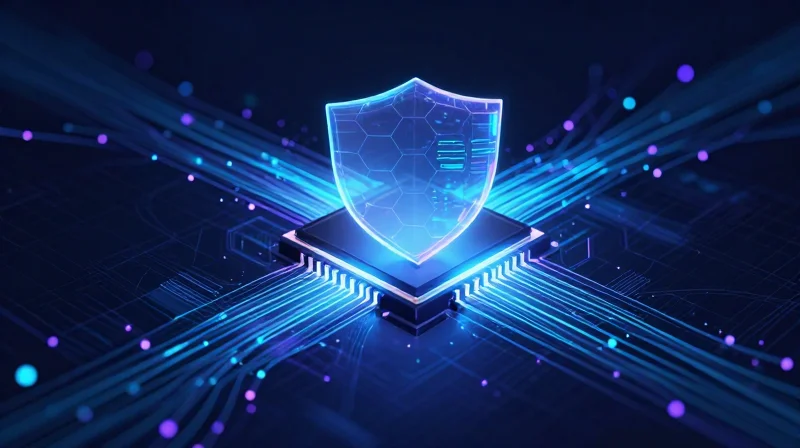
Securing the Perimeter: Onboard Encryption Chips
Unlike legacy systems that often transmit raw biometric templates to insecure central servers, modern smart lock PCBAs prioritize edge-side processing. By utilizing dedicated hardware security modules (HSM) and robust onboard encryption chips, these devices ensure that biometric data is converted into immutable mathematical hashes before it ever leaves the device. This hardware-centric approach minimizes the attack surface by ensuring that even in the event of a physical extraction attempt, the sensitive data remains cryptographically unusable.
Comparing Security Postures
| Feature | Legacy Systems | Modern Biometric PCBA |
|---|---|---|
| Data Storage | Central Server (Cloud) | Secure Onboard Element |
| Encryption | Transmission Layer Only | Hardware-Level at Rest |
| Processing | Remote Cloud Matching | Local Edge Processing |
| Vulnerability | Intercept during transit | Physical tampering only |
The Role of Secure Enclaves
A secure enclave is a physically isolated area within the PCBA processor designed to execute security-critical code. By segregating the biometric matching logic from the primary application processor, manufacturers create a trusted execution environment (TEE). Even if the smart lock's main operating system is compromised via a network vulnerability, the enclave maintains its own encrypted memory, effectively acting as an impenetrable vault for the user's biometric identity markers.
- How does edge processing prevent data breaches?
By performing biometric matching locally on the PCBA rather than in the cloud, raw data never traverses the network, significantly reducing exposure to man-in-the-middle attacks. - What happens if the device is physically stolen?
Modern PCBAs utilize tamper-detection circuitry that triggers an immediate cryptographic wipe of the secure enclave if the device casing is forcibly opened. - Is biometric data stored as an actual image?
No; modern systems use non-reversible feature extraction to store only encrypted mathematical representations, ensuring that biometric images cannot be reconstructed if the storage is breached.
Hardware Constraints and Energy Efficiency
The Energy Efficiency Paradox in Biometrics
The modern smart lock resides in a state of perpetual paradox: it must remain in a ultra-low-power standby mode while simultaneously maintaining the readiness to execute high-compute tasks, such as high-resolution fingerprint matching or neural network-based facial recognition, in milliseconds. Legacy systems, which relied on mechanical latching or basic RFID pulses, consumed negligible power. Modern biometric PCBAs, however, must manage complex clock-gating strategies and dedicated low-power interrupt handlers to prevent catastrophic battery drain.
Comparative Power Consumption: Legacy vs. Modern
| Feature | Legacy Access System | Biometric PCBA System |
|---|---|---|
| Idle Power | < 5µA | 10µA - 50µA |
| Peak Processing | N/A | 100mA - 300mA |
| Wake-up Latency | Instant (Mechanical) | < 500ms (Electronic) |
| Primary Constraint | Physical Maintenance | Battery Life/Duty Cycle |
Optimizing Hardware Constraints
To extend operational lifespan beyond the typical 6-12 month consumer expectation, engineers are moving away from general-purpose microcontrollers. Instead, custom silicon or ASICs (Application-Specific Integrated Circuits) are employed to perform biometric feature extraction in hardware rather than firmware. This shift reduces the CPU load significantly, allowing the system to keep its main application processor in deep sleep for 99% of its lifecycle.
Technical FAQ
- How does capacitive sensing reduce energy overhead?
Capacitive sensors operate as low-power 'wake-up' triggers. The PCBA remains in a near-zero state until the sensor detects a finger, which then fires an interrupt to power up the secure enclave and biometric processor. - What is the impact of onboard encryption on power draw?
While encryption adds computational overhead, dedicated hardware acceleration units (AES/SHA) ensure that cryptographic operations are completed in microseconds, minimizing the time the CPU spends in active mode. - Can edge computing truly save battery?
Yes. By processing biometric templates on the local PCBA rather than uploading data to the cloud, the system eliminates the massive power drain associated with high-bandwidth Wi-Fi or LTE transmissions.
Comparative Market Trends: What Customers Demand Today
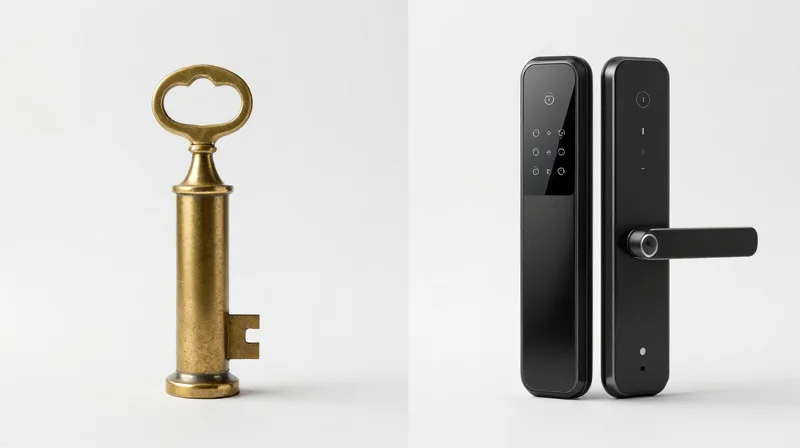
The Shift Toward Frictionless Security
Today's consumer landscape is defined by the demand for 'invisible' security. While legacy systems relied on mechanical keys or static PIN codes, modern users prioritize convenience and speed without sacrificing safety. The adoption of biometric smart lock PCBA technology is no longer a luxury; it is the industry standard for homeowners and enterprises seeking to eliminate the vulnerability of lost keys and forgotten passwords.
Comparative Market Standards: Legacy vs. Biometric
| Feature | Legacy Access Systems | Biometric Smart Lock PCBA |
|---|---|---|
| Verification Method | Physical Key/PIN | Fingerprint/Facial/Voice |
| Security Level | Moderate (Susceptible to picking/copying) | High (Encrypted unique data) |
| User Convenience | Low (Frequent physical interaction) | High (Passive, multi-modal entry) |
| Smart Integration | Non-existent | Native IoT connectivity |
Key Drivers of Modern Consumer Demand
- Why is multi-modal biometrics preferred over single-factor authentication?
Multi-modal systems, which combine fingerprinting with facial recognition, offer superior reliability by compensating for environmental factors like wet hands or low-light conditions, ensuring a 99.9% access success rate. - How does IoT connectivity influence purchasing decisions?
Consumers now demand real-time audit logs and remote access management through mobile applications, features that are only possible through advanced PCBA designs capable of continuous Wi-Fi or Bluetooth Low Energy (BLE) connectivity. - Does aesthetic integration impact hardware design?
Yes, current market trends favor miniaturized, high-density PCBAs that allow for sleeker, low-profile lock designs that blend seamlessly with modern architectural styles.
As the market continues to evolve, the distinction between security hardware and smart electronics is blurring. Manufacturers are increasingly focused on the synergy between processing speed and energy consumption, ensuring that even as locks become more 'intelligent' and feature-rich, they maintain the battery longevity that remains a critical pain point for end-users.
Overcoming Integration Challenges
Overcoming Integration Challenges
Integrating advanced biometric modules into legacy-based smart lock architectures introduces significant complexity. The primary hurdle lies in balancing signal integrity with the high-performance requirements of modern sensors while maintaining a compact PCBA form factor. Manufacturers must transition toward decoupled architectural frameworks to prevent tightly coupled hardware dependencies that hinder scalability and security updates.
Strategic Mitigation of Technical Barriers
| Challenge | Legacy Approach | Modern PCBA Best Practice |
|---|---|---|
| Communication Protocols | UART/GPIO bit-banging | SPI/I2C with DMA optimization |
| Power Management | Monolithic linear regulation | Dynamic Power Gating & Load Switching |
| EMI/EMC Sensitivity | Ad-hoc shielding | Isolated ground planes and differential routing |
FAQs on Biometric PCBA Integration
- How do we handle signal noise in sensitive biometric sensors?
Utilize dedicated analog power rails for sensors, strictly separated from high-current motor drive circuits, and ensure high-speed differential signal lines are properly terminated to minimize crosstalk. - Is software abstraction necessary for future-proofing?
Absolutely. Developing a Hardware Abstraction Layer (HAL) allows for swapping biometric sensors without rewriting the core security firmware, insulating the system from sensor-specific technical debt. - How can we reduce the footprint of additional security chips?
Adopt System-in-Package (SiP) technology or integrate secure enclaves directly into the MCU to minimize board surface area while ensuring root-of-trust authentication remains robust.
Future-Proofing Your Roadmap: Projections for 2025 and Beyond
The Shift Toward Autonomous Edge Intelligence
As we move into 2025, the industry is abandoning cloud-dependent authentication in favor of powerful, localized PCBA architectures. Integrating dedicated Neural Processing Units (NPUs) directly onto the smart lock motherboard enables near-instantaneous liveness detection—the ability for the hardware to distinguish between a living finger and a synthetic spoof—without relying on external network connectivity. This reduction in latency is the cornerstone of the next generation of frictionless security.
Comparative Evolution: Legacy Systems vs. Next-Gen Biometric PCBA
| Feature | Legacy Systems | 2025 Biometric PCBA |
|---|---|---|
| Authentication | Centralized Cloud Database | Decentralized On-Device Storage |
| Liveness Detection | Passive/None | Active AI-Driven Hardware |
| Data Privacy | High Risk (PII Exposure) | Zero-Knowledge Proofs |
| Offline Access | Limited/None | Fully Functional (Edge AI) |
Decentralized Credential Storage
The future of access control lies in the decoupling of identity from centralized corporate servers. Manufacturers are increasingly utilizing Secure Elements (SE) on the PCBA that support decentralized identity protocols. By storing biometric templates as encrypted hashes on the device itself, the system ensures that even in the event of a physical or network breach, no biometric data can be reconstructed by unauthorized parties.
Strategic Outlook and FAQ
- How will edge AI affect battery performance in 2025?
Modern PCBAs are adopting ultra-low-power ASICs designed specifically for neural inference, allowing complex liveness checks to consume less energy than traditional optical sensor polling. - Is cloud storage becoming obsolete?
For critical access authentication, yes. Cloud usage is shifting toward management tasks like audit logging and firmware updates, while the actual 'handshake' of entry remains on the edge. - What is the biggest risk for manufacturers?
The failure to implement hardware-level encryption will be the primary liability. Future-proofing requires moving away from software-based security to dedicated Secure Element chips.
The transition to biometric-first access control is not merely a trend; it is the new standard for reliability and user experience. To maintain your competitive edge, your product roadmap must prioritize modular, encrypted, and energy-efficient PCBA design today. Contact our engineering team to discuss how we can accelerate your next-generation smart lock development.
