
In the high-stakes world of medical device manufacturing, complexity is the enemy of efficiency. OEMs are increasingly moving away from fragmented assembly processes toward integrated, end-to-end box build solutions. By consolidating procurement, assembly, and rigorous testing under one roof, companies can eliminate costly bottlenecks and refocus on innovation.
The Evolution of Medical Device Manufacturing
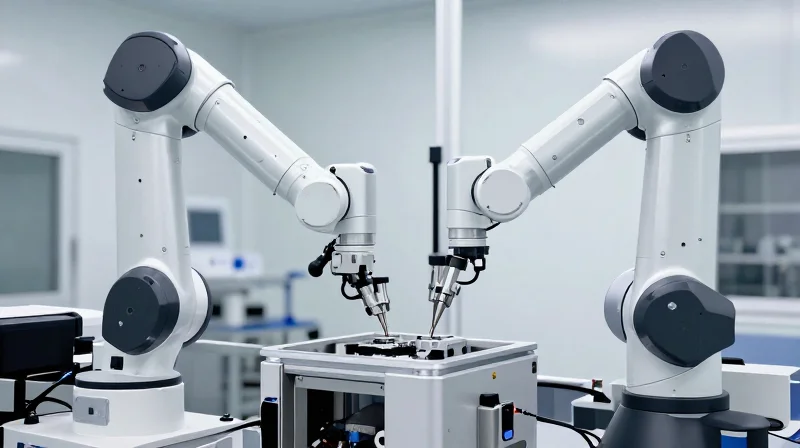
The Shift Toward Integrated Box Build Assembly
Historically, medical device manufacturing was characterized by a disjointed, multi-vendor approach. Original Equipment Manufacturers (OEMs) often managed individual components across disparate facilities, leading to complex supply chains, quality control bottlenecks, and significant overhead. In the pursuit of maximizing ROI through integrated medical box build assembly, companies are increasingly transitioning toward a consolidated manufacturing model. By outsourcing the entire system integration—from printed circuit board assemblies (PCBAs) to final enclosure integration—OEMs achieve higher process transparency and reduced cycle times.
Comparative Analysis: Traditional vs. Integrated Models
| Feature | Traditional Fragmented Assembly | Integrated Box Build |
|---|---|---|
| Supply Chain Complexity | High: Multiple vendor touchpoints | Low: Single point of contact |
| Quality Oversight | Difficult: Decentralized audits | Streamlined: Unified quality management |
| Time-to-Market | Delayed: Coordination latency | Rapid: Synchronized production |
| Cost Impact | Hidden overhead costs | Optimized total cost of ownership |
Strategic Advantages for Modern OEMs
Adopting an integrated box build approach is no longer just a logistical choice; it is a strategic imperative. This evolution allows manufacturers to focus on core competencies—such as R&D and clinical application—while technical partners handle complex mechanical assemblies and final testing. This symbiotic relationship ensures that regulatory compliance is baked into the manufacturing process from the start, significantly lowering the risk of costly rework.
- Why is integration critical for ROI?
Integration minimizes inventory holding costs and eliminates the management overhead required to coordinate multiple secondary suppliers. - How does this shift affect regulatory compliance?
Consolidated assembly simplifies the Device History Record (DHR) process, as validation is performed on the complete system rather than isolated modules. - What is the primary risk of traditional assembly?
The 'silo effect' causes misalignment in design intent, leading to integration failures during final device assembly.
Reducing Operational Overhead through Integration
Eliminating Fragmented Supply Chain Costs
Operational overhead in medical manufacturing is often inflated by the administrative burden of managing multiple vendors. By shifting to a single-source integrated box build assembly, manufacturers remove the complex web of sourcing components from disparate suppliers, coordinating varying lead times, and managing redundant shipping logistics. This consolidation directly reduces the man-hours required for vendor oversight and minimizes the financial impact of supply chain disruptions.
Comparative Impact on Operational Efficiency
| Operational Metric | Fragmented Assembly Model | Integrated Box Build |
|---|---|---|
| Vendor Management | High (10-15+ vendors) | Low (Single-source partner) |
| Logistical Costs | High (Multi-freight/transit) | Low (Consolidated arrival) |
| Quality Audits | Complex (Cross-site variability) | Simplified (Unified oversight) |
| Inventory Overhead | High (Buffer stocks required) | Low (Just-in-time assembly) |
Streamlining Quality and Compliance
Beyond logistical savings, the integrated approach minimizes the risk of non-compliance and documentation errors. When assemblies are handled internally by a partner, quality management systems are centralized, ensuring that every component—from PCBAs to the final enclosure—adheres to strict medical standards (such as ISO 13485) under a singular, traceable audit trail. This reduction in quality assurance friction prevents costly production stalls and rework cycles.
- Does integration reduce warehouse costs?
Yes, by eliminating the need to store and manage sub-assemblies from multiple vendors, companies can significantly reduce inventory carrying costs and warehouse space requirements. - How does it impact time-to-market?
Integrated box build assembly synchronizes the procurement and assembly phases, preventing the 'waiting game' inherent in traditional models where parts arrive at different intervals. - What is the biggest hidden cost reduction?
The largest savings often come from 'soft costs,' such as the reduction in administrative hours spent on PO processing, invoicing reconciliations, and vendor dispute resolution.
Accelerating Time-to-Market for Complex Devices

Synchronizing the Path from Prototype to Production
In the medical device industry, the transition from successful prototyping to mass production is often where momentum is lost. Integrated box build assembly mitigates this risk by ensuring that design-for-manufacturability (DFM) feedback is continuous rather than periodic. By housing engineering, sourcing, and assembly under one roof, manufacturers can iterate on device designs in real-time, preventing the common pitfalls associated with disparate manufacturing handoffs.
Comparative Efficiency of Manufacturing Models
| Process Metric | Fragmented Model | Integrated Box Build |
|---|---|---|
| Vendor Coordination | High Complexity | Single Point of Contact |
| Prototype Iteration | Delayed / Serial | Rapid / Concurrent |
| Quality Verification | Redundant / Multi-stage | Unified / Streamlined |
| Lead Time to Launch | Extended | Compressed |
Key Drivers of Accelerated Delivery
- How does unified assembly eliminate transit delays?
By housing assembly, sub-system testing, and packaging in a single facility, you eliminate the shipping, customs, and inspection intervals required between vendor locations, saving weeks of transit time. - Does integration affect supply chain responsiveness?
Yes, centralizing procurement allows for strategic buffer stock management and faster reaction to component shortages, which are critical when scaling production quickly. - What role does DFM play in speed-to-market?
Early involvement of the assembly team in the design phase ensures that the product is optimized for production-grade automation, drastically reducing the time spent fixing manufacturability issues post-prototype.
Ultimately, the strategic consolidation of box builds transforms manufacturing from a series of logistical obstacles into a cohesive engine for innovation. By reducing the 'friction' between specialized manufacturing phases, organizations can bring life-critical devices to market with the agility required in today’s competitive healthcare landscape.
Streamlining Procurement and Supply Chain Resilience
The Strategic Advantage of Centralized Sourcing
Transitioning to a single-source integrated model transforms procurement from a series of fragmented transactions into a cohesive, data-driven operation. By consolidating the supply chain, medical device manufacturers gain unprecedented visibility into component lead times and inventory health. This centralization eliminates the 'silo effect' where disparate vendors operate without synchronization, ensuring that critical medical components are procured, inspected, and integrated into the box build assembly under a unified quality management system.
Risk Mitigation and Market Volatility
Global market fluctuations pose a significant threat to medical device timelines. Integrated assembly partners often utilize strategic buffer stocks and diversified regional supplier networks to shield the OEM from sudden shortages. This proactive inventory management serves as a shock absorber against geopolitical instability and shipping disruptions.
| Feature | Fragmented Procurement | Integrated Box Build |
|---|---|---|
| Supplier Oversight | Multiple points of contact | Unified vendor management |
| Lead Time Control | Reactive to delays | Proactive synchronization |
| Inventory Risk | High carrying costs | Optimized just-in-time |
Supply Chain FAQs
- How does integration protect against component shortages?
Integrated assembly providers leverage higher procurement volumes and long-term supplier contracts to secure priority allocation during market-wide shortages. - Does consolidation reduce administrative overhead?
Yes, by reducing the number of Purchase Orders (POs) and invoices, a company significantly cuts down on procurement department labor costs and simplifies audit processes. - Is quality control impacted by centralized sourcing?
Quality control is actually enhanced; the provider assumes responsibility for incoming inspection of all sub-components, ensuring compliance before final box build integration.
Integrated Testing and Quality Compliance
The Strategic Shift: In-Process Quality Control
By integrating rigorous testing protocols directly into the medical box build assembly line, manufacturers can detect anomalies at the point of origin rather than discovering them during final inspection. This proactive approach significantly reduces the Cost of Quality (CoQ) by minimizing the rework cycles associated with complete unit failure at the end of the manufacturing process.
| Feature | End-of-Line Verification | Integrated In-Process Testing |
|---|---|---|
| Detection Speed | Delayed (Post-Assembly) | Immediate (Real-Time) |
| Rework Impact | High (Full Disassembly) | Low (Specific Component) |
| Regulatory Risk | Variable | Minimal (Continuous Audit Trail) |
Compliance and Reliability Standards
Maintaining compliance with ISO 13485 and FDA 21 CFR Part 820 requires robust data traceability throughout the build. Integrated systems provide a digital thread, linking specific component batch data to performance test results, which simplifies the validation process for complex medical devices.
- How does integrated testing improve ROI?
It reduces scrap rates and labor costs associated with late-stage failure diagnosis, directly protecting the bottom line from expensive production downtime. - Does in-process testing satisfy audit requirements?
Yes; by embedding automated data logging into the assembly sequence, you ensure that every product meets specified criteria, creating a comprehensive audit trail that meets or exceeds regulatory scrutiny. - Is real-time testing scalable?
Automated testing fixtures can be calibrated for high-volume production, ensuring that testing cycles do not become a bottleneck as production capacity scales.
The Direct Impact on ROI and Labor Costs

Optimizing Labor Efficiency Through Integration
The transition from traditional, siloed manufacturing to an integrated box build model shifts labor from non-value-added administrative tasks to high-value assembly and quality assurance. By centralizing management, firms eliminate the need for redundant multi-vendor oversight, procurement coordination, and fragmented logistics monitoring.
| Cost Factor | Traditional Model | Integrated Model |
|---|---|---|
| Procurement Labor | High (Multi-vendor management) | Low (Single point of contact) |
| Assembly Throughput | Variable (Bottleneck-prone) | Optimized (Synchronized flow) |
| Administrative Overhead | High (QA/Compliance tracking) | Low (Unified documentation) |
Financial Impact of Throughput Gains
Improved throughput is the most significant driver of ROI in medical box builds. Integrated assembly lines utilize JIT (Just-In-Time) principles to reduce Work-in-Progress (WIP) capital tied up in inventory. By synchronizing sub-assembly and final box build stages, manufacturers reduce the cycle time from days to hours, effectively lowering the cost-per-unit by amortizing fixed labor costs over a higher volume of finished goods.
Common ROI and Labor Cost Questions
- How does integration specifically lower direct labor costs?
Integration minimizes the 'touch time' associated with individual parts by grouping them into modular builds, reducing the need for repetitive handling and testing at different facilities. - Can administrative burden reduction really impact bottom-line ROI?
Absolutely. Reducing administrative staff intervention in supply chain reconciliation reduces hidden 'shadow costs' and allows highly skilled technical personnel to focus on assembly and innovation rather than clerical management. - Does this approach require higher upfront labor skill sets?
While it requires cross-trained technicians, the total cost of labor is lower because the complexity is managed by the integrated system rather than requiring constant human troubleshooting of disjointed process steps.
Selecting the Right Manufacturing Partner
Choosing an Electronic Manufacturing Services (EMS) partner for complex medical box builds requires a shift in focus from unit cost to total lifecycle value. A partner capable of delivering high ROI understands that the integration of mechanical housing, PCBAs, cabling, and software must occur within a strictly controlled quality management system that aligns with medical regulatory requirements.
Critical Vetting Criteria for Medical EMS Providers
| Selection Criteria | Impact on ROI | Operational Priority |
|---|---|---|
| ISO 13485 Certification | High: Prevents costly non-compliance delays | Non-negotiable |
| Vertical Integration | Medium: Reduces logistics and overhead costs | High |
| Design for Manufacturability (DFM) | High: Optimizes assembly time and yields | High |
| Supply Chain Transparency | Medium: Mitigates component risk and inflation | Medium |
Frequently Asked Questions Regarding Partner Selection
- Why is ISO 13485 certification mandatory for box build partners?
This certification ensures that the manufacturer adheres to the strict quality management systems required for medical devices, significantly reducing the risk of product recalls and regulatory friction during audits. - How does DFM service specifically influence my ROI?
Early engagement in DFM identifies assembly bottlenecks and suggests component substitutions, which can lead to reduced labor hours, higher throughput, and lower materials costs before production begins. - Is a larger EMS provider always better for medical box builds?
Not necessarily. While large providers offer scale, mid-sized firms often provide more agile communication, dedicated engineering support, and greater attention to specialized medical projects where accuracy outweighs sheer volume.
Strategic Alignment Checklist
To ensure long-term success, evaluate prospective partners against these core operational benchmarks: 1) Proven traceability logs for all sub-assemblies; 2) Experience with high-level assembly (HLA) configurations; 3) Scalable cleanroom capabilities; and 4) A clear commitment to proactive obsolescence management.
Integrated medical box build assembly is no longer just a luxury; it is a strategic requirement for competitive OEMs aiming to optimize costs and shorten release cycles. By consolidating your production chain, you ensure superior quality control and operational agility. Contact our engineering team today to audit your current manufacturing process and start maximizing your ROI.
