
In the fast-evolving HVAC industry, the intelligence of your smart thermostat hinges entirely on the quality of its internal electronics. With tightening regulations and high consumer expectations for connectivity and reliability, selecting the right Printed Circuit Board (PCB) assembly partner is no longer just a procurement task—it is a critical business strategy that dictates your time-to-market and long-term product success.
The Strategic Importance of Specialized PCB Partners
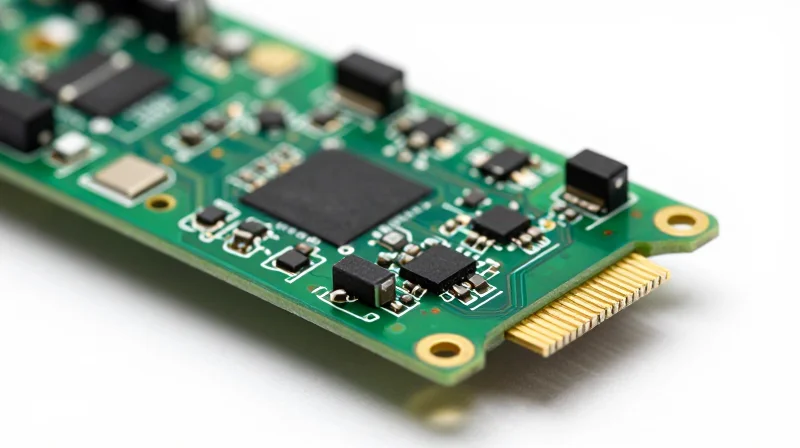
In the competitive landscape of IoT-enabled HVAC systems, the printed circuit board (PCB) is the central nervous system of the thermostat. While general-purpose contract manufacturers (CMs) provide cost-effective assembly for consumer electronics, they often lack the specialized expertise required for the unique challenges of climate control hardware. Smart thermostats demand high reliability under constant thermal cycling, precise sensor integration, and long-term field stability that generic manufacturing workflows are seldom engineered to support.
Why Generic Manufacturing Falls Short in HVAC Applications
| Requirement Area | Generic Manufacturer Approach | Specialized PCB Partner Approach |
|---|---|---|
| Thermal Management | Standard FR4 substrates, basic heat sinking. | High-Tg materials, optimized copper weights for heat dissipation. |
| Reliability Standards | Focus on rapid turnaround and low cost. | Rigorous IPC Class 2/3 inspection and environmental stress testing. |
| Sensor Integration | Standard signal routing. | Low-noise layout design to preserve high-accuracy sensor data. |
| Lifespan Expectancy | Designed for 2-3 year product cycles. | Designed for 10+ years of continuous, failure-free operation. |
Key Considerations for Partner Evaluation
- Does the partner have experience with low-power wireless protocols?
Smart thermostats rely on Wi-Fi, Zigbee, or Thread. Specialized partners understand how to optimize PCB layout to minimize interference and signal loss, which is essential for battery-operated or power-constrained designs. - How does the partner manage supply chain transparency?
HVAC components require long-term traceability. Specialized partners offer robust component sourcing and lifecycle management to prevent the introduction of counterfeit or low-grade capacitors and ICs that fail under heat. - Is there built-in support for environmental stress screening?
A strategic partner provides in-house validation testing—such as thermal shock and humidity testing—to ensure that the PCB assembly can withstand the actual operating conditions of a wall-mounted thermostat.
Ultimately, the strategic choice of a PCB partner determines whether your product becomes a market leader or suffers from high return rates and poor brand reputation. By moving beyond a 'lowest-bidder' mindset and prioritizing technical competency in thermal design and material science, manufacturers can ensure that their smart thermostat hardware remains resilient in the face of constant environmental exposure.
Assessing Technical Capabilities and Advanced Manufacturing

Core Technical Capabilities for Modern Smart Thermostats
Smart thermostats are increasingly defined by their compact, feature-rich designs, which necessitate advanced manufacturing techniques. A capable partner must move beyond basic fabrication to support the high density and stringent signal integrity requirements of modern IoT HVAC controllers.
Evaluating HDI and Assembly Standards
| Capability | Strategic Importance | KPI/Benchmark |
|---|---|---|
| HDI (High-Density Interconnect) | Enables miniaturization of complex circuitry. | Via-in-pad/Micro-via capability |
| SMT (Surface Mount Technology) | Handles fine-pitch components (0201/01005). | Placement accuracy in microns |
| AOI (Automated Optical Inspection) | Detects hidden solder defects early. | Sub-10 micron resolution |
Frequently Asked Questions on Technical Selection
- Why is HDI technology mandatory for modern smart thermostats?
As smart devices incorporate more sensors and wireless connectivity, space on the PCB shrinks. HDI allows for finer traces and micro-vias, enabling high-density routing without sacrificing signal integrity. - How does AOI change the quality assurance landscape?
Traditional manual inspection is insufficient for the tiny components used in HVAC controllers. AOI utilizes sophisticated camera systems to identify misalignment or soldering issues that are invisible to the naked eye, drastically reducing field failure rates. - What should I verify regarding SMT equipment?
Request details on their pick-and-place precision and their capability to handle fine-pitch Ball Grid Array (BGA) components, which are common in modern thermostat communication modules.
Verifying Quality Certifications and Compliance Standards
For smart thermostat manufacturers, the Printed Circuit Board (PCB) serves as the heart of the device, controlling complex sensor inputs and connectivity modules. Partnering with a manufacturer that lacks certified quality management systems invites performance degradation and safety hazards. Verifying specific certifications is not merely a bureaucratic requirement; it is a critical vetting process that validates a partner's ability to maintain repeatability, environmental compliance, and high-fidelity production.
Essential Industry Certifications
| Certification | Significance for Smart HVAC | Primary Goal |
|---|---|---|
| ISO 9001 | Foundation for all manufacturing processes. | Consistency and customer satisfaction. |
| IATF 16949 | Critical for high-reliability consumer electronics. | Defect prevention and supply chain waste reduction. |
| ISO 14001 | Essential for environmental footprint management. | Sustainable and compliant manufacturing practices. |
| IPC-A-600/610 | Defines acceptance criteria for board quality. | Structural integrity and solder joint reliability. |
The Role of IPC Standards in Board Longevity
While broad certifications demonstrate organizational maturity, IPC standards—specifically IPC-A-600 (Acceptability of Printed Boards) and IPC-A-610 (Acceptability of Electronic Assemblies)—dictate the physical and mechanical quality of the PCB. For smart thermostats often exposed to varying thermal environments in residential settings, compliance with these standards ensures that solder joints remain robust, copper traces are adequately protected, and thermal cycling does not lead to delamination or electrical shorting over time.
Frequently Asked Questions
- Why should I prioritize IATF 16949 over basic ISO 9001?
IATF 16949 is significantly more stringent, requiring proactive risk assessment and continuous improvement processes. It ensures your PCB partner treats your product with the same rigor required for the automotive industry. - Does UL certification for the PCB matter if the thermostat is already UL listed?
Yes. Using UL-certified PCB substrates and materials simplifies your final product's safety approval process and guarantees that the raw materials used can withstand internal device temperatures. - How do I verify a partner's claims regarding compliance?
Always request current, valid certificate documents with an expiration date and check the issuer's database. Never rely solely on a logo placed on their company website.
Evaluating Supply Chain Transparency and Risk Management

For smart thermostat manufacturers, the PCB assembly partner is not just a fabricator but a critical supply chain node. Ensuring your partner employs transparent sourcing practices is essential to avoiding costly production halts caused by component shortages and to guaranteeing that only genuine, high-reliability electronic components are integrated into your consumer-facing devices.
Mitigating Component Risk and Counterfeiting
Protecting the integrity of your bill of materials (BOM) starts with visibility. A professional partner should provide a clear audit trail from authorized distributors back to the original component manufacturer (OCM). Relying on independent brokers should be a strategy of last resort, executed only under strict testing and verification protocols to prevent the infiltration of counterfeit ICs or unreliable capacitors that could jeopardize the lifespan of your thermostat.
| Risk Factor | Mitigation Strategy | Key Partner Requirement |
|---|---|---|
| Supply Shortage | Strategic Buffer Stocking | Active Lifecycle Management |
| Counterfeit Parts | Authorized Sourcing Only | Chain-of-Custody Documentation |
| Lead-Time Fluctuations | Early BOM Involvement | Forecasted Procurement Sharing |
Evaluating Procurement Transparency
- How do you verify the source of non-franchised components?
A high-quality partner will conduct rigorous visual inspection and X-ray analysis to ensure physical authenticity, combined with electrical parametric testing to confirm component performance against OCM data sheets. - What reporting metrics should I expect regarding supply chain health?
Look for partners who provide monthly 'Obsolescence and Lead-Time Reports' (EOL reports) and offer proactive recommendations for part substitutions before shortages impact the production line. - Is inventory managed via a transparent portal?
The best partners offer real-time dashboard access to your current raw material inventory, pending deliveries, and flagged high-risk components, ensuring you are never caught off guard.
Ultimately, your chosen partner must demonstrate an 'open book' approach to procurement. By integrating their supply chain intelligence early in the design phase, you transition from reactive firefighting to a proactive stance, ensuring your smart thermostat reaches the market on time and functions exactly as specified.
The Role of DFM and DFT in Cost Optimization

The Strategic Impact of DFM and DFT
Design for Manufacturing (DFM) and Design for Testing (DFT) are not merely technical checkpoints; they are strategic business processes. By partnering with a PCB provider that implements these methodologies during the prototyping phase, you eliminate 'hidden' costs related to board layout inefficiencies, manual rework, and excessive failure rates during assembly. For high-volume smart thermostat production, these practices ensure that the final design is inherently optimized for the manufacturer's specific equipment, leading to higher yields and lower per-unit costs.
Core Benefits of DFM/DFT Integration
| Focus Area | Cost Optimization Mechanism | Production Benefit |
|---|---|---|
| DFM (Manufacturing) | Standardization of footprints and drill sizes | Faster setup and reduced assembly tooling costs |
| DFT (Testing) | Strategic placement of test points and ICT | Automated fault detection during high-speed assembly |
Key Considerations for your PCB Partner
- How does early DFM analysis impact my BOM cost?
A qualified partner will identify components that may cause manufacturing bottlenecks or high-cost assembly, allowing you to swap them for more robust, cost-effective alternatives before mass production begins. - Why is DFT critical for smart HVAC controllers?
Smart thermostats often feature high-density layouts. Robust DFT ensures that every board is functionally validated via In-Circuit Testing (ICT) or Flying Probe before it reaches your end user, preventing costly field failures and warranty claims. - Should I require a DFM/DFT report for every prototype?
Yes. A transparent partner should provide a formal DFM/DFT report that highlights potential yield issues, such as solder bridging risks or thermal management concerns, to ensure full alignment before the transition to high-volume production.
Ultimately, the right PCB partner uses DFM and DFT to bridge the gap between engineering design and assembly reality. Choosing a partner who treats these as core competencies rather than optional add-ons will safeguard your budget against the iterative design cycles that frequently derail smart thermostat product launches.
Assessing Scalability and Prototyping Agility
Bridging the Gap: From Prototype to Mass Production
The transition from a functional prototype to a market-ready smart thermostat is the point where most projects encounter significant failure. A partner with true scalability offers a unified ecosystem where the transition from low-volume, high-flexibility prototyping to high-volume, cost-optimized production occurs within the same facility or managed pipeline. This prevents the 'knowledge loss' that often happens when transitioning projects between disparate vendors.
Scaling Metrics Comparison
| Capability | Prototyping Stage | Volume Production Stage |
|---|---|---|
| Tooling Strategy | Soft tooling / 3D printing | Hard tooling / High-speed SMT |
| Supply Chain | Distributor-sourced, quick-turn | Direct-from-factory, long-term contracts |
| Documentation | Iterative, agile specs | Frozen BOMs, rigorous DFM audit |
Key Indicators of Prototyping Agility
- How does the partner handle BOM changes during the prototype phase?
An agile partner should have a streamlined Engineering Change Order (ECO) process that allows for quick component swaps without requiring a full re-validation of the entire supply chain. - Does the partner offer dedicated NPI (New Product Introduction) lines?
A dedicated NPI line ensures that your prototype development does not get deprioritized in favor of mass-production runs, keeping your development timeline on track. - How early is the transition to volume production discussed?
Strategic partners begin discussing volume manufacturing constraints, such as panelization and assembly speed, during the initial prototype design to avoid costly redesigns later.
Ultimately, your partner's agility is measured by their ability to maintain strict quality standards while accelerating speed-to-market. By vetting their capacity to handle the 'valley of death' between prototype and scale, you ensure that your smart thermostat reaches the consumer without compromise in feature set or assembly precision.
Cultural Alignment and Communication Frameworks

Aligning Organizational Cultures
Cultural alignment goes beyond shared languages; it is about synchronized working styles and shared values regarding quality, transparency, and problem-solving. When your engineering team’s iterative design process meets a partner that embraces a rigid waterfall approach, friction is inevitable. Choose a partner that mirrors your agility, especially for IoT products where firmware and hardware must evolve in tandem.
Communication Frameworks for Success
Standardizing communication prevents the costly assumptions that frequently plague offshore or remote PCB manufacturing. A robust framework should define the cadence of progress reporting, escalation protocols, and centralized documentation practices.
| Framework Component | Strategic Benefit | KPI |
|---|---|---|
| Daily Standups | Real-time issue resolution | Task velocity |
| Unified PLM System | Version control accuracy | Revision error rate |
| Escalation Matrix | Faster decision-making | Time-to-resolution |
The Proximity and Management Paradigm
- Does geographical proximity still matter?
Yes, primarily for prototyping. While high-volume production can be global, proximity reduces shipping lead times for hardware iterations and allows for in-person design reviews, which are crucial for complex thermostat sensor integration. - What is the role of a Dedicated Account Manager (DAM)?
A DAM acts as the single point of failure prevention. They bridge the gap between your hardware engineers and the factory floor, translating technical requirements into actionable manufacturing steps without dilution of intent. - How do I evaluate transparency during the vetting phase?
Ask for their incident management policy. A high-quality partner will readily share case studies of previous projects where components went out of stock and how they proactively communicated solutions to their clients.
Conducting the Audit: Questions to Ask Your Potential Vendor
Conducting the Audit: Questions to Ask Your Potential Vendor
Selecting a PCB partner for smart thermostat development requires moving beyond surface-level capabilities. To identify true operational excellence, you must probe into their internal workflows, quality assurance methodologies, and crisis management protocols. Use these questions to move past marketing literature and reveal the reality of their facility performance.
Critical Audit FAQ
- How do you handle Engineering Change Orders (ECOs) mid-production?
Look for a formal, documented process. A capable partner will have version control systems that prevent mixing old and new revisions in the supply chain. - Can you provide documented examples of DFM feedback implementation?
Ask for case studies where their DFM input reduced costs or assembly failures, rather than just identifying errors. - What is your specific escalation protocol for quality defects?
You need to know the 'stop-ship' authority and the response time guarantee for identifying root causes versus mere rework. - How is production data secured for IoT device firmware?
For smart thermostats, security is paramount. Ensure they have strict protocols for flashing firmware in a secure, air-gapped or encrypted environment.
Vendor Performance Matrix
| Audit Metric | Red Flag | Gold Standard |
|---|---|---|
| Lead Times | Vague estimates | Real-time portal access |
| Quality Certs | Outdated ISO docs | Current IPC Class 3 adherence |
| Supply Chain | Single-source sourcing | Multi-tier risk mitigation |
Ultimately, your audit should verify that the manufacturer acts as an extension of your own engineering team. If a vendor struggles to provide specific data points or references regarding these questions, it often signals a lack of systemic control that could jeopardize your time-to-market and product reliability.
Selecting a PCB assembly partner is a defining factor in the reliability and innovation of your smart thermostat products. By prioritizing technical expertise, supply chain resilience, and transparent quality management, you can mitigate risks and ensure a successful product rollout. Ready to secure your supply chain? Contact our engineering team today to discuss your next HVAC project and see how we align with your quality requirements.
