
In the hyper-competitive smart home market, the difference between a market leader and a failed product often comes down to the efficiency of the assembly line. As connected thermostat complexity rises, manufacturers face mounting pressure to balance high-tech features with razor-thin margins. By leveraging strategic Design-for-Manufacturing (DFM) principles, companies can slash unit costs while hardening devices against the high price of field failure.
The High Cost of Poor PCB Design in Consumer IoT

In the consumer IoT landscape, the temptation to rush PCB design to meet aggressive time-to-market goals often obscures the severe financial consequences of suboptimal engineering. For smart home thermostats, a device that must operate continuously in diverse environmental conditions, design oversights are not merely technical glitches—they are liabilities that compound over the product's entire lifecycle.
The Multiplier Effect of Design Debt
When engineers compromise on trace routing, component selection, or thermal management to save pennies during the prototyping phase, they incur 'design debt.' This debt is paid with interest during manufacturing, testing, and post-launch support. A poorly optimized board might require complex rework or manual assembly steps, effectively wiping out the initial savings through increased labor costs and decreased manufacturing yields.
| Issue | Design Shortcut | Lifecycle Financial Impact |
|---|---|---|
| Thermal Management | Inadequate Heat Sinking | Accelerated component degradation leading to high RMA rates. |
| Signal Integrity | Poor Ground Plane Design | Increased EMI testing failures and costly board spins. |
| Dfm (Design for Mfg) | Overly Complex Layout | Slower assembly throughput and higher rejection rates. |
Addressing Lifecycle Costs: Frequently Asked Questions
- How does PCB layout impact field returns?
Poor layout causes inconsistent performance or premature component failure due to thermal stress or electromagnetic interference, which directly drives up the costs of warranty replacements and logistics. - Can initial design investment be quantified as ROI?
Yes. By reducing the need for expensive post-launch firmware patches, hardware recalls, or manual factory testing, optimized design ensures a predictable and stable profit margin. - Why is PCB reliability critical for smart thermostats?
Smart thermostats serve as the heart of a home. A failure resulting from a poorly designed PCB leads to immediate customer dissatisfaction, brand erosion, and high churn rates in subscription-based models.
Implementing DFM Principles for Smart Thermostats
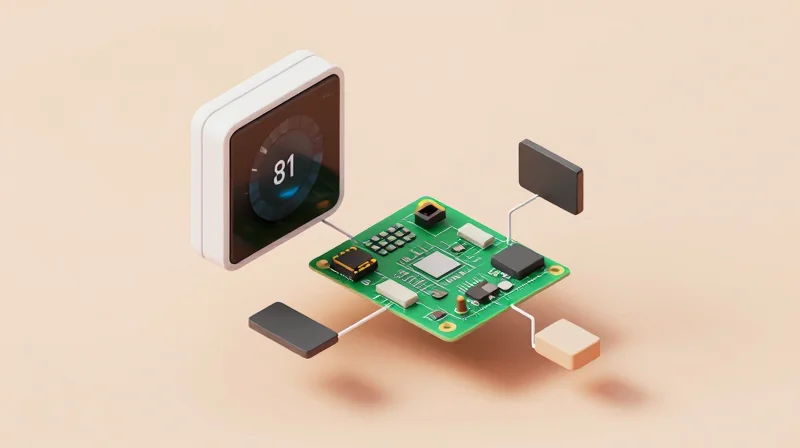
For smart thermostats, the transition from prototype to high-volume production hinges on DFM principles that prioritize assembly reliability and supply chain resilience. By standardizing component footprints and streamlining trace routing during the initial design phase, manufacturers can significantly reduce the potential for board-level defects, thereby lowering the total cost of ownership over the product's lifecycle.
Strategic Component Selection and Footprint Standardization
Smart thermostat PCBs are constrained by tight enclosures and complex thermal management requirements. Standardizing component footprints minimizes the need for specialized assembly tooling and reduces the complexity of pick-and-place programming. By selecting components with high availability and industry-standard packaging, manufacturers avoid the bottleneck of single-source procurement and the associated price volatility.
| Design Strategy | Impact on Production | ROI Benefit |
|---|---|---|
| Standardized Footprints | Faster Pick-and-Place Setup | Reduced assembly labor costs |
| Panelization Optimization | Higher board utilization | Lower per-unit manufacturing cost |
| Thermal Vias Placement | Improved heat dissipation | Extended product reliability |
Layout Efficiency for High-Volume Assembly
Efficient layout goes beyond electrical performance; it ensures manufacturability at scale. DFM-focused layout prioritizes adequate spacing between components to permit rework and automated optical inspection (AOI). Proper routing of high-speed signals for Wi-Fi or Zigbee modules ensures stability, reducing the frequency of field failures—a critical component of long-term ROI.
- How does DFM affect initial design time?
While DFM requires more upfront design effort, it prevents time-consuming engineering change orders (ECOs) during the production ramp-up phase. - Can DFM help mitigate supply chain risks?
Yes, designing for multiple component source compatibility at the footprint level ensures that production continues even when specific parts are out of stock. - Why is board panelization critical for ROI?
Optimized panelization reduces substrate waste, which constitutes a large percentage of total PCB costs in large-scale smart home device manufacturing.
Streamlining Assembly for Faster Time-to-Market
In the competitive smart home market, the interval between design freeze and mass production is a critical determinant of product success. By simplifying PCB layouts and optimizing component placement, engineering teams can bypass traditional manufacturing bottlenecks, directly contributing to a more agile supply chain and faster time-to-market.
Optimizing Throughput via Component Consolidation
A primary driver of slow assembly is component density and variety. Reducing the bill of materials (BOM) by utilizing multi-function ICs not only saves physical space on the thermostat board but also minimizes pick-and-place machine downtime. Fewer feeder changes and faster placement cycles translate to a higher units-per-hour output on the SMT line.
| Optimization Strategy | Impact on Production | Lifecycle Benefit |
|---|---|---|
| Standardized Components | Faster setup time | Reduced inventory cost |
| Single-Sided Layout | Eliminates flip/re-flow | Lower defect rates |
| Panelization Density | Increased throughput | Reduced board wastage |
Accelerating Assembly: Common Questions
- How does single-sided placement improve assembly time?
Single-sided assembly removes the need for a secondary reflow pass, cutting throughput time in half and reducing the thermal stress applied to components. - Can board panelization affect time-to-market?
Yes, optimizing the panel array minimizes material waste and increases the number of units processed per conveyor cycle, effectively shortening production lead times. - What is the role of DFM in reducing rework?
DFM-optimized layouts ensure adequate clearance and trace routing that prevent solder bridging, thereby reducing post-assembly inspection and repair cycles.
By prioritizing manufacturability during the initial layout phase, designers empower the factory floor to operate at maximum efficiency. This proactive approach transforms the PCB from a mere component carrier into a strategic asset that enables a rapid, cost-effective launch of the next generation of smart home thermostats.
Minimizing Field Failures Through Robust Hardware Engineering

The Cost of Field Failures in IoT Ecosystems
Hardware reliability in wall-mounted thermostats is not merely a technical metric; it is a critical business asset. When a device fails in the field, the cost includes not just the hardware replacement, but shipping, technician labor, and potential brand erosion. By focusing on thermal management and signal integrity during the initial design phase, manufacturers can preemptively mitigate the risks that lead to expensive, large-scale recalls.
Critical Engineering Pillars for Long-Term Reliability
| Failure Driver | Engineering Mitigation | ROI Impact |
|---|---|---|
| Thermal Stress | Copper pour optimization | Extended component lifespan |
| Signal Noise | Layer stack-up control | Lower troubleshooting costs |
| Environmental | Conformal coating/Sealing | Reduced moisture-related RMAs |
Common Failure Points and Mitigation
- How does PCB layout impact thermal reliability?
Improper component density and lack of adequate thermal relief paths can lead to localized hotspots, causing early degradation of electrolytic capacitors and silicon, ultimately triggering premature power-stage failure. - Why is signal integrity crucial for smart thermostats?
Intermittent connectivity or data corruption caused by poor signal routing can lead to 'ghost' resets, which are often mistakenly diagnosed as firmware bugs, leading to wasted software engineering hours. - Can hardware design eliminate RMA spikes?
Yes, by incorporating robust ESD protection and voltage transient suppression directly on the PCB, designers can prevent field failures caused by power surges common in home HVAC electrical systems.
To achieve maximum ROI, engineering teams must transition from a 'function-first' mentality to a 'resilience-first' design philosophy. Investing in simulation tools for thermal analysis and signal integrity during the prototype stage reveals potential failure points long before the thermostat reaches the end user.
ROI Analysis: The Economics of Premium Assembly Processes
The Economic Imperative of Quality Assembly
In the lifecycle of a smart home thermostat, initial assembly costs are often viewed as a primary target for reduction. However, prioritizing low-cost assembly methods frequently leads to higher total costs due to increased defect rates, shortened service lives, and ballooning warranty expenses. By adopting premium assembly standards—such as advanced solder paste inspection (SPI), automated optical inspection (AOI), and precise reflow profiling—manufacturers can achieve a lower Total Cost of Ownership (TCO) through superior unit reliability.
| Metric | Economy Assembly Approach | Premium Assembly Investment |
|---|---|---|
| First-Pass Yield | 85-92% | 98-99.9% |
| Field Failure Rate | High (3-5%) | Very Low (<0.5%) |
| Warranty/Support Cost | High Overheads | Minimal Impact |
| Product Longevity | 3-5 Years | 7-10+ Years |
Quantifying ROI Through Reduced Field Service
The true ROI of premium assembly is realized in the field. A thermostat failing in a customer's home does not just incur the cost of a replacement unit; it involves shipping, labor for installation, and, most importantly, intangible brand equity loss. Investing an additional 5-8% in advanced assembly technologies often reduces field failures by over 70%, effectively paying for the initial investment within the first two years of the product's market cycle.
Economic FAQ
- Does premium assembly justify higher upfront costs?
Yes. When calculating the TCO, the reduction in warranty returns and the preservation of brand reputation far outweigh the marginal increase in per-unit manufacturing costs. - How does SPI and AOI impact ROI?
These technologies detect micro-solder defects that human inspection cannot see. Catching these at the factory level prevents costly field recalls and replacements. - Why is long-term reliability a key ROI driver?
Smart thermostats are expected to last for years. Increased longevity keeps customers within the ecosystem longer and minimizes the high operational cost of managing frequent hardware refreshes.
Supply Chain Resilience and Component Sourcing Strategies

Mitigating Supply Chain Risks Through Design-for-Availability
In the context of smart home thermostats, a supply chain disruption for a single critical component can halt production, leading to massive financial losses and market share erosion. To maximize ROI, designers must adopt a 'Design-for-Availability' (DfA) approach. This involves moving beyond choosing the cheapest component to selecting parts with broad multisourcing potential, long production lifecycles, and high availability across major distributors.
Component Selection Strategies for Lifecycle Stability
| Strategy | Impact on Lifecycle Cost | Benefit |
|---|---|---|
| Multisourcing Footprints | Lowers risk of production halts | Enables rapid switching between suppliers |
| Selecting Industry Standard Components | Reduces specialized part premiums | Ensures long-term inventory availability |
| Active Lifecycle Monitoring | Prevents reactive redesigns | Allows for proactive Last-Time-Buy (LTB) planning |
Frequently Asked Questions
- How does component sourcing affect PCB design ROI?
Poor sourcing choices often lead to component obsolescence, forcing expensive hardware redesigns, firmware updates, and re-certification cycles mid-lifecycle. - What is the best way to handle 'sole-source' components?
If a proprietary component is unavoidable, negotiate a buffer stock agreement or a formal roadmap commitment from the manufacturer to ensure supply continuity. - Does optimizing for availability compromise technical performance?
Not necessarily; modern standard components are highly capable. DfA requires balancing performance specs with broader compatibility, which often leads to more robust, stable designs.
Case Study: Achieving Profitability at Scale
The Challenge: Margin Compression in Smart Thermostats
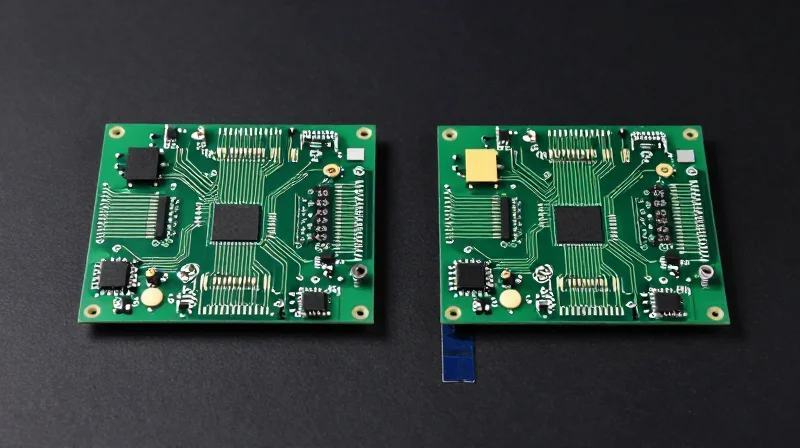
A mid-sized smart thermostat manufacturer faced significant margin erosion due to rising component costs and high field failure rates. Their original four-layer PCB design suffered from poor thermal dissipation, causing micro-fractures in solder joints over 18 months of operation. This led to a high return rate, eating into initial manufacturing savings and damaging brand reputation.
Strategic Optimization Initiatives
The engineering team transitioned to a high-density, high-thermal-conductivity substrate that allowed for better component placement and integrated thermal relief. By shifting from a standard FR-4 material to an improved laminate, they successfully reduced operating temperatures by 12°C, directly extending the product lifecycle.
| Metric | Legacy Design | Optimized Design |
|---|---|---|
| PCB Layer Count | 4 Layers | 6 Layers |
| Field Failure Rate (2-year) | 4.5% | 0.8% |
| Avg Component Cost | $18.50 | $21.20 |
| Lifecycle Cost (Total) | $28.40 | $23.10 |
Key Lessons in Achieving Profitability
- Why did spending more on PCBs lower total costs?
The increased upfront cost of $2.70 per unit was offset by a 3.7% reduction in warranty claims, which were previously costing the company over $15 per unit in logistics and replacement hardware. - How does PCB density affect scalability?
By adopting a high-density interconnect (HDI) approach, the manufacturer reduced board footprint, allowing them to consolidate power management circuitry and reduce total component count by 15%. - What was the long-term impact on ROI?
Improved reliability and lower failure rates transformed customer support overhead into a fixed operational cost, facilitating predictable margins even as component markets fluctuated.
Future-Proofing Your Thermostat Product Roadmap
The Modular Architecture Paradigm
To avoid costly redesigns when standards like Matter, Thread, or future Wi-Fi iterations evolve, manufacturers must transition toward a System-on-Module (SoM) approach. By isolating the RF front-end and communication stack from the primary thermostat control logic, you can swap communication modules without altering the base PCB design or incurring significant re-certification costs.
| Design Approach | Initial Cost | Future Adaptation | Long-term ROI |
|---|---|---|---|
| Monolithic PCB | Low | High Redesign Effort | Low (Frequent Obsolescence) |
| Modular/SoM | Moderate | Seamless Module Swap | High (Extended Lifecycle) |
Strategic Considerations for Long-Term Scalability
- How do we handle evolving wireless standards?
Implement standardized high-speed mezzanine connectors on your base PCB to support 'plug-and-play' wireless modules, allowing you to update connectivity without a total board re-spin. - Does modularity impact manufacturing targets?
While modular components carry a higher per-unit cost, the reduction in engineering overhead and the ability to maintain a consistent chassis design significantly lowers total lifecycle costs. - How can firmware architecture support hardware longevity?
Utilize Hardware Abstraction Layers (HAL) in your firmware to ensure that application-level code remains independent of the underlying hardware vendor, enabling easier migrations during component shortages.
Managing Component Obsolescence
Future-proofing is not merely about connectivity; it is about proactive lifecycle management. Use predictive analytics to track component End-of-Life (EOL) notices early in the design phase. By selecting 'long-life' silicon variants—specifically those marketed for industrial or automotive applications—you effectively insulate your thermostat product from the rapid obsolescence cycles of consumer-grade chips, ensuring a stable manufacturing bill of materials for years.
Optimizing your PCB design isn't just a technical exercise; it is a fundamental business strategy for ensuring long-term profitability in the smart home sector. By prioritizing DFM and reliability today, you can avoid the costly pitfalls of mass-market failure. Ready to refine your design for maximum ROI? Contact our engineering team today for a comprehensive design audit.
