Where to Buy Capacitors Online: A Comprehensive Guide
2024.12.29
Capacitors, essential components in countless electronic devices from smartphones to industrial machinery, play a crucial role in storing and releasing electrical energy. Whether you're a hobbyist working on a DIY project or a professional engineer, knowing where and how to buy capacitors efficiently is key. This article delves into the best online resources for purchasing capacitors, providing guidance on selecting the right type and ensuring you get the components you need for your specific application. From understanding different capacitor types to navigating the online marketplace, we've got you covered.
Understanding Different Types of Capacitors
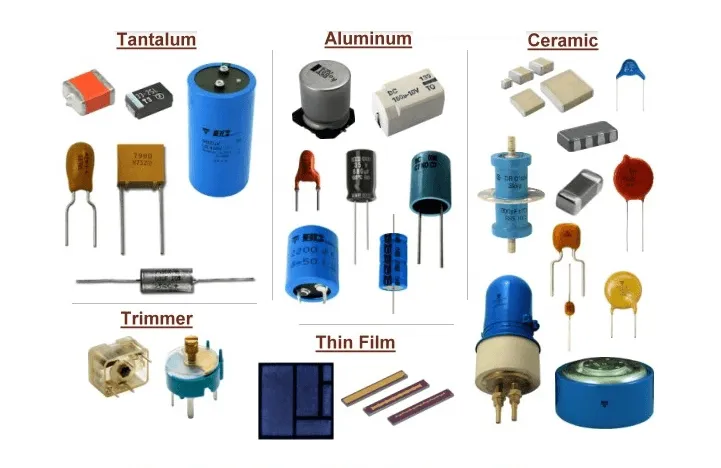
Different Capacitors
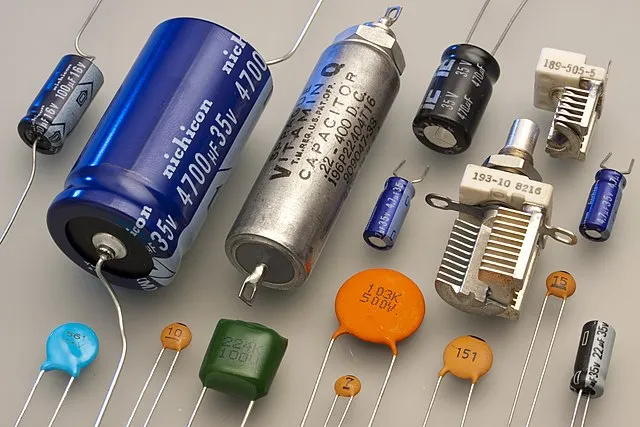
Selecting the correct capacitor is crucial for any electronic project, and this requires understanding the various types available. Capacitors, essential components in electronic circuits, come in diverse forms, each with unique characteristics that dictate their suitability for specific applications. This section delves into the primary categories: ceramic, electrolytic, film, and tantalum capacitors, focusing on their distinct attributes to guide your purchasing decisions.
Capacitor Type
Dielectric Material
Capacitance Range
Voltage Range
Typical Applications
Advantages
Disadvantages
Ceramic
Ceramic materials (e.g., Barium Titanate)
Picofarads (pF) to Microfarads (µF)
Few volts to Kilovolts
Bypass, decoupling, and filtering
Small, low cost, high frequency performance
Lower capacitance values, sensitive to temperature variations
Electrolytic
Aluminum oxide or Tantalum pentoxide
Microfarads (µF) to Farads (F)
Few volts to hundreds of volts
Power supply filtering, energy storage
High capacitance, good for low frequencies
Polarized, limited life, high equivalent series resistance (ESR)
Film
Polyester, Polypropylene, Polystyrene
Picofarads (pF) to Microfarads (µF)
Few volts to Kilovolts
Audio circuits, high frequency applications
High stability, low ESR, good for high frequencies
Larger in size, more expensive
Tantalum
Tantalum pentoxide
Microfarads (µF)
Few volts to hundreds of volts
High reliability, military applications
Compact size, high stability
Expensive, susceptible to surge currents
Each type of capacitor exhibits distinct characteristics regarding capacitance, voltage ratings, temperature coefficients, and equivalent series resistance (ESR). Understanding these attributes is crucial to selecting the correct component for your project. The table provides a high level view of each capacitor.
Top Online Retailers for Buying Capacitors
Online Retailer Website
For engineers and hobbyists seeking to buy capacitors online, several major electronics distributors offer extensive selections, competitive pricing, and reliable shipping. This section examines leading platforms like Mouser, DigiKey, and Newark, detailing their unique offerings to help you make an informed purchasing decision.
Retailer
Selection
Pricing
Shipping Options
Key Features
Mouser Electronics
Vast selection of capacitors from various manufacturers, including specialized and hard-to-find components.
Generally competitive, with tiered pricing for bulk orders.
Multiple shipping carriers, options for expedited delivery, international shipping available.
Comprehensive range of capacitors, known for a large in-stock inventory and quick turnaround.
Pricing is competitive, with frequent promotions and quantity discounts.
Fast and reliable shipping services, typically faster for in-stock parts, and international shipping.
Excellent search functionality, extensive technical documentation, and a reputation for reliability.
Newark (element14)
Broad selection of capacitors, catering to industrial and commercial needs. Carries a range of brands.
Prices vary, often with special offers for bulk purchases, aimed more towards industry clients.
Offers various shipping options, including same-day and next-day options for eligible parts.
Strong focus on industrial needs, good for sourcing components at high quantities.
When choosing where to buy capacitors, consider factors such as the breadth of their selection (do they carry the specific types and values you need), their pricing structure (are there discounts for larger orders?), and shipping options (are they fast and cost-effective?). Each platform offers different strengths, tailored to various project requirements and purchasing habits.
Specialty Capacitor Suppliers and Marketplaces
Supplier Warehouse
Beyond the major electronics distributors, several specialty suppliers and online marketplaces offer capacitors, each with its own unique advantages and drawbacks. These platforms can provide access to a broader range of parts, varying price points, and may cater to more specific needs.
Key players in this category include:
Amazon A general marketplace with a wide variety of electronic components, including capacitors. Offers convenience and often competitive pricing, however, component authenticity and quality should be carefully verified. While Amazon can be a good place for hobbyists and smaller projects, the supply chain can sometimes be unclear, making it less suitable for professional applications.
Octopart An electronic component search engine that aggregates data from multiple distributors and manufacturers. Octopart is an extremely valuable tool to compare pricing, availability, and datasheets of specific capacitors. It does not sell parts directly, but rather directs users to where the component can be purchased.
Future Electronics A global distributor focusing on providing a wide range of electronic components. Future Electronics often has a strong inventory of capacitors but may be more geared towards large-volume orders for commercial customers. They are known to offer strong technical support and value-added services.
Marketplace/Supplier
Pros
Cons
Amazon
Convenient, competitive pricing, wide variety
Authenticity verification needed, less reliable for professional applications, supply chain concerns
Octopart
Aggregates data from multiple sources, useful for price comparison
Does not sell parts directly, requires navigating multiple distributors
Future Electronics
Strong inventory, excellent technical support
Geared towards larger commercial orders
How to Choose the Right Capacitor for Your Project
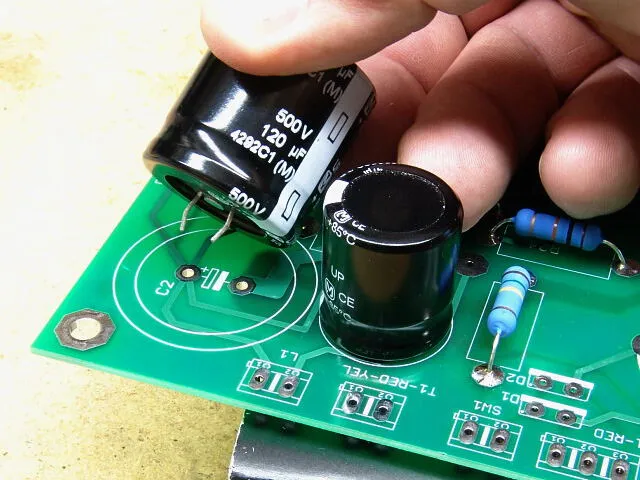
Capacitors on PCB
Selecting the correct capacitor for a project hinges on understanding its key specifications. These parameters ensure that the chosen component operates as intended within the circuit, and will significantly impact performance and longevity. Crucial factors include capacitance, voltage rating, tolerance, and temperature coefficient, each of which is defined by the demands of the application.
Capacitance Measured in farads (F), capacitance indicates a capacitor's ability to store an electrical charge. Select a value that aligns with the circuit's requirements, as insufficient capacitance may cause instability, and excessive capacitance may result in longer charge/discharge times. Common units include microfarads (µF), nanofarads (nF), and picofarads (pF).
Voltage Rating The maximum voltage a capacitor can safely handle without failing. It is critical to select a capacitor with a voltage rating that exceeds the maximum expected voltage in the circuit. Operating a capacitor above its voltage rating can lead to dielectric breakdown and permanent damage, or even catastrophic failure.
Tolerance Indicates the acceptable deviation from the capacitor's stated capacitance value. A 100µF capacitor with a 10% tolerance could range from 90µF to 110µF. Tighter tolerance capacitors are critical for applications requiring high precision.
Temperature Coefficient The change in capacitance with temperature variation. Some capacitors exhibit a high temperature coefficient, which may render them inappropriate for applications subject to extreme temperatures. Understand your expected operating temperature to choose a stable capacitor.
Case Size and Mounting Consider physical dimensions and mounting type (e.g., surface mount or through-hole) to fit properly on your printed circuit board. Select capacitors that match the footprint and the physical space.
Dielectric Material The dielectric material influences the capacitor's characteristics such as temperature stability, voltage limits and frequency characteristics. Each material, such as ceramic, electrolytic, tantalum, or film, has inherent benefits and drawbacks depending on the application.
Comparing Pricing and Availability: How to Get the Best Deals When You Buy Capacitors
Capacitor Packaging
Securing the most favorable terms when purchasing capacitors online involves a strategic approach to comparing prices, evaluating lead times, and capitalizing on various cost-saving opportunities. This section provides insights into how to navigate the online marketplace to achieve the best value for your capacitor needs.
Factor
Description
Impact on Cost
Price Per Unit
The cost of an individual capacitor, often variable depending on quantity, brand, and specifications.
Directly affects the total cost. Lower unit price for bulk purchases.
Lead Time
The time it takes for the capacitors to be shipped after placing your order.
Long lead times might force you to buy from a more expensive source. Shorter times are often pricier.
Shipping Costs
The expenses for transporting the components to your location.
High shipping can negate price discounts, impacting overall cost.
Minimum Order Quantity (MOQ)
The smallest quantity of parts an online retailer is willing to sell.
MOQs can be an obstacle for small projects. May necessitate bulk purchases.
Bulk Discounts
Reduced unit price available for purchasing large quantities.
Can significantly reduce per unit costs. Ideal for large projects.
Promotional Offers
Special limited-time discounts offered by vendors.
May result in short-term cost savings.
Sourcing From Multiple Suppliers
Buying the same part from different suppliers to reduce risk.
May give access to lower prices, or diversify your supply chain.
Utilize Price Comparison Websites Use platforms that compare prices across multiple distributors to pinpoint the most economical source.
Negotiate for Bulk Orders When purchasing large quantities, contact distributors to negotiate bulk discount pricing, which can significantly lower per-unit costs.
Plan for Long Lead Times If possible, anticipate your needs in advance. Order capacitors with longer lead times from reputable vendors, this can reduce costs.
Look for Promotional Offers Keep an eye out for seasonal sales, promotional discounts, and special offers from distributors.
Consider Alternative Suppliers Do not always rely on one or two suppliers for components. It's better to diversify, both to mitigate risk and to achieve the best pricing
Analyze Shipping Costs Always account for shipping costs when comparing prices. Shipping expenses can often negate the lower price of a capacitor purchase.
Frequently Asked Questions About Buying Capacitors
Navigating the world of capacitors can be complex, especially when purchasing them for specific applications. This section addresses the most common questions that arise when buying capacitors, providing clear and concise answers to guide your purchasing decisions.
How do I determine which capacitor to buy for my project? Selecting the correct capacitor requires a thorough understanding of your project’s specific needs. Key considerations include capacitance value (measured in farads), voltage rating (must exceed the maximum circuit voltage), tolerance (acceptable variation in capacitance), temperature coefficient (how capacitance changes with temperature), and the capacitor's physical dimensions. Review your circuit design specifications, datasheets of existing components, and always err on the side of a higher voltage rating to ensure safe operation.
How long can a capacitor typically hold a charge? The charge-holding duration of a capacitor is not indefinite and depends on its type, size, and the circuit it is in. In ideal conditions with no load connected, a capacitor can hold a charge for a considerable time. However, in practical applications, internal leakage currents and external loads cause discharge. For small capacitors in circuits with low leakage, charge retention can be hours or even days, but for larger capacitors, it will be much less.
What is considered the 'best' capacitor to buy, and why? There isn't a single 'best' capacitor; the optimal choice depends entirely on your application's specific requirements. For instance, ceramic capacitors are suitable for high-frequency decoupling due to their low inductance, while electrolytic capacitors are often chosen for bulk energy storage due to their high capacitance. Film capacitors are favored in audio applications because of their low distortion and high accuracy. Carefully assessing the application and circuit requirements will dictate the 'best' type for your purposes.
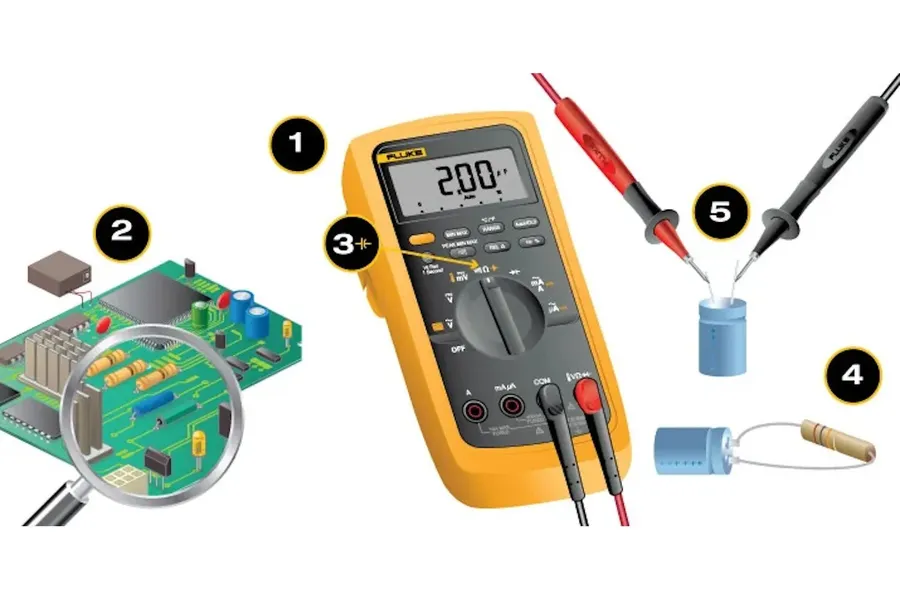
How can I identify a bad capacitor? Identifying a faulty capacitor is crucial to prevent circuit malfunctions. Visual cues, such as bulging or leaking electrolyte, often indicate issues. Furthermore, using a multimeter to measure capacitance and equivalent series resistance (ESR) can detect changes that indicate degradation. Low capacitance, high ESR, or complete failure to charge all point to capacitor malfunction.
Are there any risks associated with using the wrong capacitor? Using the wrong type or rating of capacitor can lead to severe consequences, including circuit failure, component damage and potentially dangerous situations. For example, a capacitor with a voltage rating that is too low can experience dielectric breakdown and fail catastrophically. Similarly, using a capacitor with a temperature rating that is too low in a hot environment may lead to shortened life and premature failure. Choosing components outside of the specification will compromise performance or create safety hazards.
Is it okay to replace a capacitor with a higher voltage rating? Yes, it is generally acceptable and often advisable to replace a capacitor with one that has a higher voltage rating than the original. A higher voltage rating does not affect the circuit under normal operating conditions. Using a higher rated part provides additional safety margins and reduces the risk of dielectric breakdown under transient voltage peaks. However, it's essential to ensure the capacitance, tolerance and physical size of the replacement are suitable for the application.
How does a capacitor’s temperature coefficient affect circuit performance? A capacitor's temperature coefficient specifies how much its capacitance changes with temperature variations. Different types of capacitors have varied temperature coefficients. For circuits that operate over a broad range of temperatures, this characteristic becomes crucial, as variations in capacitance can lead to altered circuit performance. It’s always best to chose the capacitor with the necessary stability for the circuit's specific operating environment.
Practical Tips for Purchasing Capacitors Online
Measuring Capacitors
Purchasing capacitors online requires careful attention to detail to ensure you receive authentic, functional components that meet your project's requirements. This section outlines practical advice to navigate the complexities of online capacitor procurement, from verifying component authenticity to understanding packaging options and returns.
Verifying Component Authenticity Always buy from reputable distributors with established return policies. Check for manufacturer logos and part numbers, compare them to the official datasheets, and look for any inconsistencies in packaging or markings that could indicate counterfeit parts. If a deal seems too good to be true, it likely is.
Reading Datasheets Datasheets provide critical information such as capacitance, voltage rating, tolerance, temperature coefficients, and dimensions. Carefully review the datasheet to verify that a capacitor meets your needs before purchase, paying particular attention to operating conditions that could affect performance. Understanding the nuances in these specifications is key to successful project outcomes.
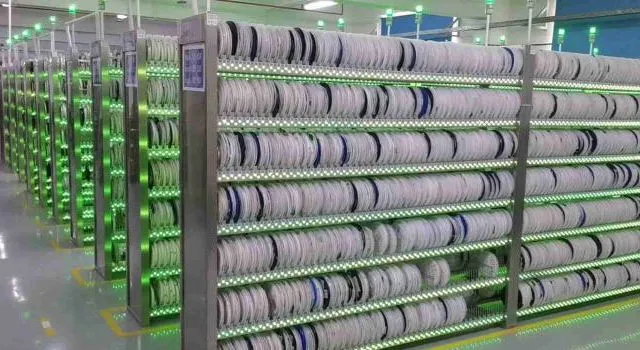
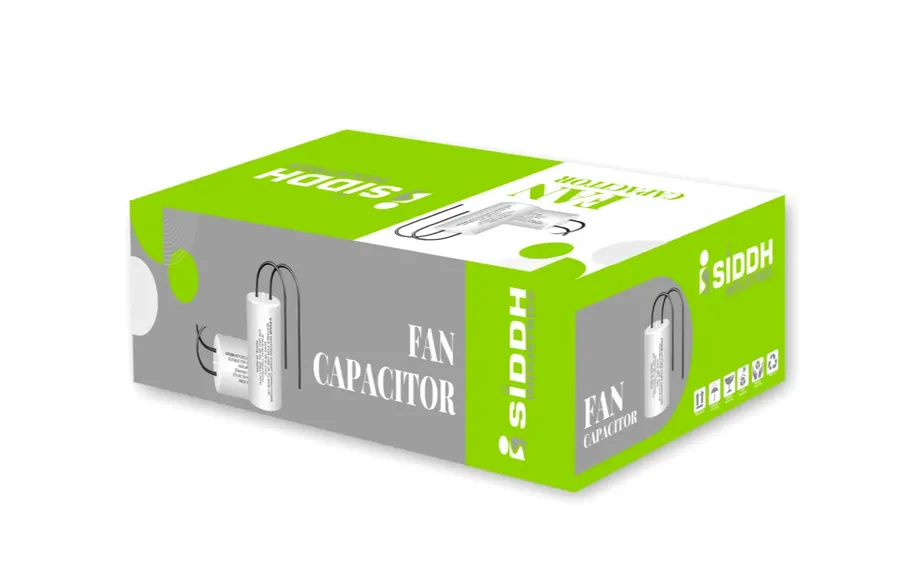
Understanding Packaging Options Capacitors can come in various packaging options, such as tape and reel, cut tape, or bulk packaging. Select the option best suited to your needs, considering factors like ease of use, handling, and storage. Tape and reel packaging is preferable for automated assembly, whereas cut tape or bulk options might be suitable for small-scale projects. Be sure that the packaging method is clearly stated on the part's product listing.
Understanding lead times Lead times refer to the time it takes a capacitor to ship after you place your order. Given supply chain volatility, lead times can fluctuate significantly. Consider your project timelines and whether an alternative part could be used if one part's lead time is prohibitive.
Navigating Returns and Handling Issues Familiarize yourself with the retailer's return policy before making a purchase. In cases where you have received non-conforming or counterfeit parts, be prepared to document the issues with clear photos and descriptions to expedite the return process. Be aware of the timeframe for returns and ensure you test components as soon as possible after receiving them.
Considerations for Buying Capacitors for Specific Applications
Capacitors in Devices
Selecting the correct capacitor hinges significantly on its intended application. Different applications impose varying demands on capacitor performance, necessitating careful consideration of parameters such as capacitance, voltage rating, temperature stability, and equivalent series resistance (ESR). This section delves into specific capacitor selection criteria for common applications, providing insights to guide your purchasing decisions.
When buying capacitors, always prioritize consulting the device manufacturer's specifications and datasheets to ascertain the required parameters for your specific situation. Deviating from these requirements can lead to component failures, decreased performance, or even safety hazards.
Audio Equipment In audio applications, capacitors are crucial for filtering, coupling, and decoupling signals. Key considerations include low distortion, minimal noise, and stability over the audio frequency range (20 Hz to 20 kHz). Film capacitors or low-ESR electrolytic capacitors are often preferred to maintain signal integrity and sonic clarity.
Power Supplies Capacitors in power supplies are used for filtering, smoothing, and energy storage. High capacitance, low ESR, and high ripple current handling are critical to ensure efficient power delivery and prevent voltage fluctuations. Electrolytic capacitors, often with higher voltage ratings, are commonly employed for this application.
HVAC Systems Capacitors in HVAC systems are primarily used for motor starting and running. These capacitors must withstand high voltage and current surges, often requiring robust construction and specific dielectric materials. Run capacitors often utilize oil-filled technology for longevity, while start capacitors are designed for short-term high-current duty.
High-Frequency Circuits In high-frequency circuits (e.g., RF circuits, switching power converters), parasitic inductance and ESR can significantly impact performance. Ceramic capacitors with low inductance and ESR are frequently the component of choice here. Select components with appropriately rated operating frequency for these circuits.
General-Purpose Applications For basic filtering, decoupling, or timing applications, a variety of capacitors will suffice, including ceramic, film, and electrolytic types, as these are often less demanding situations. Evaluate cost, physical size, and stability when buying components for such a purpose.
Exploring Local Options to Buy Capacitors
While online retailers offer vast selections and competitive pricing, exploring local options for purchasing capacitors can be advantageous in certain situations, especially when immediate availability is crucial. Local suppliers provide an alternative that can fulfill urgent needs and offer the benefit of hands-on evaluation.
Local options for capacitor purchasing primarily include brick-and-mortar electronics stores, hobby shops, and specialized component distributors. These sources may offer a limited range of capacitors compared to online retailers, but they excel in providing immediate access to commonly needed components. This can be particularly beneficial for quick repairs, prototyping, and small-scale projects where the time required for online shipping could be prohibitive. However, these sources may have a lower selection and higher prices.
Factor
Local Options
Online Options
Availability
Immediate, subject to stock
Requires shipping, may have lead times
Selection
Typically limited to common types and values
Extensive, with a wider variety of types and specifications
Pricing
Generally higher due to overhead and smaller purchasing volumes
More competitive, often with bulk discounts
Convenience
Physical shopping, ability to physically inspect the components
Online shopping, potential delivery to a desired location
Expertise
Can offer in-person assistance from knowledgeable staff
Online support usually limited to documentation and FAQs
In summary, local capacitor suppliers are most advantageous when immediacy is critical, physical inspection is desired, or when small quantities are needed. Conversely, online sources excel in scenarios requiring a vast array of specialized components, greater price competitiveness, or when shipping times are acceptable. The optimal choice is highly dependent on the specific requirements and constraints of the given project.
Finding the right capacitors for your project, whether for a hobby or professional application, doesn't have to be complicated. By understanding the different capacitor types and knowing where to buy capacitors online from reputable vendors like Mouser, DigiKey, and others, you can ensure that you select the right components that meet your needs. Remember to compare prices, check availability, and double-check specifications before making your purchase. With these tips, buying capacitors online can be streamlined, efficient, and cost-effective. Consider bookmarking this guide as your go-to resource for your next capacitor purchase to help make the whole process easier.