
The smart home revolution is no longer just about connectivity; it is about intelligence at the edge. As consumers demand more autonomy from their robotic devices, the underlying hardware—specifically the PCBA architecture—is undergoing a radical transformation to support real-time processing and sophisticated spatial awareness.
The Shift from Cloud-Based to Edge AI
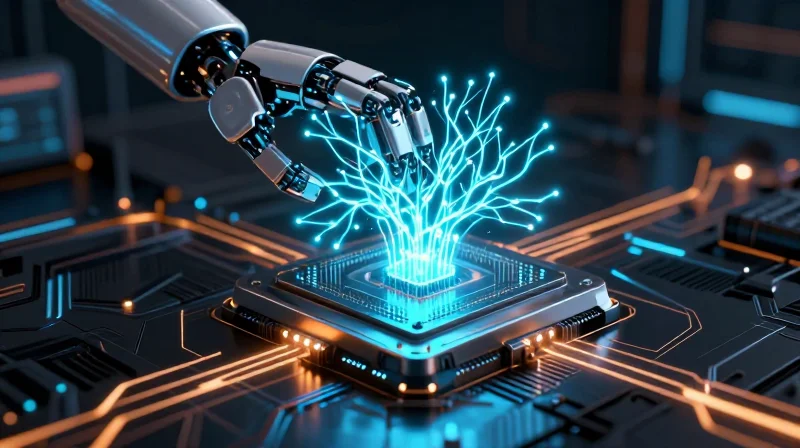
Overcoming Cloud-Based Limitations
The traditional cloud-centric approach to robotics has historically been limited by network latency and bandwidth constraints. As robots perform increasingly complex tasks in dynamic environments, relying on a round-trip to a remote server for decision-making introduces critical timing failures. Edge AI solves this by embedding high-performance computation directly onto the robotic motherboard, enabling real-time inference that is agnostic of connectivity stability.
Why Edge AI is Essential for Modern Robotics
- Latency Reduction
Processing data locally removes the transit time to and from cloud servers, allowing for sub-millisecond response times critical for obstacle avoidance and safety. - Data Privacy and Security
By keeping sensor data and environmental maps onboard, robots reduce the surface area for cyberattacks and ensure sensitive operational data never leaves the local device. - Operational Reliability
Robotic systems gain the ability to function effectively in environments with intermittent or zero internet connectivity, ensuring consistent uptime in remote or mission-critical settings.
Comparing Processing Paradigms
| Feature | Cloud-Based AI | Edge AI |
|---|---|---|
| Latency | High (Network Dependent) | Ultra-Low (Localized) |
| Connectivity | Essential | Optional |
| Hardware Cost | Lower (Thin Client) | Higher (Local Accelerator) |
| Privacy | Vulnerable (Data Transit) | Secure (Data Localized) |
This transition mandates a hardware architectural shift. Developers are moving toward heterogeneous computing, where motherboards combine traditional CPUs with specialized NPUs (Neural Processing Units) or FPGAs. This hardware configuration is the cornerstone of the 'Future of Smart Robotics,' ensuring the robot can process visual and navigational data sets without becoming a bottleneck for higher-order decision logic.
Anatomy of a Modern Robotic Motherboard
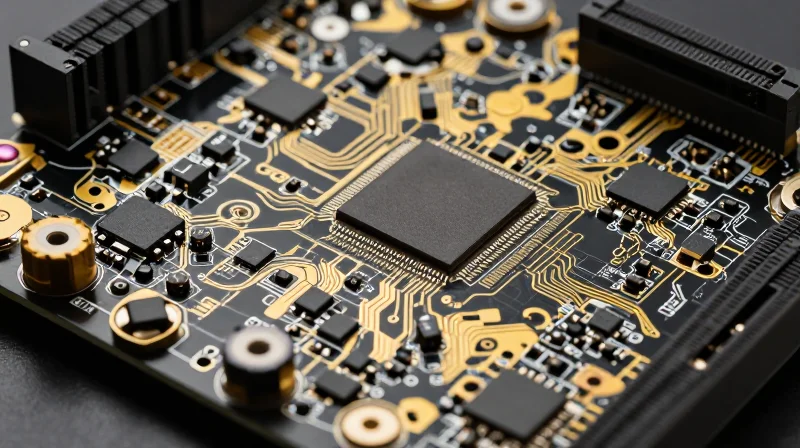
High-Density Interconnects and Multi-Layer PCB Architecture
A modern robotic motherboard serves as the central nervous system of an intelligent machine. To support edge AI chipsets like the NVIDIA Jetson or Google Coral, engineers must utilize High-Density Interconnect (HDI) PCB technology. These boards frequently feature 10 to 16 layers, utilizing laser-drilled microvias to pack dense routing paths into a compact footprint while maintaining signal integrity for high-speed buses like PCIe Gen 4/5.
Critical Components of AI-Driven Motherboards
| Component Type | Function | Impact on Design |
|---|---|---|
| SoC/SoM Module | Primary AI & Logic Processing | Requires high-speed impedance controlled routing. |
| Power Management ICs | Voltage Regulation | Requires optimized thermal vias for heat dissipation. |
| I/O Controller | Sensor Fusion & Actuator Control | Needs shielding to mitigate EMI from high-power motors. |
| Memory (LPDDR5) | Data Caching | Requires length-matching to prevent signal latency. |
Thermal and Signal Integrity Considerations
As AI workloads intensify, thermal density becomes the primary bottleneck. Modern architectures employ thick copper planes (2oz+) that act as internal heatsinks to draw heat away from the GPU/NPU. Furthermore, differential pairs must be carefully routed to avoid cross-talk, ensuring that sensitive navigation sensor data—such as LiDAR point clouds—remains noise-free even when adjacent to noisy switching regulators.
Technical FAQ: Robotic Motherboard Design
- Why are rigid-flex PCBs becoming popular in robotics?
Rigid-flex designs allow the motherboard to fold or fit into unconventional mechanical enclosures, essential for humanoid or micro-drone applications where space is extremely constrained. - How do engineers prevent electromagnetic interference (EMI)?
Engineers utilize localized metal shielding cans over sensitive processors and employ strict ground-plane stitching to ensure that high-frequency signals do not induce noise in analog sensor inputs. - What is the role of the Power Management Integrated Circuit (PMIC)?
The PMIC manages complex power sequencing, ensuring that high-voltage motor drivers do not cause voltage sags that would otherwise trigger a reboot in the AI processing unit.
Advancements in Spatial Navigation Processors
The Transition to Integrated Visual SLAM Engines
The landscape of spatial navigation is undergoing a fundamental transformation, moving away from legacy Lidar-centric architectures toward sophisticated Visual SLAM (Simultaneous Localization and Mapping) engines. While Lidar provides high-precision point clouds, it often struggles with semantic understanding and environmental variability. Modern navigation processors now leverage dedicated hardware acceleration for feature extraction, depth estimation, and loop closure, enabling robots to navigate complex, unstructured environments with human-like spatial awareness.
| Feature | Lidar-Based Systems | Visual SLAM Engines |
|---|---|---|
| Environmental Depth | Active Laser Ranging | Stereo/Monocular Vision |
| Computational Load | Low (Geometric Processing) | High (Neural Network Inference) |
| Semantic Capability | None | High (Object/Scene Classification) |
| Lighting Sensitivity | Excellent | Moderate to Low |
Hardware Acceleration for Spatial Intelligence
At the heart of this advancement is the integration of dedicated Tensor Processing Units (TPUs) and specialized ISP (Image Signal Processor) pipelines. Unlike traditional CPUs which handle sequential navigation logic, these new SoC (System on a Chip) architectures perform parallelized matrix multiplications essential for real-time feature matching. By offloading SLAM calculations from the main motherboard processor, these specialized chips ensure low-latency path planning even at high movement velocities.
Frequently Asked Questions
- Why is Visual SLAM replacing Lidar in many modern robotics designs?
Visual SLAM offers superior cost-efficiency and enables the robot to 'see' and interpret scene semantics, such as identifying a human versus a static object, which traditional Lidar cannot do. - How do hardware-accelerated processors affect battery life?
By offloading intensive visual processing tasks to dedicated hardware accelerators, general-purpose processors operate at lower clock speeds, significantly reducing power draw and extending overall mission duration. - Is hybrid sensing the future of spatial navigation?
Yes, fusion-based approaches combining Lidar for distance precision and Visual SLAM for semantic context are becoming the industry standard for high-reliability autonomous systems.
Thermal Management Challenges in High-Performance Robotics
The Thermal Density Paradox
As robotic motherboards integrate high-throughput AI inference engines and real-time vision processors, they face a fundamental paradox: increasing computational density directly correlates with higher power consumption and heat output, while structural design requirements mandate smaller, more sealed form factors that impede natural airflow.
Comparison of Thermal Dissipation Strategies
| Strategy | Effectiveness | Implementation Complexity | Best Use Case |
|---|---|---|---|
| Passive Heat Spreading | Low | Low | Low-power edge devices |
| Active Forced Air | Medium | Medium | General-purpose mobile robotics |
| Liquid Cooling | High | High | High-performance industrial manipulators |
| Phase-Change Materials | High | Low | Burst-mode intensive compute |
Engineering for Thermal Resilience
Beyond simple cooling, the architecture itself must adapt to thermal stress. Dynamic thermal throttling is no longer a safety feature but an integrated component of software-defined power management. By utilizing AI to predict workloads, the motherboard can pre-emptively manage core frequencies, balancing navigation performance against thermal limits to ensure structural integrity and component longevity.
- How does heat impact AI inference accuracy?
Sustained high temperatures cause thermal throttling, which reduces clock speeds, potentially leading to frame drops in visual SLAM or increased latency in decision-making pipelines. - Why is liquid cooling rarely used in mobile robots?
Liquid cooling introduces failure points such as pump mechanical fatigue, fluid leakage risks, and significantly increases the overall weight and maintenance burden of a mobile platform. - What is the future of heat management in AI robotics?
The trend is moving toward thermal-aware chip design (chiplet architectures) and advanced materials like graphene-based thermal interfaces that move heat more efficiently without requiring bulky physical heat sinks.
Comparative Analysis: AI Chipset Architectures
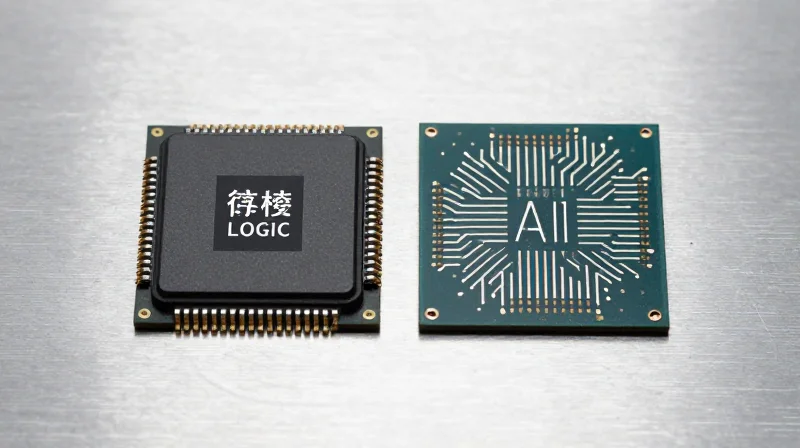
NPU Integration vs. Traditional Architectures
The transition from CPU/GPU-dominant motherboards to NPU-centric designs marks a pivotal shift in floor care robotics. While general-purpose CPUs are versatile, they suffer from high latency and power inefficiency when processing deep learning models for real-time obstacle avoidance. NPUs provide dedicated hardware acceleration for tensor operations, enabling local neural network execution that minimizes dependency on cloud computing.
| Architecture | Performance Focus | Power Efficiency | Ideal Application |
|---|---|---|---|
| CPU-Centric | Serial Task Processing | Low to Moderate | General System Control |
| GPU-Accelerated | Parallel Data Processing | Low | Advanced Visual Rendering |
| NPU-Integrated | Neural Inference | High | Real-time Object Recognition |
Key Performance Metrics in Edge Robotics
- Why is NPU integration superior for navigation?
NPUs handle matrix multiplication natively, which is the core operation for visual SLAM and CNN-based object recognition, resulting in significantly faster response times. - Does this impact battery life?
Yes. NPUs offer a superior performance-per-watt ratio, allowing robots to process complex AI inference tasks without drastically reducing the runtime between charges. - Can current CPUs be upgraded for these tasks?
While software-level optimization exists, hardware-level NPU integration is required to meet the thermal and latency constraints inherent in compact floor-care robot designs.
Ultimately, the shift toward heterogeneous computing architectures allows for a more intelligent, autonomous floor-care ecosystem. By delegating specific AI workloads to an NPU, manufacturers can preserve the CPU for high-level decision making, creating a more responsive and energy-efficient autonomous platform.
The Role of Sensor Fusion in Autonomous Navigation

Architectural Requirements for Multi-Modal Fusion
Modern autonomous navigation requires the seamless integration of disparate inputs, including high-resolution RGB cameras, ultrasonic proximity sensors, and depth-sensing Time-of-Flight (ToF) modules. The fundamental challenge lies in the motherboard's ability to minimize latency between data acquisition and inference. High-density interconnect (HDI) PCB design is essential here, providing the low-impedance pathways required to move massive data packets from CMOS image sensors and LIDAR arrays to the NPU without signal degradation or thermal throttling.
Comparing Sensor Data Streams
| Sensor Type | Primary Function | Data Load | PCBA Requirement |
|---|---|---|---|
| RGB Camera | Semantic Recognition | High | MIPI-CSI Lanes |
| ToF Module | Depth Mapping | Medium | I2C/SPI Bus |
| Ultrasonic | Collision Avoidance | Low | GPIO/ADC |
Real-Time Processing and Synchronization
True sensor fusion transcends mere aggregation; it requires temporal synchronization. If a robot is moving at 1.5 m/s, a 50ms delay in sensor alignment leads to significant spatial drift. Advanced motherboards now employ hardware-level timestamping, ensuring that the visual data from a camera frame is time-aligned with the spatial coordinates provided by an IMU. This synchronization is achieved via dedicated hardware triggers embedded directly into the motherboard logic, bypassing OS-level bottlenecks.
Frequently Asked Questions
- Why is PCBA routing critical for sensor fusion?
Improper trace impedance can introduce noise into sensitive sensor signals, causing jitter in depth maps or misidentified objects in visual streams. - Does higher sensor resolution always mean better navigation?
No; excessive data density without adequate bus bandwidth on the motherboard leads to frame drops, which can compromise real-time obstacle avoidance. - How do ToF modules outperform traditional sensors?
ToF modules provide direct depth information independent of ambient lighting, reducing the computational load required for complex stereo-vision algorithms.
Scalability and Future-Proofing Robotic Designs
The Shift Toward Modular Robotic Architectures
To achieve long-term viability, modern robotics are transitioning from monolithic, fixed-function PCBs toward modular, high-density mezzanine connectors. By decoupling the primary compute module—the system-on-module (SOM)—from the carrier board that manages specific I/O and sensor interfaces, engineers can implement 'hot-swappable' performance upgrades. This modularity allows manufacturers to upgrade an aging robot's brain to the latest NPU architecture while retaining the chassis, drive systems, and established sensor arrays.
Software-Defined Hardware and Future-Proofing
Future-proofing relies on the integration of Field Programmable Gate Arrays (FPGAs) and software-defined peripheral controllers within the motherboard design. This allows the hardware's physical routing and processing logic to be reconfigured via firmware updates to accommodate new communication protocols, sensor technologies, or optimized AI inference pipelines.
| Architectural Approach | Scalability Potential | Update Mechanism | Hardware Lifespan |
|---|---|---|---|
| Monolithic PCB | Low | Physical replacement | 3-5 years |
| Modular SOM + Carrier | High | Compute module swap | 7-10+ years |
| FPGA-Configurable | Very High | Firmware/Gateware update | 10+ years |
Frequently Asked Questions on Scalability
- How does modularity reduce total cost of ownership?
By allowing operators to replace only the compute engine (the most rapidly aging component) rather than the entire robotic platform, capital expenditure is significantly reduced over the machine's operational lifecycle. - Can software-defined hardware handle future AI models?
Yes, through the use of reconfigurable silicon like FPGAs or AI-accelerated SoCs that support programmable instruction sets, enabling the system to adapt to new neural network architectures without requiring board redesigns. - What is the primary constraint of modular design?
The main challenge is maintaining signal integrity and power efficiency across high-speed mezzanine connectors, which requires precise PCBA design to minimize latency and heat.
Market Impact: Improving User Experience through Hardware
Bridging Technical Specs and Real-World Cleaning Efficiency
The evolution of smart robotics is no longer measured solely by computational power but by how effectively hardware translates raw data into human-centric convenience. By integrating AI-optimized motherboards, robotics platforms now achieve a level of spatial awareness that minimizes user intervention, ensuring that robots not only clean better but also operate with the situational intelligence expected of high-end consumer appliances.
Hardware-Driven Performance Metrics
| Hardware Enhancement | Technical Impact | User Experience Benefit |
|---|---|---|
| NPU Integration | Faster local inference | Reduced obstacle hesitation |
| High-Density PCBA | Real-time sensor fusion | Precise edge-to-edge cleaning |
| Modular Architectures | Upgradable hardware | Extended product lifecycle |
Frequently Asked Questions
- How does better sensor fusion impact daily use?
Superior sensor fusion reduces 'robotic bumping,' allowing devices to navigate complex furniture layouts and delicate home environments with near-human situational awareness. - Will hardware advancements reduce the need for constant software resets?
Yes; dedicated AI processors handle navigation tasks locally, reducing cloud-dependency and preventing the common latency-based navigation errors seen in legacy robots. - What does future-proofing mean for the consumer?
Modular board designs allow manufacturers to push updates that enable new features like improved carpet-detection or advanced object recognition without requiring a complete hardware replacement.
As we move toward a future where autonomous devices operate with near-human awareness, the importance of robust, AI-optimized motherboard design cannot be overstated. By prioritizing edge-based spatial navigation and high-performance PCBA architecture, manufacturers can define the next frontier of home automation. Contact our engineering team today to learn how our hardware solutions can power your next generation of intelligent robotics.
