
As smart homes evolve from simple connected devices to complex, AI-driven ecosystems, the burden on traditional cloud-based processing has become a bottleneck. Users now demand instantaneous responsiveness, enhanced data privacy, and unwavering reliability—challenges that current cloud-reliant architectures struggle to meet. The solution lies at the edge. In this article, we analyze the shifting landscape of IoT gateway hardware and how the integration of local AI processing is setting the new industry standard for high-performance smart home connectivity.
The Evolution of the Smart Home Gateway
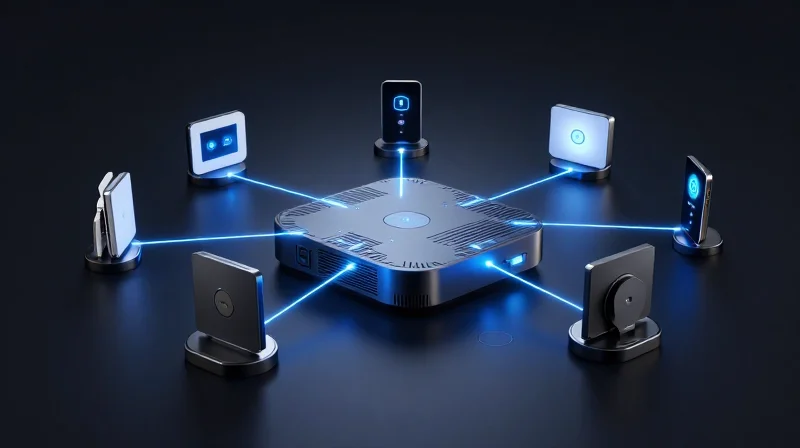
From Connectivity Bridges to Edge Intelligence
The smart home gateway has transitioned from a rudimentary network bridge—essentially a translator between Zigbee or Z-Wave and local IP networks—into a multifaceted computational hub. Early iterations functioned primarily as passive conduits, relying heavily on cloud processing for intelligence and data storage. Today, modern gateway hardware integrates powerful SoCs (System-on-Chips) and neural processing units that enable real-time local processing, minimizing latency and enhancing security by reducing cloud dependencies.
Generational Evolution Table
| Era | Primary Function | Data Location | Compute Power |
|---|---|---|---|
| 1st Gen | Protocol Translation | Cloud-Dependent | Minimal |
| 2nd Gen | Local Automation | Hybrid Cloud | Moderate |
| Current | Edge AI & Analytics | Local-First | High |
Key Drivers of Hardware Transformation
- Why did cloud dependency decrease?
The need for lower latency, improved reliability during internet outages, and enhanced privacy protections drove the industry to move intelligence closer to the device. - What role does AI play in new gateways?
Modern hardware now includes local AI processing for tasks like voice recognition, video analytics, and behavioral pattern matching, which were previously impossible without cloud resources. - How have wireless standards influenced hardware?
The push toward unified standards like Matter has necessitated more complex, multi-radio hardware designs capable of handling Thread, Bluetooth LE, and Wi-Fi simultaneously on a single chip.
Why Edge Computing is the New Standard
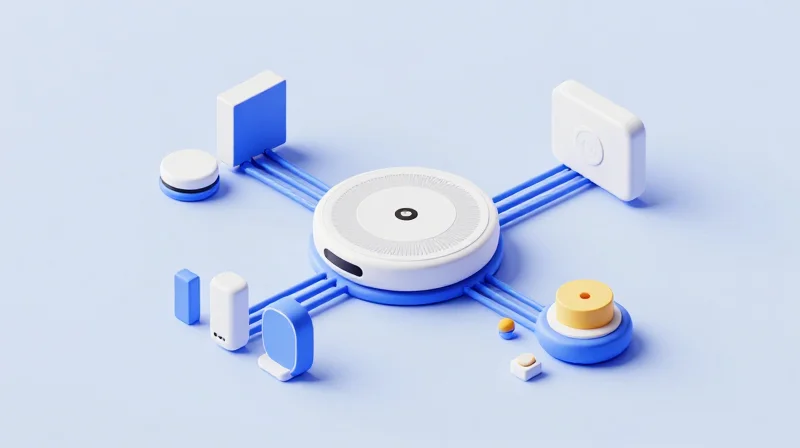
The Shift to Edge-First Architecture
Modern smart homes generate massive volumes of sensor data that make cloud-only architectures unsustainable due to latency bottlenecks and bandwidth constraints. Edge computing resolves these challenges by executing time-sensitive processing locally on the IoT gateway. By minimizing the round-trip time required to reach the cloud, systems can achieve near-instantaneous response times, which is critical for safety-sensitive applications like motion-triggered security lighting and rapid intrusion detection.
Cloud vs. Edge: Comparative Performance
| Feature | Cloud-Dependent | Edge-Computing |
|---|---|---|
| Latency | High (Network dependent) | Ultra-low (Local) |
| Bandwidth Usage | High | Low |
| Connectivity Requirement | Always-on | Works Offline |
| Data Privacy | Moderate | High |
Key Benefits of Localized Intelligence
- How does edge computing improve reliability?
By processing commands locally, the smart home remains functional even during internet outages, preventing the system from becoming a 'dumb' house when the ISP goes down. - What is the impact on data privacy?
Local processing ensures that sensitive personal data, such as audio feeds or occupancy patterns, do not need to be transmitted to third-party servers, significantly reducing the attack surface. - Does edge computing reduce bandwidth costs?
Yes, by filtering, aggregating, and analyzing data locally, gateways only send relevant alerts or summary reports to the cloud rather than raw, high-bitrate data streams.
The Rise of Integrated AI and NPU Architecture
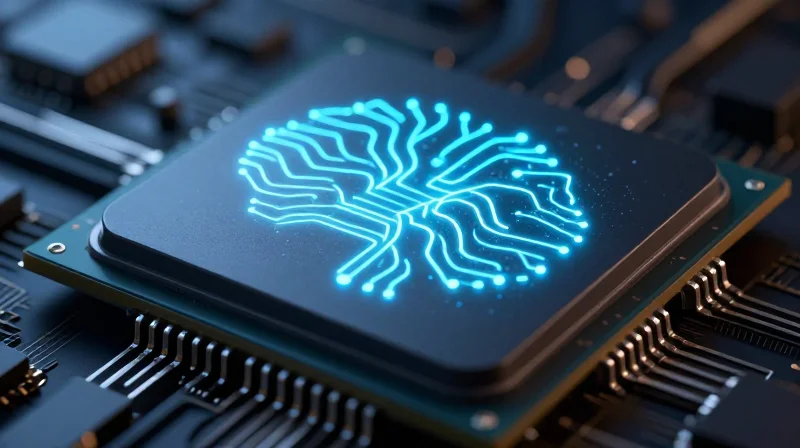
The Shift Toward Localized AI Intelligence
Traditional IoT gateways function primarily as communication bridges, offloading data-intensive analytical tasks to remote cloud servers. The emergence of specialized AI hardware, specifically the Neural Processing Unit (NPU), allows modern gateways to perform complex machine learning inference locally. By moving intelligence from the cloud to the silicon level, smart home systems gain the capability to process high-resolution audio, visual, and sensor data with sub-millisecond latency while maintaining user privacy.
Hardware Capability Comparison
| Feature | Standard Gateway (CPU-Only) | AI-Integrated Gateway (w/ NPU) |
|---|---|---|
| Inference Latency | High (Cloud-reliant) | Ultra-low (Local) |
| Privacy Exposure | High (Data to Cloud) | Minimal (Local Data) |
| Bandwidth Usage | High | Low |
| Offline Resilience | Poor | Excellent |
Architectural Benefits of NPU Integration
Integrating an NPU transforms the gateway into an intelligent hub capable of event-driven decision making. Unlike standard CPUs that utilize general-purpose cycles for pattern recognition, NPUs are architected for the parallel matrix multiplication required by deep learning neural networks. This ensures that features like gesture recognition, voice wake-words, and anomalous activity detection can operate continuously without consuming significant power or compromising the responsiveness of standard networking tasks.
Frequently Asked Questions
- Why is an NPU preferred over a standard CPU for IoT AI tasks?
NPUs are specialized silicon designed for high-throughput, low-power execution of neural network models, whereas CPUs are general-purpose processors that become bottlenecks when running complex AI inference. - Does local AI processing replace the need for the cloud?
Not entirely. While NPUs handle real-time inference at the edge, cloud platforms remain essential for long-term storage, global device management, and large-scale model training updates. - How does NPU integration impact user privacy?
By processing sensitive data like camera feeds or voice commands locally, the system eliminates the need to transmit personal data to the cloud, significantly reducing the surface area for security breaches.
Comparing Hardware Architectures: ARM vs. RISC-V
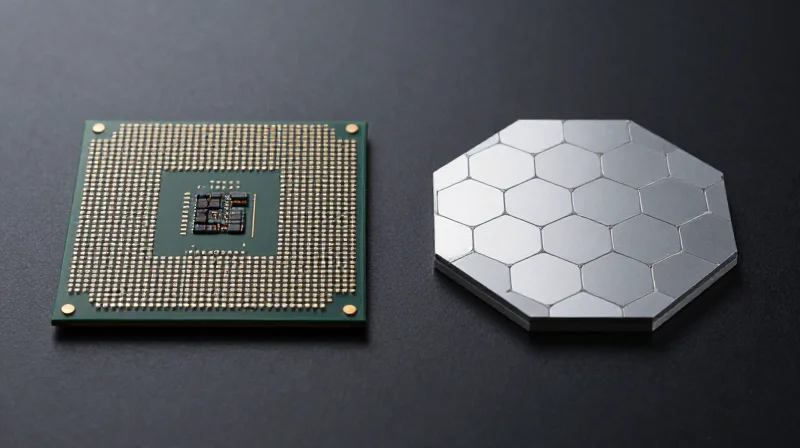
ARM vs. RISC-V: Architectural Paradigms in IoT Gateways
The choice between ARM and RISC-V represents a fundamental strategic decision for IoT gateway manufacturers, balancing the reliability of established ecosystems against the flexibility and cost-efficiency of open-standard instruction sets.
| Feature | ARM (Cortex-A/M Series) | RISC-V |
|---|---|---|
| Licensing Model | Proprietary/Commercial | Open Source (ISA) |
| Ecosystem Maturity | High (Extensive Software Stack) | Growing (Rapidly Evolving) |
| Customization | Limited (Fixed ISA) | High (Extensible/Modular) |
| Power Efficiency | Highly Optimized | Excellent (Lean Instruction Set) |
Comparative Analysis for Edge Computing
ARM architectures currently dominate the IoT market due to their mature software ecosystem, extensive developer support, and hardware-software integration capabilities that ensure predictable performance. Conversely, RISC-V provides a compelling alternative by allowing hardware designers to strip away unnecessary instructions, creating highly specialized chips that reduce power consumption and footprint for specific gateway workloads.
Frequently Asked Questions
- Which architecture is better for AI-heavy gateways?
ARM remains the leader for AI-heavy gateways due to robust partnerships with NPU developers and optimized machine learning libraries. RISC-V is catching up, but often requires significant custom investment to achieve similar neural processing efficiency. - Is RISC-V cost-effective for medium-scale manufacturers?
Yes, RISC-V eliminates licensing royalties, which can lead to significant BOM (Bill of Materials) cost reductions over large production runs, though initial R&D costs for custom silicon design can be higher. - How does the software ecosystem impact these architectures?
ARM benefits from decades of software optimization and middleware compatibility. RISC-V requires more effort in porting software, though Linux and RTOS support for RISC-V is currently expanding rapidly.
Data Privacy and Localized Security Models
The Shift Toward Privacy-by-Design
Modern IoT gateway architecture is fundamentally changing by prioritizing local execution environments over cloud-reliant data pipelines. By moving data processing and sensitive logic to the gateway level, manufacturers are effectively reducing the attack surface area that exposes user habits and behavioral metadata to external vulnerabilities.
Hardware-Rooted Security Mechanisms
The integration of Trusted Execution Environments (TEEs) and Hardware Security Modules (HSMs) directly onto the SoC has become the gold standard for secure IoT design. These components allow for cryptographic key storage and authenticated boot processes that remain isolated from the primary operating system, ensuring that even if a gateway's connectivity layer is compromised, the core privacy-sensitive data remains encrypted and inaccessible.
| Feature | Cloud-Centric Model | Localized Gateway Model |
|---|---|---|
| Data Storage | Public/Private Cloud | Local Encrypted Storage |
| Processing Latency | Variable (High) | Predictable (Near-Zero) |
| Security Boundary | External Network | Physical Gateway Hardware |
| Privacy Risk | High (Third-party access) | Low (User-controlled) |
Frequently Asked Questions
- How does local processing improve home security?
Local processing keeps sensitive telemetry and video streams within the home network, preventing sensitive data from traversing the public internet where it could be intercepted or subjected to data mining. - What role do Secure Enclaves play in IoT gateways?
Secure enclaves create an isolated partition in the processor, protecting critical tasks such as voice processing or biometric verification from unauthorized access by other running applications. - Is a local-only model less feature-rich than cloud alternatives?
While early local systems were limited, modern NPUs (Neural Processing Units) embedded in gateways now allow for complex AI capabilities, such as object detection and automation logic, to function effectively without cloud oversight.
Interoperability and the Matter Protocol Impact
Breaking Down the Matter Protocol
Matter, the application-layer standard running over Thread, Wi-Fi, and Ethernet, is rapidly becoming the backbone of modern IoT gateway architecture. By enforcing a common language for device communication, it removes the need for complex multi-protocol bridges that previously relied on proprietary APIs. For hardware designers, this means shifting focus from translating disparate manufacturer languages to optimizing local processing capabilities for a standardized set of commands.
Impact on Gateway Hardware Requirements
| Feature | Legacy Gateway Model | Matter-Enabled Gateway |
|---|---|---|
| Connectivity | Multiple proprietary radio chips | Consolidated Thread/Wi-Fi/Ethernet support |
| Software Load | High (heavy cloud translation) | Low (localized command execution) |
| Interoperability | Restricted to specific ecosystems | Universal device compatibility |
Future-Proofing Design Through Standardization
Designing for Matter requires a transition toward more flexible, high-memory, and low-latency hardware. Because Matter is built on IPv6, gateways now function as border routers that facilitate native IP communication between end devices. This architecture reduces the compute overhead previously required for protocol translation, allowing designers to allocate more resources toward localized NPU integration for advanced automation.
- How does Matter change memory requirements?
Matter's cryptographic requirements and IP stack overhead necessitate higher SRAM and Flash storage compared to legacy, low-power Zigbee/Z-Wave bridges. - Does Matter eliminate the need for multi-radio gateways?
While Matter unifies the application layer, Thread and Wi-Fi remain distinct physical layers, meaning gateways must still maintain hardware support for both to achieve full ecosystem coverage. - What is the role of an IPv6 border router in this context?
Matter-compliant gateways act as border routers, connecting the low-power Thread network to the broader home Wi-Fi infrastructure without needing proprietary cloud-based translation layers.
Market Trends: Scaling for Performance and Reliability
The Evolution of Scalable Gateway Architecture
As the number of connected endpoints in a typical smart home expands from dozens to hundreds, the traditional single-processor gateway is becoming a bottleneck. Market trends now prioritize modular, containerized software architectures running on heterogeneous hardware. This allows manufacturers to deploy lightweight services for simple lighting control alongside resource-intensive AI models for local security analytics, all within the same physical gateway hardware.
Comparative Metrics for Gateway Reliability
| Feature | Consumer-Grade | Industrial-Grade/Professional |
|---|---|---|
| Uptime Target | 99.5% | 99.999% |
| Thermal Management | Passive (Budget) | Active/Advanced Heat Spreading |
| Memory Error Correction | None (Standard RAM) | ECC Memory Support |
| Software Updates | Monolithic firmware | A/B Partitioning (Atomic) |
Key Questions in High-Performance Gateway Design
- How does containerization improve scalability?
By isolating processes (using Docker or WebAssembly), gateways can dynamically allocate CPU and RAM to specific tasks, ensuring that a surge in sensor data does not crash essential connectivity protocols like Thread or Matter. - Why is ECC memory becoming standard in prosumer gateways?
Error-Correcting Code (ECC) memory prevents system crashes caused by single-bit errors in RAM, which are increasingly common as memory densities increase and environmental conditions fluctuate in a household. - What is the impact of edge AI on hardware requirements?
Integrating NPUs (Neural Processing Units) allows for local voice processing and object detection without latency, but mandates a shift toward high-efficiency SoCs capable of handling high-speed data streams without thermal throttling.
Future-Proofing Your Smart Home Infrastructure
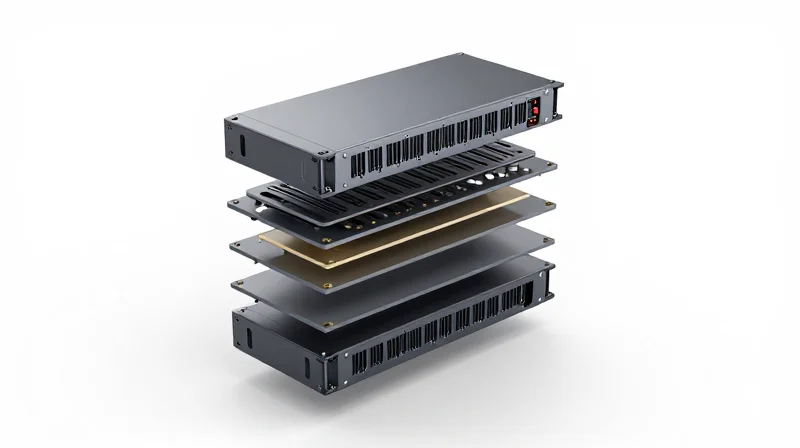
Architecting for Longevity: Modularity and Upgradability
To prevent premature obsolescence in IoT gateways, designers must prioritize modular hardware architectures. By decoupling radio modules from the core processing unit, manufacturers allow for seamless upgrades as wireless standards evolve beyond current iterations of Thread, Zigbee, or Wi-Fi 7.
Key Hardware Considerations for Future-Ready Gateways
| Feature | Strategic Benefit | Implementation Priority |
|---|---|---|
| SoC Headroom | Supports local LLM execution and AI tasks. | High |
| Unified Radio Modules | Allows field-swappable connectivity hardware. | Medium |
| Over-the-Air (OTA) Banks | Prevents bricking during firmware rollouts. | Critical |
Leveraging Edge Intelligence and Software-Defined Features
The shift toward software-defined IoT gateways is essential for longevity. By offloading logic to local edge containers, gateways can adapt to new protocols and AI models via software patches without requiring physical device replacement. This approach effectively transitions the gateway from a static bridge into an evolving ecosystem controller.
Frequently Asked Questions
- How much RAM is sufficient for future-proofing?
While current gateways operate on 512MB-1GB of RAM, aiming for 2GB or more is recommended to handle emerging local AI workloads and complex containerized environments. - Is hardware encryption necessary for longevity?
Yes. Dedicated hardware security modules (HSM) ensure that as security threats evolve, the gateway can support new cryptographic standards without stalling the CPU. - Does Matter negate the need for hardware-focused strategy?
No. Matter simplifies interoperability, but hardware must still be robust enough to handle the increased computational overhead of managing multi-protocol mesh networks.
The transition toward edge-computing architectures is not just an incremental update; it is a fundamental shift in how we manage the smart home. By prioritizing local processing and hardware-level AI, manufacturers can deliver the reliability and privacy users demand today. Ready to future-proof your connected ecosystem? Contact our engineering team today to learn how our latest IoT gateway solutions can power your next-generation projects.
