
In the fast-evolving world of respiratory care, the technology inside CPAP devices is undergoing a quiet revolution. As manufacturers race to make devices smaller, quieter, and more energy-efficient, the focus has shifted entirely to the heart of the machine: the motor control system. This article examines why the transition from legacy architectures to intelligent BLDC designs is no longer a luxury, but a necessity for patient compliance.
The Evolution of CPAP Motor Control
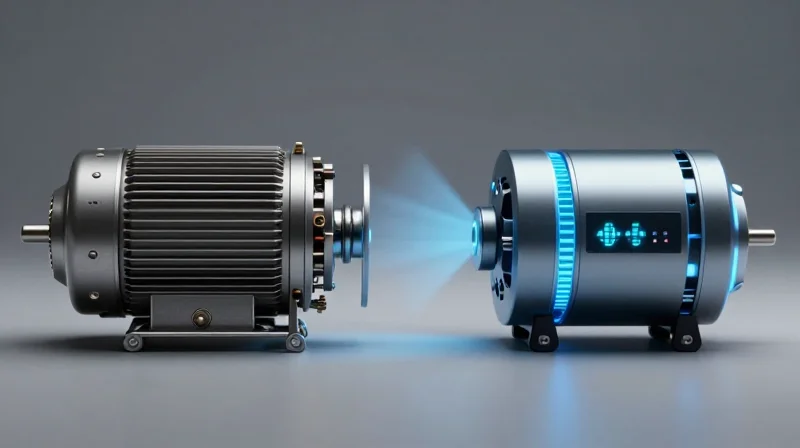
From Mechanical Noise to Digital Precision
In the early iterations of respiratory therapy devices, motor control was primitive. CPAP machines relied on bulky, AC-powered induction motors that were not only heavy but lacked the granularity required to respond to real-time changes in patient breathing patterns. These traditional systems relied on crude mechanical or basic electromechanical switching to regulate airflow, resulting in significant noise and inconsistent pressure delivery.
Historical Motor Control Comparison
| Feature | Legacy AC Motor Control | Modern BLDC Motor Control |
|---|---|---|
| Control Logic | Analog/Mechanical | Digital MCU-based |
| Efficiency | Low/Moderate | High (>90%) |
| Pressure Response | Slow/Lagging | Real-time (ms latency) |
| Form Factor | Heavy/Bulky | Compact/Optimized |
The Shift to BLDC Architectures
The introduction of Brushless DC (BLDC) motors revolutionized CPAP technology. By removing physical brushes, manufacturers eliminated sparking and friction, significantly increasing the lifespan and efficiency of the units. Today, the core of these controllers rests on high-speed MOSFET drivers and dedicated microcontrollers that utilize Field-Oriented Control (FOC) algorithms to ensure the motor operates at peak efficiency while maintaining near-silent performance.
- Why did the shift from AC to BLDC occur?
BLDC motors provide superior power-to-weight ratios, lower acoustic footprints, and precise speed modulation essential for sensitive respiratory algorithms. - What role does the MCU play in modern control?
Modern MCUs process sensor inputs at kilohertz frequencies, allowing the controller to adjust pressure delivery instantaneously based on the user's inhalation and exhalation rhythm.
Anatomy of Legacy PCB Architectures
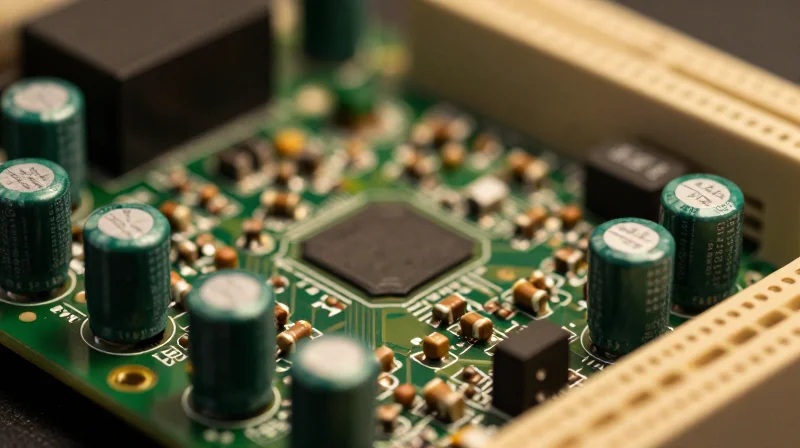
Legacy PCB architectures for respiratory devices were primarily built around discrete analog components and early-generation low-frequency switching regulators. These designs functioned effectively for decades but relied on large electrolytic capacitors, bulky heat sinks for power MOSFETs, and linear power stages that prioritized simplicity over efficiency. As respiratory technology shifts toward high-precision CPAP and ventilator applications, these outdated layouts have become a bottleneck, creating unavoidable trade-offs in size, acoustic noise, and heat dissipation.
Key Limitations of Traditional Motor Drive Circuits
- Thermal Management Challenges
Older architectures often lack the thermal efficiency required for high-speed BLDC operation, leading to concentrated heat spots on the PCB that necessitate large metal heat sinks. - Acoustic Noise and EMI
Lower-frequency pulse-width modulation (PWM) and lack of advanced signal filtering in legacy boards lead to audible motor whine and high electromagnetic interference, both of which are detrimental to patient compliance. - Form Factor Constraints
The reliance on bulky through-hole components and oversized transformers prevents the transition to the compact, wearable device designs demanded by the modern respiratory market.
Comparative Analysis: Legacy vs. Modern Design Approaches
| Feature | Legacy Architecture | Next-Gen Architecture |
|---|---|---|
| Component Profile | Discrete/Through-hole | Highly Integrated/SMD |
| Switching Frequency | Low (Audible Range) | High (>20kHz Inaudible) |
| Heat Management | Massive Heat Sinks | PCB Copper Planes/Via Arrays |
| Efficiency | 70-80% | 95%+ |
The legacy approach failed to leverage high-speed digital control loops, instead relying on static drive sequences. This resulted in significant torque ripple and energy wastage. By transitioning away from these rigid, heat-heavy architectures, engineers can utilize modern Field Oriented Control (FOC) integrated into highly compact SoCs, effectively eliminating the need for the excessive hardware overhead that defined the previous generation of respiratory hardware.
The Rise of BLDC Motors in Medical Devices
The Rise of BLDC Motors in Medical Devices
The transition from brushed DC and AC induction motors to BLDC technology represents the most significant shift in respiratory device engineering over the last decade. By eliminating physical brushes, BLDC motors eradicate the primary source of mechanical failure and particle contamination, making them essential for clinical environments requiring high reliability and stringent air-purity standards.
Critical Advantages in Clinical Performance
| Feature | Brushed Motor Performance | BLDC Motor Performance |
|---|---|---|
| Operational Lifespan | Limited by brush wear | High (no friction components) |
| Acoustic Signature | High (mechanical noise) | Low (electronic commutation) |
| Power-to-Size Ratio | Moderate | Exceptional |
| Maintenance Needs | Frequent servicing required | Maintenance-free |
Beyond mechanical longevity, BLDC motors enable superior airflow precision. Because these motors are electronically commutated, they allow for rapid adjustments in torque and speed, critical for responsive pressure delivery in ventilators and CPAP machines that must synchronize with a patient's breathing cycle in milliseconds.
Frequently Asked Questions
- Why is BLDC preferred for portable ventilators?
BLDC motors offer a superior power-to-weight ratio and higher energy efficiency, which significantly extends battery life in portable, life-critical respiratory devices. - Do BLDC motors impact patient comfort?
Yes, through reduced mechanical vibration and quieter electromagnetic noise profiles, BLDC motors significantly enhance patient compliance and sleep quality. - Is the transition to BLDC complex for PCB design?
Transitioning requires more sophisticated control logic and power electronics (such as FOC algorithms) compared to simple brush-driven circuits, but the performance gains justify the architectural complexity.
Modern PCB Design: Intelligent Power Stages
The Shift to Intelligent Power Stages
Modern PCB architecture for respiratory therapy is moving away from discrete component layouts toward highly integrated Intelligent Power Stages (IPS). By housing the power MOSFETs, gate drivers, and protection logic within a single silicon die or compact package, engineers can significantly reduce the board real estate required for motor commutation. This integration is essential for portable CPAP and ventilator designs, where every square millimeter of the PCB contributes to overall device ergonomics and weight reduction.
Performance Comparison: Discrete vs. Integrated Stages
| Feature | Discrete FET Architecture | Intelligent Power Stage (IPS) |
|---|---|---|
| Footprint | Large (High PCB area) | Small (Highly optimized) |
| Thermal Management | Complex, multiple heat paths | Advanced, thermally enhanced packages |
| Parasitic Inductance | High (longer trace routing) | Low (internal die interconnects) |
| Protection Features | External circuitry required | Built-in overcurrent/overtemp |
Advancing Power Density and Thermal Efficiency
Intelligent Power Stages not only shrink the physical footprint but also drastically improve electrical performance. Reduced parasitic inductance—inherent in integrated packages—leads to faster switching speeds and lower switching losses. This efficiency gain is critical in medical environments where acoustic noise must be minimized to ensure patient comfort during sleep therapy. Furthermore, the integrated nature of these stages allows for real-time monitoring of thermal conditions directly at the MOSFET junctions, enabling more precise current-limiting algorithms that prevent hardware failure under load.
Frequently Asked Questions
- How does IPS reduce board size?
By collapsing multiple discrete components like gate resistors, bootstrap diodes, and FETs into a single silicon-optimized footprint, you eliminate the need for bulky routing and auxiliary passive components. - Does integration improve reliability?
Yes, by moving protection features like shoot-through prevention and fault reporting directly onto the silicon, the response time to electrical transients is orders of magnitude faster than external logic. - Are there limitations to using IPS?
Integration can lead to higher heat concentration in one spot, necessitating advanced PCB thermal vias and copper-pour strategies to effectively dissipate heat from the localized power stage.
Efficiency Gains: Power Consumption and Battery Life
Maximizing Battery Autonomy through Advanced Switching
The transition from traditional, loss-heavy motor control architectures to next-gen intelligent PCB designs is the primary driver behind the extended operational lifespan of modern ventilators and oxygen concentrators. By utilizing wide-bandgap (WBG) semiconductors and advanced Field Oriented Control (FOC) algorithms, these systems minimize switching losses and conduction resistance, ensuring that a greater percentage of battery energy is converted into mechanical work rather than waste heat.
| Parameter | Legacy Architecture | Next-Gen BLDC Architecture |
|---|---|---|
| Switching Efficiency | 82% - 88% | 94% - 98% |
| Thermal Dissipation | High (Requires Heat Sinks) | Low (Passive Cooling) |
| Battery Life | Baseline | 25% - 40% Increase |
Operational Economics and Clinical Impact
Reduced power consumption translates directly into lower Total Cost of Ownership (TCO) for clinical facilities and home care providers. With more efficient motor drives, devices require smaller, lighter battery packs without sacrificing runtime. This reduction in weight and heat reduces component stress, significantly extending the Mean Time Between Failures (MTBF) and lowering maintenance frequency.
Key Efficiency FAQ
- How does FOC improve battery life?
Field Oriented Control ensures that the motor current is always orthogonal to the magnetic flux, meaning no energy is wasted on unproductive magnetic fields, drastically reducing current draw during variable load respiratory cycles. - What is the role of gate drive integration?
Integrating gate drivers directly onto the PCB reduces parasitic inductance, which eliminates high-frequency ringing and switching spikes that typically steal power and cause thermal instability. - Why does lower heat management matter for portability?
Lower thermal output allows for thinner device casings and smaller air gaps, enabling a more compact form factor while simultaneously protecting sensitive internal components from heat-induced degradation.
Enhanced Patient Experience: Noise and Torque Control

Mitigating Audible Vibration with FOC
In respiratory devices like CPAP or ventilators, the motor is often located close to the patient's head. Traditional trapezoidal commutation methods suffer from inherent torque ripple, which generates high-frequency vibrations and audible noise that can disturb sleep or induce clinical anxiety. Next-generation BLDC architectures transition to Field Oriented Control (FOC), also known as vector control. By mathematically decomposing the stator current into torque-producing and flux-producing components, FOC enables a smooth, sinusoidal current waveform that eliminates the 'cogging' and harmonic noise typical of older designs.
Performance Comparison
| Feature | Traditional Trapezoidal | Next-Gen FOC Architecture |
|---|---|---|
| Current Waveform | Blocky (Square) | Pure Sinusoidal |
| Audible Noise | High (Harmonic buzzing) | Near-silent operation |
| Torque Ripple | High (Pulsing) | Minimal (Smooth) |
| Efficiency at Low Speed | Poor | Optimized |
Advanced Torque Regulation
Beyond noise reduction, FOC provides precise dynamic control over the air delivery system. When a patient inhales or exhales, the respiratory motor must adjust its torque output instantaneously to maintain stable pressure. Next-gen controllers utilize high-speed sensing loops to adjust motor torque in real-time, preventing pressure drops and ensuring that the therapy feels natural rather than resistive.
- How does FOC reduce clinical noise?
FOC creates a smooth, sinusoidal magnetic field that eliminates the mechanical torque ripple responsible for high-frequency acoustic emissions in BLDC motors. - Why is torque stability critical for respiratory health?
Stable torque ensures consistent airway pressure during rapid breathing cycles, preventing the 'fighting' sensation that patients feel when a motor reacts too slowly or erratically. - What are the trade-offs in moving to FOC?
While FOC requires more complex PCB logic and increased processing power compared to simple block commutation, the resulting improvement in patient compliance and device lifespan significantly outweighs the design cost.
Regulatory Compliance and Safety Considerations
Meeting IEC 60601-1 Requirements in Modern Architectures
The transition to next-gen BLDC PCB architectures introduces significant complexity regarding electrical safety and electromagnetic compatibility (EMC). As gate drivers become more integrated and switching frequencies increase to improve efficiency, engineers must ensure that these advancements do not compromise Means of Patient Protection (MOPP) or Means of Operator Protection (MOOP) requirements.
Safety and Regulatory Compliance Comparison
| Parameter | Traditional Control | Next-Gen BLDC Control |
|---|---|---|
| EMC Profile | Lower switching frequency, easier compliance | High dV/dt, requires robust shielding |
| Isolation Strategy | Opto-isolator heavy | Digital/Capacitive isolation integration |
| Failure Mode | Predictable, mechanical-centric | Complex firmware/logic dependencies |
Critical Safety Considerations for Next-Gen PCBs
- How do high switching frequencies impact EMC certification?
Increased switching speeds improve efficiency but generate significant EMI. Shielding, multilayer board layouts, and high-frequency filtering are mandatory to meet CISPR 11 standards. - What is the role of firmware in IEC 62304 compliance?
Since next-gen architectures rely heavily on software-defined FOC algorithms, the firmware is now treated as a critical safety component requiring rigorous validation and risk management. - Does PCB integration impact leakage current?
Yes. While reducing the footprint is beneficial, creepage and clearance distances between high-voltage power stages and patient-connected low-voltage circuits must strictly adhere to 2x MOPP guidelines.
Ultimately, moving to advanced BLDC control does not exempt manufacturers from safety standards. By integrating safety-rated digital isolators and employing strict thermal management protocols, engineers can leverage modern PCB power density while maintaining the high reliability required for life-critical respiratory support.
Future-Proofing Your Respiratory Product Line
To remain competitive in the rapidly evolving respiratory device market, OEMs must transition away from legacy, fixed-function PCB architectures. Future-proofing necessitates the adoption of a modular platform approach that decouples hardware from control logic, enabling rapid updates to motor control algorithms without requiring complete hardware redesigns or extensive re-certification cycles.
Strategic Transition to Modular Architectures
The core of a future-proof strategy lies in adopting a software-defined motor control platform. By leveraging high-performance, programmable microcontrollers (MCUs) that support advanced Field Oriented Control (FOC) libraries, manufacturers can implement performance upgrades through firmware updates. This architectural shift creates a clear path for lifecycle management, allowing for feature expansion, improved efficiency, and adaptation to new clinical requirements without abandoning existing hardware investments.
| Feature | Legacy Architecture | Next-Gen Software-Defined Platform |
|---|---|---|
| Update Capability | Hardware-fixed; requires board spin | Firmware-upgradable via software |
| Scalability | Low; platform-specific | High; multi-product reuse |
| Certification | Full re-validation | Incremental assessment |
| Algorithm Logic | Hard-coded ASIC/Discrete | High-level C/C++ libraries |
Navigating Long-Term Development Risks
- How do we balance current performance with future capability?
Specify MCUs with 30-50% headroom in processing power and memory. This ensures that as algorithms for noise reduction or pressure-curve optimization become more complex, the hardware can accommodate them. - What is the impact of obsolescence management?
Select high-longevity components with guaranteed 10+ year availability. Using standard communication buses (e.g., CAN, UART) for modular integration ensures that subsystems remain compatible even if individual components reach end-of-life. - How can modularity affect regulatory re-certification?
By creating a clear boundary between the 'Safety-Critical' core logic and the 'Performance-Optimization' firmware, you can limit the scope of re-certification to only the modified software modules rather than the entire system.
Ultimately, the transition toward next-gen BLDC control is not merely a technical upgrade, but a business strategy. OEMs that embrace a modular, software-centric architecture will be better positioned to integrate artificial intelligence, IoT connectivity, and improved diagnostic capabilities into their product roadmaps, securing their position in the next generation of respiratory care.
The transition to next-gen BLDC motor control is the definitive path forward for respiratory tech, offering tangible benefits in form factor, patient comfort, and operational energy efficiency. As market competition intensifies, choosing the right PCB architecture is critical to your product's success. Contact our engineering team today to learn how we can help optimize your next-generation medical device designs.
