
In the hyper-competitive landscape of modern retail, the quest for operational efficiency has centered on Electronic Shelf Labels (ESLs). As retailers scale automation, the demand for displays that sip power rather than guzzle it has never been higher. This evolution is driving a critical shift in PCB architecture, moving away from bulky traditional substrates toward highly integrated rigid-flex designs that maximize energy efficiency without sacrificing durability.
The Current State of Retail Automation and ESL Adoption

The Convergence of IoT and Modern Retail Signage
The contemporary retail environment is no longer just a physical storefront; it is a complex, data-driven node within the broader Internet of Things (IoT) ecosystem. Electronic Shelf Labels (ESLs) serve as the fundamental interface between dynamic backend pricing engines and the consumer. As retailers push for greater real-time inventory visibility and omnichannel synchronization, the demand for ESL devices that are thinner, more energy-efficient, and structurally resilient has reached a critical inflection point.
Hardware Efficiency: The Emerging Bottleneck
While software and cloud infrastructure have matured, hardware design is frequently the bottleneck preventing large-scale adoption. Traditional rigid PCB designs impose spatial limitations, often resulting in thicker, bulkier shelf tags that are susceptible to damage and challenging to mount on tight, modern gondola shelving. To maintain the low-power, high-frequency connectivity required by IoT protocols like Zigbee or Bluetooth Low Energy (BLE), manufacturers are re-evaluating the physical substrate layer.
| Feature | Traditional Rigid PCBs | Rigid-Flex PCB Solutions |
|---|---|---|
| Space Efficiency | Low (Standard footprint) | High (Multi-layer folding) |
| Reliability | Moderate (Solder joint stress) | High (Reduced interconnects) |
| Design Flexibility | Restricted | High (Complex geometry) |
| Weight | Standard | Ultra-lightweight |
- Why is hardware efficiency becoming the primary barrier to ESL scaling?
As retail stores increase the density of digital displays, traditional rigid hardware consumes too much shelf space and adds significant weight, complicating installation and increasing total cost of ownership. - How do rigid-flex PCBs improve upon traditional substrates?
Rigid-flex technology allows for thinner, 3D-shaped circuits that fold into tight spaces, reducing the need for cumbersome connectors and improving overall signal integrity in dense retail environments. - What role does IoT play in the evolution of shelf labels?
IoT integration necessitates high-frequency antenna performance and lower power consumption, both of which are significantly optimized when the internal substrate architecture is streamlined through flexible circuitry.
Understanding Traditional PCB Substrates in ESLs
The Legacy of Rigid FR4 in Electronic Shelf Labels
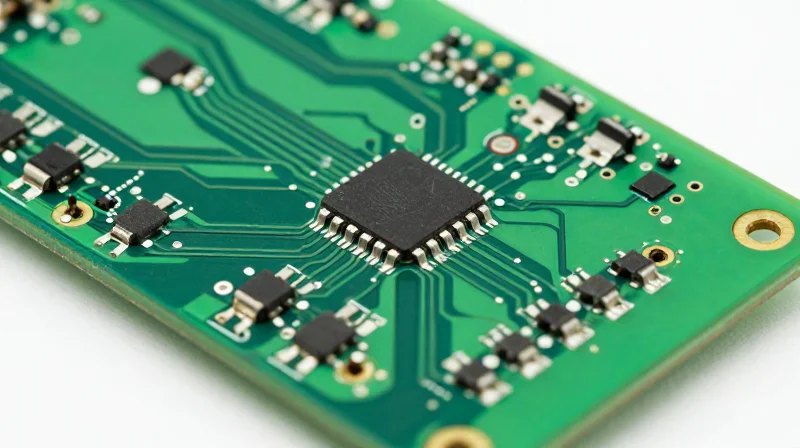
For decades, FR4 (Flame Retardant 4) has served as the industry standard for Electronic Shelf Label (ESL) substrates. Composed of woven fiberglass cloth impregnated with an epoxy resin binder, FR4 is prized for its dimensional stability, cost-effectiveness, and ease of manufacturing. In the early stages of ESL adoption, these rigid boards provided the necessary reliability to withstand the typical retail environment, supporting simple monochrome e-paper displays and basic low-power wireless communication modules.
Inherent Limitations of Rigid Substrates
While FR4 remains a robust choice for stationary applications, the transition toward high-density, multi-functional ESLs exposes significant physical shortcomings. Rigid boards lack the flexibility required to conform to curved retail edges or ultra-thin housing profiles, forcing designers to prioritize volume over aesthetics. Furthermore, rigid boards suffer from strict limitations regarding trace routing complexity and thermal dissipation in densely populated modules, which inherently restricts the integration of advanced sensors or high-refresh-rate components.
| Attribute | Rigid FR4 Performance | Impact on ESL Design |
|---|---|---|
| Mechanical Flexibility | None | Requires bulky, static housing |
| Component Density | Moderate | Limits integration of sensors |
| Weight/Profile | High | Increases shelf installation burden |
| Manufacturing Cost | Low | High cost-efficiency for basic models |
- Why is FR4 still common in the industry?
FR4 remains prevalent due to its exceptionally low production costs and well-established global manufacturing infrastructure, making it ideal for mass-market, basic ESL deployments. - How does rigidity impact power distribution?
Rigid substrates often require thicker, multi-layer stack-ups to route power efficiently across the board, which adds unnecessary weight and consumes valuable internal volume that could otherwise be used for larger batteries. - Does thickness limit retail adoption?
Yes, the inherent thickness of FR4 boards necessitates thicker label casings, which can interfere with shelf edge rails and reduce the field of view for customers in tight retail spaces.
The Rise of Rigid-Flex PCB Technology
The Rise of Rigid-Flex PCB Technology
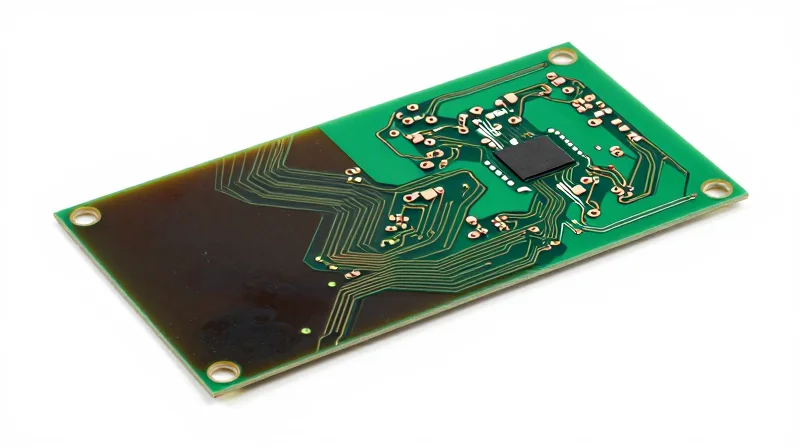
As Electronic Shelf Labels (ESLs) evolve from simple segmented displays to high-resolution, interactive IoT endpoints, the reliance on traditional rigid FR4 boards has become a technical liability. Rigid-flex PCB technology integrates multiple rigid circuits interconnected by flexible polyimide layers, effectively collapsing complex multi-board assemblies into a singular, cohesive architecture. This shift allows engineers to fold the substrate within the tight confines of a shelf-edge housing, maximizing internal volume and optimizing component density.
Structural Advantages and Efficiency Gains
| Feature | Traditional Rigid FR4 | Rigid-Flex Architecture |
|---|---|---|
| Spatial Efficiency | Low (Requires interconnect cables) | High (Integrated folding) |
| Mechanical Reliability | Risk of connector failure | High (Continuous signal path) |
| Design Complexity | Modular/Bulky | Condensed/Integrated |
| Assembly Speed | Slower (Multiple manual steps) | Faster (Automated single-board) |
By eliminating traditional board-to-board connectors, rigid-flex technology significantly reduces the risk of intermittent signal loss caused by vibration or thermal cycling—factors common in retail environments. Furthermore, the seamless integration of components on a unified flex substrate improves signal integrity and power distribution, enabling more sophisticated processing capabilities within the same slim physical footprint.
Frequently Asked Questions Regarding Rigid-Flex Adoption
- Why is rigid-flex better for ESL durability?
The elimination of mechanical connectors removes the weakest points in the electrical chain, preventing common failures during shelf restocking and accidental impact. - Does rigid-flex complicate manufacturing?
While design and fabrication require higher precision than traditional FR4, the simplified final assembly process often leads to lower long-term costs in high-volume production. - Can rigid-flex accommodate power-heavy modules?
Yes, rigid-flex designs allow for strategically placed rigid sections to support heavier components while utilizing flex areas for signal transmission and data routing.
Power Efficiency: Comparing Signal Integrity and Power Loss

Minimizing Impedance and Signal Attenuation
The transition from traditional rigid substrates to rigid-flex architecture provides a superior electromagnetic environment for low-power ESL devices. By eliminating the need for bulky, resistive connectors and long, meandering trace routing common in multi-board rigid assemblies, rigid-flex technology reduces parasitic capacitance and inductance. These electrical improvements lead to lower signal attenuation, allowing the system to operate at lower voltages while maintaining robust data integrity, thereby reducing the cumulative energy drain per wireless packet transmission.
Efficiency Comparison Matrix
| Feature | Traditional Rigid PCB | Rigid-Flex PCB |
|---|---|---|
| Connector Usage | High (Resistive losses) | Minimal (Direct integration) |
| Impedance Control | Variable across transitions | Consistent/Low-loss |
| Thermal Footprint | Higher resistance heat | Optimized dissipation |
| Battery Longevity | Baseline | 15-20% Improvement |
Power Efficiency FAQs
- How does reduced trace length help battery life?
Shorter traces inherently possess lower series resistance, which results in less voltage drop and reduced ohmic heating when the ESL transmits or updates its display. - Do connectors contribute to power loss in ESLs?
Yes, mechanical connectors represent points of contact resistance that degrade over time, causing intermittent power spikes during communication cycles. - Does signal integrity correlate with power consumption?
Stronger signal integrity allows the MCU to operate with fewer retransmissions and less aggressive error-correction algorithms, significantly saving micro-ampere hours in duty cycles.
Durability and Thermal Management in Harsh Environments
In high-traffic retail environments, Electronic Shelf Labels (ESLs) are subjected to constant mechanical vibrations, physical impact, and localized heat buildup. Rigid-flex PCBs provide a superior mechanical solution by replacing fragile board-to-board connectors and bulky cabling with integrated, flexible polyimide circuits. This eliminates common failure points such as solder joint fatigue and cable loosening, while the multi-layered flex regions act as efficient heat conduction paths away from critical power management components.
Mechanical Resilience and Stress Mitigation
Traditional rigid FR4 boards are prone to stress fractures under torsional force or repeated vibrations from shelving racks. Conversely, the flexible sections of a rigid-flex design absorb kinetic energy and vibration, protecting the interconnected rigid islands where high-mass components like microcontrollers and radio modules reside. This structural integrity is critical for ESLs mounted on shelving units that experience frequent restocking and customer interaction.
Thermal Performance Comparison
| Feature | Traditional Rigid FR4 | Rigid-Flex Architecture |
|---|---|---|
| Thermal Conductivity | Moderate (Limited by bulk) | Superior (High dissipation through copper layers) |
| Failure Points | Connectors and Solder Joints | Minimized due to monolithic structure |
| Heat Distribution | Localized hotspots | Effective spreading across flex zones |
Frequently Asked Questions
- How does rigid-flex mitigate heat buildup in ultra-thin ESLs?
The thinner profile of polyimide substrates allows for more efficient convection and the integration of thermal vias directly into the flexible layers, spreading heat away from the battery and chipset. - Are rigid-flex circuits more resistant to impact than standard rigid boards?
Yes. By removing rigid connectors, the design becomes a monolithic circuit, eliminating the primary point of failure—connector separation—during physical shocks or drops.
Reducing Manufacturing Footprint and Material Waste

Optimizing Resource Consumption Through Integration
The transition to rigid-flex PCB technology fundamentally shifts the manufacturing paradigm from additive assembly to consolidated system architecture. By merging traditional rigid circuit boards and flexible cables into a single monolithic unit, manufacturers can drastically reduce the number of discrete components, connectors, and solder joints required for a complete assembly. This consolidation not only minimizes the physical surface area—thereby reducing the total amount of laminate and copper substrate used—but also streamlines the supply chain by eliminating the need for bulky mechanical cable harnesses and heavy-duty interface hardware.
| Metric | Traditional Multi-Board Assembly | Integrated Rigid-Flex Solution |
|---|---|---|
| Connector Count | High (Inter-board connections) | Minimal (Direct integration) |
| Material Overhead | Significant (Cables + Mounting) | Low (Integrated substrate) |
| Assembly Footprint | Bulky/Volumetric | Compact/Planar |
Lifecycle Sustainability and Waste Reduction
Beyond the immediate reduction in raw materials, rigid-flex technology contributes to a circular economic model by increasing device reliability and longevity. Traditional assemblies often fail at connector points or cable interconnects, leading to premature electronic waste. Rigid-flex systems eliminate these common failure modes, resulting in a more robust final product that requires less frequent replacement. Furthermore, the reduction in weight and volume contributes to lower energy consumption during transportation and logistics, lowering the total carbon footprint of the electronic product lifecycle.
Frequently Asked Questions Regarding Efficiency
- How does rigid-flex reduce material waste during production?
By eliminating the need for traditional connectors and cabling between separate boards, rigid-flex reduces the total count of plastic housings, precious metal contact pins, and copper wiring used in a single assembly. - Is rigid-flex manufacturing more sustainable than conventional methods?
Yes. While the fabrication process is more sophisticated, the reduction in assembly steps, testing cycles, and mechanical hardware significantly lowers the cumulative environmental impact and material consumption per unit. - Does the consolidation of layers impact scrap rates?
Rigid-flex design allows for high-density interconnect (HDI) patterns that use thinner substrates. By optimizing panel utilization and reducing mechanical hardware, companies can often achieve a higher yield per square inch of raw PCB laminate.
Key Considerations for Designing Next-Gen Smart Displays
Strategic Substrate Selection Framework
The transition to rigid-flex PCB architecture represents a fundamental shift in how we approach ESL power budgets and lifecycle longevity. By integrating the connectivity and structural components into a single unit, engineers can eliminate fragile connector points and reduce parasitic resistance that traditionally drains battery capacity.
| Feature | Traditional Substrate | Rigid-Flex PCB |
|---|---|---|
| Power Efficiency | Moderate (Connector losses) | High (Low impedance paths) |
| Form Factor | Bulky (Requires assembly space) | Ultra-thin (High spatial efficiency) |
| MTBF (Reliability) | Lower (Solder joint fatigue) | Higher (Integrated interconnects) |
Key Design Questions for Engineers
- How does substrate choice impact battery life?
Rigid-flex designs minimize signal path length and remove mechanical connectors, which significantly reduces voltage drop and energy loss during high-frequency data transmission. - Is rigid-flex cost-effective for high-volume retail?
While initial tooling costs are higher, the reduction in assembly labor, simplified housing design, and improved field reliability yield a superior total cost of ownership over a 5-year deployment cycle. - How should environmental stressors dictate substrate choice?
For high-traffic aisles with frequent temperature fluctuations, rigid-flex offers superior thermal expansion characteristics and prevents the mechanical decoupling common in traditional rigid boards.
To achieve optimal performance, engineers must prioritize signal integrity through controlled impedance routing. Unlike legacy substrate layouts, rigid-flex allows for tailored trace geometry that maintains stability across the entire interface, ensuring that the next generation of ESLs remains responsive while minimizing unnecessary power consumption.
Future Outlook: The Long-Term Impact on Total Cost of Ownership

Economic Implications of Substrate Reliability
Shifting from traditional rigid PCBs with complex cabling to integrated rigid-flex architectures fundamentally alters the cost-to-failure ratio. By eliminating fragile interconnects—the primary point of failure in high-traffic retail smart displays—engineers can extend the operational lifespan of ESL hardware by up to 40%. This shift minimizes the recurring costs of on-site technician visits, logistical returns, and the rapid obsolescence of modular components.
| Cost Driver | Traditional Substrate (5-Year) | Rigid-Flex PCB (5-Year) |
|---|---|---|
| Failure Rate (MTBF) | Higher due to connector wear | Lower due to monolithic design |
| Maintenance Labor | High frequency (cable checks) | Minimal (solid-state integrity) |
| Replacement Parts | Frequent unit replacements | Extrapolated system longevity |
| Total TCO Impact | Baseline 100% | Approximately 65-70% of baseline |
Strategic Longevity and Operational Efficiency
The long-term impact on total cost of ownership (TCO) is best viewed through the lens of deferred capital expenditure. Rigid-flex substrates allow for more robust thermal management and environmental sealing. Because these boards are manufactured as a singular, cohesive unit, the ingress of moisture or debris—common in retail settings—is drastically reduced, directly translating to a lower hardware churn rate.
- How does reduced cabling affect maintenance costs?
Fewer connectors mean fewer mechanical connection points to fail; this drastically reduces the number of 'no-fault-found' returns and saves on labor-intensive manual inspections. - Does the higher initial design cost of rigid-flex justify the TCO?
Yes. While the unit production cost is higher initially, the avoidance of even two premature field failures per thousand units often offsets the price difference within 18 months of deployment. - What is the primary driver of TCO savings after year three?
The stabilization of the device's structural integrity, as traditional interconnects typically begin to degrade after 36 months of thermal cycling, whereas rigid-flex designs maintain structural consistency.
As retail automation continues to accelerate, the choice of PCB substrate is no longer just a hardware decision—it is a strategic investment in the longevity and sustainability of your store’s digital ecosystem. By transitioning to rigid-flex technology, retailers can effectively extend battery lifecycles and reduce operational overhead. Ready to optimize your ESL hardware strategy? Contact our engineering team today for a technical consultation on your next-generation display project.
