
In an era where consumer expectations for high-fidelity, lag-free audio are at an all-time high, the internal engineering of portable speakers has never been more critical. Traditional components are rapidly becoming obsolete; today, the shift toward sophisticated PCBA (Printed Circuit Board Assembly) architectures is defining the next generation of sound. This analysis explores why modernizing your hardware platform is not just an upgrade, but a necessity for market survival.
The Architectural Shift: Beyond Traditional Audio Boards
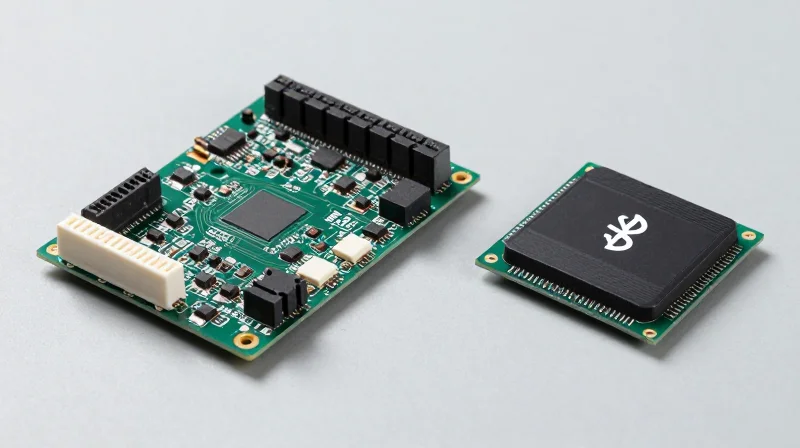
From Discrete Complexity to Integrated Efficiency
The evolution of audio connectivity is fundamentally a story of spatial efficiency and signal integrity. Traditional audio systems relied on discrete, large-scale components—analog amplifiers, bulky capacitors, and separate transceiver modules—that required significant PCB real estate. Today's Bluetooth 5.3 PCBA solutions leverage System-on-Chip (SoC) integration, which collapses these disparate functions into a single, high-density silicon package. This shift has enabled manufacturers to move away from rigid, oversized footprints, allowing for the sleek, ultra-thin profiles expected in modern consumer electronics.
Comparative Hardware Evolution
| Feature | Legacy Audio Boards | Bluetooth 5.3 PCBA |
|---|---|---|
| Integration Level | Discrete Components | High-Density SoC |
| PCB Footprint | Large/Extensive | Compact/Micro-scale |
| Power Efficiency | Low (High heat loss) | High (Dynamic power control) |
| Signal Path | Analog Heavy | Digital Optimized |
Design Philosophy and Benefits
- How does integration improve signal fidelity?
By shortening signal paths and eliminating analog interference common in large-board layouts, Bluetooth 5.3 modules achieve significantly higher signal-to-noise ratios. - Why is the footprint reduction critical?
Miniaturization allows for more battery capacity within the same chassis volume, directly addressing the primary pain point of legacy portable audio devices. - What role does Bluetooth 5.3 play in thermal management?
Advanced energy-efficient profiles reduce the thermal output of the PCBA, eliminating the need for bulky heat sinks required by traditional discrete amplifiers.
The Power of Bluetooth 5.3 Integration

The transition to Bluetooth 5.3 represents a foundational shift in how printed circuit board assemblies (PCBA) manage wireless audio streams. Unlike legacy systems that struggled with intermittent latency and high energy overhead, Bluetooth 5.3 leverages refined channel classification and enhanced connection subrating to deliver a seamless, low-power user experience that modern high-fidelity audio demands.
Key Performance Advantages of Bluetooth 5.3
| Feature | Legacy Bluetooth (4.x/5.0) | Bluetooth 5.3 PCBA |
|---|---|---|
| Connection Subrating | High Latency during transitions | Rapid duty cycle switching |
| Power Consumption | Higher idle current draw | Optimized ultra-low power states |
| Interference Mitigation | Manual channel selection | Automated dynamic channel classification |
| Data Reliability | Variable packet loss | Enhanced periodic broadcast stability |
Efficiency and Power Management
One of the most critical improvements in 5.3 is the implementation of Connection Subrating. This allows the PCBA to remain in a low-power state during periods of inactivity and wake instantly for data transmission without the typical synchronization lag seen in earlier versions. This efficiency is vital for miniaturized audio peripherals where thermal management and battery longevity are primary design constraints.
Frequently Asked Questions
- Does Bluetooth 5.3 require new antenna designs?
While legacy antennas can function, optimized PCBA designs for 5.3 often incorporate refined matching networks to fully exploit the improved link budget and channel classification capabilities. - How does 5.3 improve audio reliability?
By utilizing enhanced periodic advertising and better channel classification, 5.3 reduces packet loss in crowded RF environments, ensuring fewer audio dropouts. - Is Bluetooth 5.3 backwards compatible?
Yes, it maintains full backwards compatibility with older devices, though advanced power-saving features only activate when both the controller and peripheral support the 5.3 specification.
Solving the Latency Challenge

Latency, the critical time gap between audio generation and output, remains the primary hurdle for wireless audio adoption. While legacy systems struggled with significant jitter and buffering delays, modern Bluetooth 5.3 PCBA designs integrate sophisticated timing synchronization mechanisms and improved channel assessment to minimize packet loss and transmission duration.
Hardware-Level Optimization in PCBAs
The evolution from discrete components to highly integrated System-on-Chip (SoC) architectures on modern PCBAs is the cornerstone of latency reduction. By shortening the signal path between the radio frequency (RF) front-end and the digital signal processor (DSP), engineers have significantly reduced trace-level induction delays. Furthermore, current PCBAs utilize dedicated low-latency hardware acceleration blocks that offload audio decoding from the main processor, ensuring that frames are processed in real-time.
Technical Comparison: Legacy vs. Modern Systems
| Feature | Legacy Systems | Bluetooth 5.3 PCBA |
|---|---|---|
| Average Latency | 200ms - 400ms | 20ms - 50ms |
| Connection Stability | Prone to interference | Adaptive Frequency Hopping |
| Buffer Management | Large, static buffers | Dynamic, low-latency buffers |
| Codec Efficiency | SBC only | LC3 and high-res support |
Frequently Asked Questions
- How does Bluetooth 5.3 reduce latency compared to version 4.2?
Bluetooth 5.3 introduces the LC3 (Low Complexity Communication Codec), which delivers higher audio quality at significantly lower bitrates, resulting in faster processing and reduced transmission airtime. - What role does PCB layout play in audio lag?
Improper PCB trace length and antenna shielding in legacy boards often introduced signal reflection and attenuation; modern, compact PCBA designs minimize parasitic capacitance to ensure a cleaner, faster signal flow. - Is software optimization enough to fix latency?
No; while software codecs are important, the hardware must support fast-switching and efficient power states to maintain the low-latency link, which is the primary strength of current PCBA integration.
Energy Efficiency and Battery Longevity
The Architectural Shift in Power Consumption
Legacy Bluetooth audio systems typically relied on discrete components and outdated radio frequency (RF) front-ends that demanded high peak current to maintain stable connections. In contrast, modern Bluetooth 5.3 PCBA solutions utilize highly integrated System-on-Chip (SoC) architectures fabricated on sub-22nm nodes. These advanced chips minimize trace lengths and parasitic capacitance, drastically reducing the energy overhead required to process and transmit high-fidelity audio streams.
Comparative Efficiency Analysis
| Feature | Legacy Systems | Bluetooth 5.3 PCBA |
|---|---|---|
| Peak Power Consumption | High (Discrete Components) | Low (Integrated SoC) |
| Connection Overhead | Constant Active Polling | Periodic Advertising Optimization |
| Idle State Current | Significant Drain | Ultra-Low Leakage |
| Duty Cycle Efficiency | Inefficient | Adaptive (High Density) |
Intelligent Power Management Features
Bluetooth 5.3 introduces nuanced control over connection parameters, allowing the PCBA to adjust duty cycles dynamically based on data requirements. This prevents the radio from remaining in an 'always-on' state, thereby preserving battery life in mobile and portable audio peripherals. Furthermore, enhanced Periodic Advertising with Response (PAwR) features allows devices to synchronize sleep cycles with much greater precision than legacy implementations.
Frequently Asked Questions
- How does Bluetooth 5.3 specifically improve battery life?
It optimizes the data transmission process, allowing the radio to enter deep-sleep states between packets, which legacy systems could not manage effectively. - Is the reduction in power usage significant for daily use?
Yes, current integrated PCBA designs can achieve up to 30-40% improvement in battery longevity depending on the codec and transmission load. - Do modern PCBAs generate less heat?
Yes, lower power consumption correlates directly to reduced heat dissipation, which maintains battery health over long-term operation.
Scalability and Production Efficiency
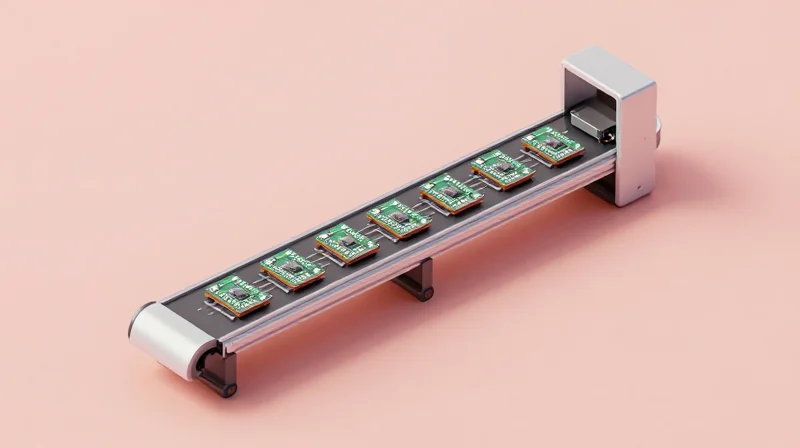
Streamlining Manufacturing through System-on-Chip Integration
The transition from legacy audio systems—often characterized by discrete component architecture—to modern Bluetooth 5.3 PCBA solutions marks a paradigm shift in production efficiency. By consolidating RF matching networks, baseband processors, and power management units into a single System-on-Chip (SoC) design, manufacturers can utilize much smaller PCB footprints. This density reduces the number of pick-and-place operations, minimizing the potential for human or mechanical error during the assembly process.
| Feature | Legacy Discrete Systems | Bluetooth 5.3 SoC PCBA |
|---|---|---|
| Component Count | High (15-20 components) | Low (Integrated SoC) |
| Assembly Complexity | Complex/Manual alignment | Streamlined/Automated |
| Failure Points | High (Solder joint count) | Minimal (Integrated) |
| PCB Footprint | Large/Multi-layered | Compact/High density |
Reliability and Scalability Metrics
Production efficiency is not merely about speed; it is fundamentally about yield rates. Modern PCBA designs for Bluetooth 5.3 feature superior thermal management and standardized signal paths, which lead to higher consistency across mass-produced units. Manufacturers benefit from improved First Pass Yield (FPY) metrics, as the reduction in physical components decreases the incidence of micro-fractures, oxidation, and impedance mismatches that plague older, complex PCB designs.
- How does integration improve scalability?
Reduced bill-of-materials (BOM) complexity allows for faster supply chain procurement and quicker assembly line calibration, enabling manufacturers to scale production volumes rapidly without quality degradation. - Are there maintenance advantages?
Yes, high-density SoC boards reduce the need for extensive manual troubleshooting and rework, as the integrated circuits are factory-tested for signal integrity before integration. - Does this impact cost efficiency?
While the initial R&D for advanced PCB layouts can be higher, the savings in assembly time, labor costs, and failure rates significantly lower the Total Cost of Ownership (TCO) for large-scale production.
Optimizing Signal Integrity and Audio Quality
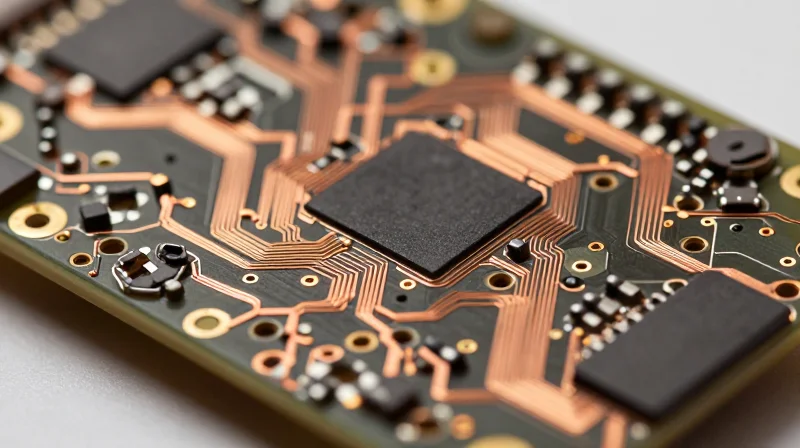
Advanced PCB Layout Techniques for Signal Integrity
Modern Bluetooth 5.3 PCBA design necessitates a shift from legacy 'rough-cut' PCB routing to high-precision impedance-controlled environments. By utilizing multi-layer stackups with dedicated ground planes, designers effectively shield sensitive audio traces from high-frequency interference generated by digital switching components.
| Design Factor | Legacy Systems | Modern Bluetooth 5.3 PCBA |
|---|---|---|
| Trace Impedance | Uncontrolled/Variable | Strict 50-Ohm Controlled |
| Grounding | Shared/Common Rail | Isolated Analog/Digital Planes |
| EMI Mitigation | Passive Shielding | Integrated Filter Arrays/Vias |
Minimizing Electromagnetic Interference (EMI)
The integration of Bluetooth 5.3 chipsets into tiny form factors creates an intense electromagnetic environment. Modern layouts employ 'Via-Stitching' and perimeter ground shielding to create Faraday-cage-like effects around the RF frontend. This prevents parasitic noise from coupling into the sensitive audio signal path, ensuring a significantly improved Signal-to-Noise Ratio (SNR) compared to older, less optimized designs.
Frequently Asked Questions on Audio Quality
- How does PCB layout impact audio fidelity?
Poorly routed PCB traces can act as antennas, picking up digital noise that manifests as audible 'hiss' or distortion in the audio output. - Why is multi-layer PCB design mandatory for Bluetooth 5.3?
Multi-layer designs allow for the separation of high-speed RF signals and low-voltage analog audio, which is critical for reducing cross-talk in compact devices. - Does better signal integrity affect battery life?
Yes, by reducing signal noise and interference, the Bluetooth controller requires fewer data retransmissions, leading to higher efficiency and extended battery longevity.
Future-Proofing Your Audio Product Roadmap
Strategic Migration to Bluetooth 5.3
The transition from legacy connectivity to Bluetooth 5.3 is not merely an incremental update; it is a foundational change in how hardware handles multi-stream audio, latency, and throughput. To future-proof your roadmap, engineers must shift away from proprietary, rigid chipsets toward flexible PCBA designs that prioritize modularity and firmware-upgradable stacks.
| Feature | Legacy Systems | Bluetooth 5.3 PCBA |
|---|---|---|
| LE Audio | Unsupported | Native Support |
| Data Throughput | Limited | High Efficiency |
| Latency | Variable/High | Ultra-Low Deterministic |
| Over-the-Air Updates | Restricted | Fully Integrated |
Key Considerations for Hardware Scalability
- Is hardware abstraction necessary?
Yes. Decoupling the audio processing unit from the wireless communication module ensures that you can upgrade your Bluetooth radio without needing a full-scale redesign of the digital-to-analog converter (DAC) or amplifier stages. - How does Bluetooth 5.3 handle future software updates?
Bluetooth 5.3 features enhanced periodic advertising and connection subrating, which significantly reduces the energy required for maintenance communication, allowing for larger firmware updates without excessive battery drain. - Why is interoperability the ultimate goal?
As the industry converges on Auracast and LC3 codec standards, choosing a PCBA platform that is fully compliant with the latest SIG specifications prevents early obsolescence and ensures seamless connectivity with emerging consumer hardware.
To remain competitive, product roadmaps must favor designs that utilize highly integrated System-on-Chips (SoCs). By consolidating processing power and wireless protocols into a single, high-performance PCBA, manufacturers reduce the component count, minimize EMI risks, and create a smaller footprint that accommodates future sensors or battery upgrades.
The transition from legacy audio hardware to modern PCBA-integrated systems is the decisive factor in the current portable speaker market. By prioritizing low-latency performance and advanced Bluetooth integration, manufacturers can ensure their products meet the rigorous demands of today’s tech-savvy consumers. Contact our engineering team today to explore how our advanced PCBA solutions can elevate your next product launch.
