
In the high-stakes world of medical device manufacturing, the initial cost of a PCBA is often a deceptive metric. While low-bid components may seem budget-friendly, the hidden costs of field failures and recalls can devastate a balance sheet. This article explores how shifting focus toward high-quality PCBA architecture and collaborative design-for-manufacturing (DFM) can optimize your Total Cost of Ownership (TCO) and ensure clinical-grade reliability.
The Hidden Costs of Low-Cost PCBA Procurement

While minimizing initial bill-of-materials (BOM) costs is a common objective for medical device OEMs, the hidden expenditures associated with low-cost procurement strategies frequently outweigh initial savings. In the highly regulated medical sector, the cost of quality is non-negotiable. Opting for non-validated components or high-risk assembly partners can trigger a cascade of downstream financial burdens, including excessive field failures, catastrophic recalls, and potential litigation, all of which erode brand equity and profitability.
The Lifecycle Cost Impact of Low-Cost Procurement
| Category | Upfront Cost Strategy | Total Lifecycle Cost Impact |
|---|---|---|
| Quality Assurance | Minimized testing/inspection | High rework rates and field failure costs |
| Supply Chain | Low-tier, unvetted vendors | Supply instability and inventory stockouts |
| Compliance | Substandard materials | Regulatory penalties and market withdrawal |
| Performance | Lower-grade tolerances | Increased technical support and warranty claims |
Common Pitfalls in Procurement Strategy
- How does component grade impact long-term reliability?
Lower-grade components often fail prematurely in clinical environments due to thermal stress or moisture sensitivity, leading to frequent field service calls that exceed the initial savings of the cheaper part. - Why is supplier vetting critical to cost management?
Vetting ensures that manufacturing processes meet ISO 13485 standards. Neglecting this leads to inconsistency in PCBA output, forcing manufacturers to bear the cost of expensive 100% inspection regimes. - What are the hidden regulatory costs of cheap sourcing?
Material traceability is essential in medical device manufacturing. Low-cost vendors often lack robust documentation systems, creating significant compliance risks and potential re-certification costs if materials are found to be non-compliant.
Strategic optimization requires moving beyond unit price analysis. By adopting a Total Cost of Ownership (TCO) approach, OEMs can weigh the risks of failure against the benefits of premium design and reliable supply chains, ultimately securing a more resilient manufacturing ecosystem.
Bridging the Gap Between Design and Manufacturability

The transition from prototype to high-volume production often reveals hidden complexities that trigger significant cost overruns. Bridging the gap between design intent and physical reality requires a proactive shift toward Design for Manufacturability (DFM). By addressing manufacturing constraints at the schematic and board layout stage, engineers can prevent costly redesigns, minimize assembly errors, and ensure consistent quality in the medical sector.
The Economic Impact of Early DFM Integration
| Development Phase | Cost of Change | Impact on Production |
|---|---|---|
| Conceptual Design | Low | High flexibility, minimal impact |
| PCBA Prototyping | Moderate | Minor delays in validation |
| Full-Scale Production | Very High | Major downtime, scrap, and recall risks |
Key Pillars of Manufacturability in PCBA
Effective DFM is not merely about board density; it is about standardized processes that simplify fabrication and assembly.
- Component Selection Strategy
Avoid end-of-life (EOL) components and prioritize parts with multiple sourcing channels to mitigate supply chain volatility. - Standardized Design Rules
Adhere to strict IPC standards for trace width, clearance, and via pad sizes to optimize fabrication yields and minimize micro-cracking risks. - Automated Testing Considerations
Integrate test points early to facilitate In-Circuit Testing (ICT) and Flying Probe testing, reducing manual debugging time during production.
Common DFM Pitfalls in Medical Device Development
- Why do bespoke components drive up costs?
Custom or non-standard parts require specialized tooling and longer lead times, increasing both unit cost and the likelihood of supply chain disruption. - How does PCB panelization affect efficiency?
Improper panelization leads to inefficient material utilization during fabrication and assembly, resulting in increased waste and higher per-unit expenses.
Case Study: Achieving a 20 Percent Yield Increase
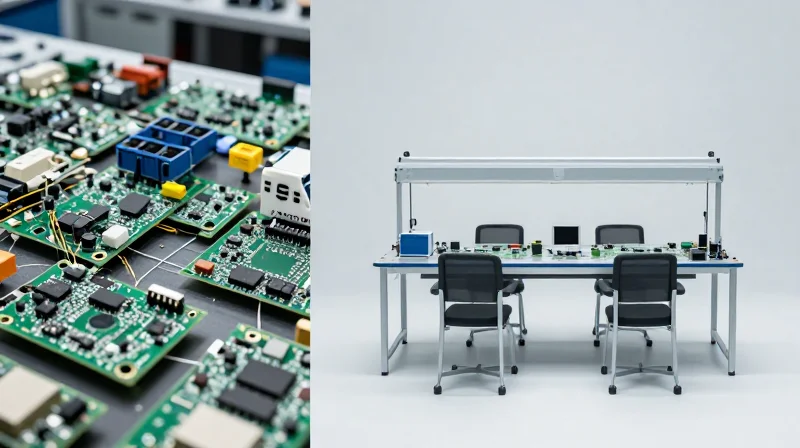
Case Study: Achieving a 20 Percent Yield Increase
For a mid-sized manufacturer of diagnostic imaging equipment, inconsistent PCBA quality was causing a persistent 15% scrap rate during final assembly. By pivoting from a low-cost procurement model to a design-for-manufacturing (DFM) centered approach, the firm eliminated critical bottlenecks and achieved a 20% total yield improvement within two fiscal quarters.
The Transformation Strategy
The intervention focused on two primary levers: component footprint standardization and localized PCBA testing protocols. Initial assessments revealed that 'vendor-agnostic' procurement had introduced subtle variations in surface-mount device (SMD) tolerances, which led to excessive solder bridges during high-speed assembly. By enforcing stricter design rules and consolidating the supply base, the manufacturer achieved immediate process stability.
| Metric | Pre-Optimization | Post-Optimization |
|---|---|---|
| First Pass Yield | 78% | 98% |
| Rework Hours per Unit | 4.2 hrs | 0.8 hrs |
| Component Variability | High | Low |
Strategic Outcomes and Lessons Learned
- Why did footprint standardization impact yields?
Standardizing footprints reduced the variables in stencil printing and reflow profiles, minimizing tombstoning and bridging issues that previously accounted for the majority of board failures. - How did supply chain efficiency contribute to the yield increase?
By limiting the supplier base to those capable of high-precision tolerance testing, the firm ensured a consistent input quality, allowing automated optical inspection (AOI) systems to calibrate more accurately. - Was there an impact on unit cost?
While per-component costs rose by 4% due to premium vendor selection, the total cost of ownership dropped by 18% as rework labor and scrap costs were nearly eliminated.
Navigating Strict Medical-Grade Performance Requirements
Balancing Regulatory Compliance and Cost-Efficiency
Medical device manufacturers face a common misconception: that high-reliability requirements necessitate exorbitant manufacturing costs. In reality, strict adherence to standards such as ISO 13485 and IEC 60601-1 can be integrated into a lean manufacturing strategy by focusing on process validation and material selection early in the design phase. By designing for repeatability rather than just basic functionality, engineers can reduce scrap rates and minimize the need for labor-intensive manual inspections.
Cost Impact of Medical-Grade Standards
| Compliance Factor | Cost Driver | Optimization Strategy |
|---|---|---|
| Component Traceability | Logistics overhead | Automated ERP integration |
| Environmental Stress Screening | Testing cycle time | Statistical process control |
| Documentation Rigor | Engineering labor hours | Digitized DHR systems |
Key Considerations for Regulatory-Aligned Manufacturing
- How does early supplier engagement impact regulatory timelines?
Early engagement ensures that components meet medical-grade specifications (e.g., biocompatibility or specific thermal ratings) before procurement, preventing costly redesigns post-validation. - Can automated assembly compromise medical-grade precision?
Conversely, automation often increases precision. By utilizing vision systems and precision placement robots, manufacturers can maintain tighter tolerances than manual assembly, while lowering the risk of human error during complex PCBA production. - What role does risk management play in cost reduction?
Implementing FMEA (Failure Mode and Effects Analysis) during the PCBA design phase identifies high-risk failure points, allowing for design hardening that eliminates the need for expensive secondary processes or field recalls.
The Role of Component Traceability and Supply Chain Integrity

The Economic Imperative of Traceability
In medical device manufacturing, traceability is not merely a regulatory burden but a strategic cost-control mechanism. By maintaining a granular record of every PCBA component—from source silicon to the final board assembly—manufacturers can isolate quality failures to specific batches. This precision prevents the expensive, industry-wide recalls that occur when a lack of documentation forces a company to pull an entire product line due to a single suspect component.
Supply Chain Integrity vs. Cost
| Strategy | Cost Impact | Risk Mitigation |
|---|---|---|
| Direct Sourcing (Franchised) | Higher initial unit cost | High (Authenticated provenance) |
| Brokered/Spot Market | Lower initial unit cost | Extreme (Counterfeit risk) |
| Certified Component Traceability | Moderate (Audit overhead) | Very High (Recall protection) |
Mitigating Risk Through Verified Sourcing
Supply chain integrity relies on the elimination of non-authorized distribution channels. Implementing strict Approved Vendor Lists (AVLs) and validating the certification of every supplier are essential steps. When manufacturers prioritize integrity, they reduce the 'hidden' costs associated with counterfeit components, such as premature device failure in the field and the subsequent liability costs that can bankrupt a product development lifecycle.
Frequently Asked Questions
- How does traceability reduce long-term operational costs?
It minimizes the scope of impact during quality investigations, avoiding massive, unnecessary recalls and reducing liability exposure. - Why is the spot market dangerous for medical devices?
The spot market often lacks the strict chain of custody required for medical-grade hardware, significantly increasing the probability of counterfeit or salvaged components. - What is the role of blockchain in component tracking?
Blockchain provides an immutable, transparent ledger for component provenance, ensuring that audit trails are beyond reproach during regulatory inspections.
Advanced Testing Strategies for Long-Term Reliability

Shifting Reliability Left: Predictive Validation
Advanced medical device manufacturers are increasingly moving away from reactive end-of-line testing toward predictive, simulation-driven validation. By integrating Highly Accelerated Life Testing (HALT) and Highly Accelerated Stress Screening (HASS) early in the development lifecycle, engineers can identify latent design weaknesses that traditional functional testing might miss. This proactive approach ensures that the PCBA can withstand the thermal, mechanical, and electrical stresses inherent in the clinical environment, ultimately reducing warranty claims and the risk of costly post-market recalls.
Testing Methodology Comparison
| Methodology | Primary Goal | Cost Impact | Development Stage |
|---|---|---|---|
| HALT | Identify design limits | High upfront, low long-term | Prototype/Design |
| HASS | Production defect detection | Balanced | Volume Manufacturing |
| ICT (In-Circuit) | Assembly verification | Low cost | Production |
Strategic Implementation FAQ
- How does early reliability testing lower overall manufacturing costs?
By catching design flaws during prototyping, you avoid the exponential cost of redesigning and retrofitting finished medical assemblies once they are already in the supply chain. - Is HASS testing necessary for every medical device PCBA?
It is essential for high-risk or life-critical hardware where component aging or environmental stress could lead to life-threatening failure, justifying the investment through risk mitigation. - How can test coverage be optimized for cost-efficiency?
Use Design for Test (DFT) principles to ensure 100% test coverage of critical safety nodes while minimizing the number of expensive probe points, balancing diagnostic rigor with manufacturing speed.
Calculating Total Cost of Ownership (TCO) for Medical Electronics
Moving Beyond Unit Price: The TCO Framework
Calculating the Total Cost of Ownership (TCO) for medical PCBA is not merely an accounting exercise; it is a strategic necessity to avoid the 'hidden' costs that erode profit margins over a product’s lifecycle. Leadership must shift from viewing unit price as the primary metric toward an integrated model that accounts for engineering effort, manufacturing yields, field failure rates, and regulatory overhead.
| Cost Category | Direct Procurement Focus | Strategic TCO Focus |
|---|---|---|
| Component Selection | Lowest BOM cost | Lifecycle availability and longevity |
| Quality Assurance | Standard AQL testing | Advanced ICT and AOI for high reliability |
| Supply Chain | Just-in-time (JIT) | Buffer stock and verified traceability |
| Field Performance | Minimal warranty provision | Cost of clinical downtime and remediation |
Quantifying Quality and Risk
To effectively calculate TCO, manufacturers must assign a quantitative value to risk. A lower-cost PCBA that suffers from a 2% failure rate in the field can be magnitudes more expensive than a premium-manufactured board due to the costs of FDA reporting, product recalls, clinical downtime, and damage to brand equity. Engineering efficiency, through Design for Manufacturing (DFM) and Design for Assembly (DFA), should be factored as a reduction in long-term assembly costs.
Frequently Asked Questions
- How do I account for regulatory risk in my TCO model?
Include the projected costs of re-validation, potential supply chain audits, and documentation compliance efforts required when sub-standard components force a design pivot. - Why is component longevity critical to TCO?
Medical devices often have 7-10 year lifecycles; using components nearing End-of-Life (EOL) guarantees expensive redesign cycles, which significantly increase the total cost of ownership. - Does high-end automated testing pay off?
Yes. Advanced testing prevents defective units from reaching clinical environments, effectively lowering the cost of warranty claims and potential liability settlements.
Optimizing your PCBA strategy is not just about choosing the right components—it is about integrating quality into every stage of the manufacturing cycle. By reducing field failures and maximizing yields, you protect your brand reputation and bottom line. Ready to elevate your manufacturing processes? Contact our engineering team today to discuss your next medical device project.
