
In today’s volatile global electronics market, the complexity of supply chain management can be the difference between a product's success and its obsolescence. As traditional, fragmented assembly strategies fall prey to lead-time delays and hidden overheads, engineers and procurement leaders are pivoting toward integrated turnkey solutions to secure their margins and accelerate development cycles.
Understanding the Turnkey Assembly Paradigm
Defining the Turnkey Assembly Model
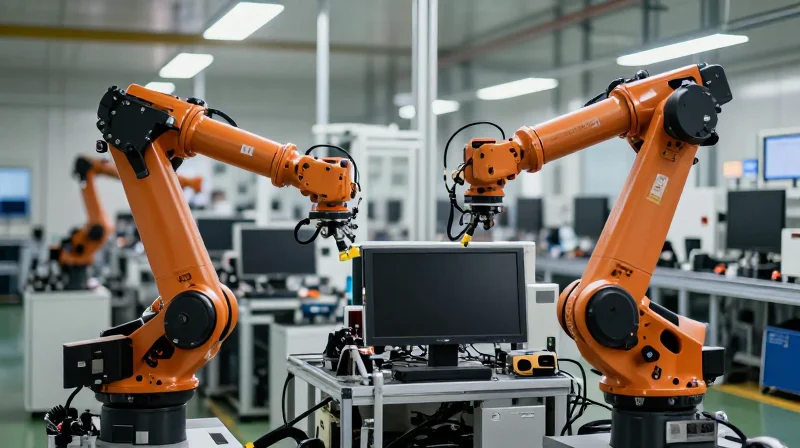
Turnkey PCB assembly represents a comprehensive manufacturing strategy where a single EMS (Electronic Manufacturing Services) provider assumes full responsibility for the entire production lifecycle. Unlike traditional methods, a turnkey partner manages the procurement of all raw printed circuit boards, electronic components, and hardware, alongside the actual assembly, testing, and final quality assurance. By centralizing the supply chain under one roof, companies transform the manufacturing process from a series of disparate, high-risk logistics challenges into a streamlined, unified execution model.
Comparative Analysis: Consigned vs. Turnkey Assembly
| Feature | Consigned Model | Turnkey Model |
|---|---|---|
| Component Procurement | Managed by Customer | Managed by EMS Provider |
| Inventory Risk | High (Customer Liability) | Low (Integrated into EMS) |
| Supply Chain Visibility | Complex and Fragmented | Simplified and Centralized |
| Time-to-Market | Delayed by Logistical Silos | Accelerated via Parallel Processing |
Key Differences and Strategic Impact
The fundamental shift lies in the mitigation of logistical friction. In a consigned model, the customer is responsible for sourcing every individual part, managing multi-vendor relationships, and coordinating shipments. If a single capacitor is backordered, the entire assembly line stalls. Turnkey providers, however, leverage established procurement networks and bulk purchasing power to resolve supply chain volatility before it impacts the assembly schedule.
- How does turnkey assembly affect hidden costs?
It eliminates the overhead associated with internal procurement teams, shipping logistics from multiple vendors, and the cost of capital tied up in excess component inventory. - Does the turnkey model impact quality control?
Yes, by allowing the EMS provider to manage the entire process, quality issues are identified earlier through integrated testing procedures, reducing the cost of rework and scrap. - Why is turnkey more effective for time-to-market?
It enables concurrent engineering and procurement, meaning the manufacturing process can begin immediately upon design finalization rather than waiting for decentralized component arrivals.
Reducing Hidden Logistics Overhead

Eliminating Fragmented Supply Chain Costs
Hidden logistics overhead is the silent profit killer in electronics manufacturing. When companies manage a consigned model, they incur significant expenses in multi-leg freight, inbound inspection, and inventory warehousing for various discrete components. Turnkey PCB assembly consolidates these operations, shifting the burden of procurement and logistics to a single partner, which significantly flattens operational complexity and reduces redundant overhead.
| Cost Driver | Consigned Model | Turnkey Model |
|---|---|---|
| Inbound Freight | Multiple shipments per vendor | Consolidated single arrival |
| Inventory Handling | In-house warehouse storage | Just-in-time delivery by vendor |
| Inspection Overhead | Testing components from N vendors | Vendor-managed quality assurance |
| Administrative Time | High volume of PO processing | Single PO, single transaction |
The Efficiency Gains of Centralized Management
Beyond basic shipping costs, centralized management addresses the indirect expenses associated with the 'hidden' life cycle of a part. By utilizing a turnkey provider, businesses avoid the 'carrying costs' of excess safety stock—a common requirement in consigned models to buffer against supply chain variability. The provider’s sophisticated ERP systems allow for lean inventory management, ensuring that components are only purchased and delivered exactly when they are required for production.
- How does turnkey reduce freight expenses?
Consolidating component sourcing into a single turnkey shipment eliminates the need for managing dozens of individual inbound logistics tracking events and separate handling fees from multiple suppliers. - What happens to the cost of component shrinkage?
In a turnkey model, the responsibility for component loss, miscount, or damage during pre-assembly handling shifts to the provider, effectively removing these risks from your balance sheet. - Can administrative overhead really be reduced?
Absolutely. By replacing fifty purchase orders with one, your procurement team gains significant time to focus on strategic sourcing or product development rather than tactical logistics tracking.
Mitigating Component Sourcing Inefficiencies

Mitigating Component Sourcing Inefficiencies
Component procurement is frequently the most volatile stage of electronics manufacturing, where fragmented supply chains and unpredictable lead times can derail project timelines. By adopting a turnkey assembly model, OEMs transfer the burden of component lifecycle management, vendor vetting, and inventory logistics to manufacturing partners who possess high-volume purchasing power and deep-rooted relationships with global distributors.
Leveraging Established Vendor Networks
Professional assembly partners do not rely on a single sourcing channel; instead, they maintain a multi-tiered ecosystem of franchised distributors and direct manufacturer contacts. This redundancy is critical for mitigating risks during global semiconductor shortages or regional supply shocks. Because these manufacturers manage recurring high-volume orders, they are often prioritized during allocation periods, ensuring that essential components are secured even when market availability is constrained.
| Feature | Consigned Model | Turnkey Model |
|---|---|---|
| Sourcing Responsibility | OEM/In-house Team | Contract Manufacturer |
| Supply Chain Visibility | Limited to direct vendors | Global distribution network |
| Procurement Efficiency | Manual and reactive | Automated and predictive |
| Risk Exposure | High (single-source reliance) | Low (diversified supply chain) |
Common Procurement Challenges
- How does turnkey assembly handle end-of-life (EOL) components?
Professional partners monitor component lifecycles continuously and proactively suggest form-fit-function equivalents or last-time-buy opportunities to prevent production halts. - Does a turnkey model increase component cost due to markup?
While there is a management fee, the total cost of ownership often decreases because manufacturers leverage economies of scale and eliminate the administrative labor costs associated with managing multiple vendor accounts. - What happens if a specific part is completely unavailable?
Contract manufacturers utilize secondary market databases and established partnerships to source vetted components, often providing DFM (Design for Manufacturing) feedback to allow for board layout modifications that accommodate available alternatives.
Accelerating Time-to-Market Through Workflow Integration

The Synergy of Unified Manufacturing Workflows
Time-to-market is the ultimate competitive advantage in electronics manufacturing. A turnkey PCB assembly model eliminates the fragmented processes inherent in traditional manufacturing by consolidating every stage—from design validation and component procurement to assembly and final testing—into a single, unified workflow. This cohesion removes the gaps where projects typically stall, ensuring that data and materials flow seamlessly from one phase to the next without waiting for handoffs between disjointed vendors.
Comparative Efficiency: Fragmented vs. Unified
| Process Milestone | Fragmented Model | Unified Turnkey Model |
|---|---|---|
| Design Review | Delayed handoffs to assemblers | Integrated DFM in real-time |
| Procurement | Multi-vendor lead time tracking | Centralized procurement management |
| Production Sync | Frequent stops for missing parts | Continuous, automated flow |
| Time-to-Market | Extended/Unpredictable | Condensed/Predictable |
Driving Speed Through Direct Integration
By centralizing the entire assembly lifecycle, manufacturers move from 'siloed operations' to 'synchronized production.' Design for Manufacturing (DFM) feedback is applied during the design phase rather than discovery during prototype assembly, preventing costly rework. Furthermore, project management is streamlined because you interact with a single point of responsibility rather than managing a complex ecosystem of component suppliers and third-party assembly houses.
Frequently Asked Questions
- How does integration prevent project delays?
It eliminates the 'wait-and-see' approach between procurement and assembly, as the manufacturer synchronizes supply arrival with production schedules automatically. - Does a unified workflow compromise quality for speed?
On the contrary, it improves quality. Unified workflows allow for earlier detection of design flaws and better oversight of component quality from sourcing to the final board. - Is the unified model scalable for mass production?
Yes, turnkey partners utilize advanced ERP systems that scale with your volume, maintaining the same workflow efficiencies whether you are producing 50 boards or 50,000.
The Direct Impact on Project ROI
The transition to a turnkey manufacturing model moves beyond mere convenience; it is a strategic financial decision that directly impacts the bottom line by consolidating operational overhead and mitigating the risk of expensive production delays. By integrating procurement, logistics, and assembly, businesses realize immediate gains in fiscal efficiency through reduced labor hours and optimized material utilization.
Quantifiable ROI Drivers in Turnkey Manufacturing
| Efficiency Factor | Traditional Consigned ROI Impact | Turnkey Model ROI Impact |
|---|---|---|
| Administrative Labor | High (Multi-vendor tracking) | Low (Single-point management) |
| Inventory Carrying Cost | High (Excess components) | Minimal (Just-in-time procurement) |
| Shipping & Freight | High (Multiple inbound shipments) | Low (Single consolidated arrival) |
| Time-to-Market | Delayed (Procurement bottlenecks) | Rapid (Unified workflow) |
Reducing Waste and Optimizing Resource Allocation
In a consigned model, companies often over-order components to hedge against shipping delays or batch variance, leading to tied-up capital in obsolete inventory. Turnkey providers mitigate this waste by utilizing precision procurement strategies that align inventory levels exactly with production schedules. This reduction in 'buffer stock' frees up liquidity and prevents the hidden costs associated with electronic component degradation and storage management.
Frequently Asked Questions Regarding Financial Performance
- How does turnkey assembly accelerate revenue?
By collapsing the timeline between initial design and final product delivery, companies can capture market share faster, effectively moving the 'break-even' point forward in the product lifecycle. - Does turnkey assembly actually cost less than self-sourcing?
While component unit costs may appear higher on an invoice, the 'Total Cost of Ownership' is significantly lower when accounting for the elimination of freight fees, purchasing labor, quality inspection, and potential rework costs. - How does this model impact risk-related ROI?
Professional assemblers bear the burden of component verification and supply chain risk, shielding the client from costly production line halts caused by counterfeit parts or sudden material shortages.
Quality Assurance and Risk Management

The Risk Management Advantage of Turnkey Integration
Quality assurance in a fragmented supply chain is often reactive, leading to disjointed communication and delayed defect detection. Turnkey PCB assembly services eliminate these gaps by embedding rigorous testing protocols directly into the production cycle, ensuring that design flaws or component mismatches are identified before reaching high-volume manufacturing.
Proactive vs. Reactive Quality Control
| Feature | Fragmented Model | Turnkey Model |
|---|---|---|
| Failure Detection | Post-assembly testing | In-process inspection |
| Root Cause Analysis | Slow (requires multiple vendors) | Rapid (unified internal data) |
| Risk Exposure | High (siloed accountability) | Low (single point of responsibility) |
| Rework Costs | High due to logistics | Minimized via early detection |
Frequently Asked Questions
- How does turnkey assembly reduce the risk of component counterfeit?
Turnkey providers maintain audited vendor lists and strictly adhere to supply chain traceability standards, significantly reducing the introduction of sub-par or counterfeit parts compared to ad-hoc procurement. - What testing standards are typically applied in turnkey workflows?
Professional assemblers utilize Automated Optical Inspection (AOI), X-ray inspection for BGA components, and In-Circuit Testing (ICT) as standard checkpoints to validate integrity. - Why does a single-vendor model lower total rework costs?
By centralizing manufacturing and testing, you eliminate the 'blame-game' between designers and assemblers, allowing for immediate corrective action that minimizes production downtime.
Selecting the Right Turnkey Manufacturing Partner
Defining Your Selection Criteria
The ideal turnkey partner functions as an extension of your engineering team rather than a simple vendor. When evaluating potential manufacturers, prioritize those that offer deep visibility into their supply chain and demonstrate rigorous technical competence. By scrutinizing their operational infrastructure before signing a contract, you minimize the risk of production delays and ensure the highest standards of quality control.
Critical Evaluation Framework
| Evaluation Pillar | Key Indicator | ROI Impact |
|---|---|---|
| Supply Chain Transparency | Real-time portal access to BOM status | Reduced procurement lead times |
| Technical Expertise | In-house DFM and DFA verification | Minimized rework and waste |
| Quality Systems | ISO/AS9100 certification levels | Lower field failure rates |
Frequently Asked Questions
- How do I verify a partner's supply chain reliability?
Request a sample report showing how they manage 'End-of-Life' components and their contingency planning for single-source shortages. - Is technical expertise more important than cost?
For complex assemblies, yes. A partner with strong DFM (Design for Manufacturing) expertise prevents production stalls that often cost significantly more than any initial savings on unit price. - Should I require on-site audits?
Yes, especially for long-term production. An on-site visit confirms the partner's stated equipment capabilities, cleanroom standards, and general organizational culture.
Ultimately, your choice of partner dictates the long-term ROI of your hardware product. Select a partner whose systems are architected for transparency and proactive communication to turn manufacturing from a tactical challenge into a competitive advantage.
By adopting a turnkey assembly strategy, companies can shift focus from managing granular logistics to innovating their core products. Eliminating fragmentation not only reduces hidden production costs but also provides the agility necessary to compete in modern markets. Ready to optimize your production efficiency? Contact our engineering team today to discuss your next project requirements.
