
In the fast-paced world of consumer electronics, a delayed PCB assembly (PCBA) launch can cost you market share and investor confidence. The transition from prototype to full-scale production is a critical juncture where your choice of a turnkey manufacturing partner determines the difference between a successful rollout and a costly recall. This guide provides the tactical blueprint to vet potential partners with the rigor expected in Silicon Valley, ensuring your supply chain is as innovative as your hardware.
Understanding the Turnkey Advantage

Defining the Turnkey PCBA Model
In a turnkey PCBA engagement, the manufacturer assumes total responsibility for the entire production ecosystem. Unlike consignment manufacturing, where the client manages bill-of-materials (BOM) procurement and inventory logistics, the turnkey provider integrates component sourcing, PCB fabrication, surface-mount technology (SMT) assembly, and functional testing into a cohesive workflow. For rapid-launch consumer electronics, this vertical integration removes the operational bottlenecks associated with multi-vendor coordination.
Why Turnkey is Essential for Rapid Launches
Time-to-market is the primary driver in consumer electronics. By leveraging a turnkey partner, firms can bypass the friction of managing disparate suppliers, shipping logistics, and inconsistent quality control standards. A unified partner provides visibility into global procurement channels, ensuring that long-lead-time components are secured early, thereby mitigating the risk of production stalls during critical launch windows.
| Attribute | Consignment Model | Turnkey Model |
|---|---|---|
| Procurement Responsibility | Customer | PCBA Partner |
| Inventory Management | High Overhead | Vendor Managed |
| Quality Accountability | Fragmented | Centralized |
| Launch Speed | Slower/Complex | Fast/Integrated |
- Does the turnkey model reduce upfront capital expenditure?
Yes, by delegating procurement and component sourcing to the partner, your team avoids the financial and logistical burden of carrying safety stock and managing vendor payments for hundreds of individual parts. - How does integrated testing benefit rapid launches?
Integrated functional testing performed at the assembly site prevents the shipment of defective units, ensuring that products are market-ready immediately upon leaving the factory floor.
Evaluating Manufacturing Capacity and Scalability

Scalability in electronics manufacturing is not merely about having more machines; it is about the agility to transition from NPI (New Product Introduction) prototypes to high-volume production without sacrificing quality or yield. To validate a potential partner, you must look past their current shop floor to understand their throughput limits, automation capabilities, and supply chain elasticity.
Assessing Throughput and Equipment Capability
To effectively evaluate a partner, you need to understand their SMT line utilization and bottleneck management. Modern rapid consumer electronics launches often demand complex fine-pitch components and high-density interconnects, which require high-speed placement machines and advanced inspection systems.
| Capability Metric | Key Indicator of Quality | Scaling Impact |
|---|---|---|
| SMT Placement Rate | CPH (Components Per Hour) | Direct impact on lead time |
| AOI/AXI Coverage | Automated Optical/X-Ray Inspection | Crucial for yield at scale |
| Line Flexibility | Quick changeover capabilities | Reduces downtime for new versions |
Scaling for Future Demand
A scalable partner should have a predefined pathway to expand your production volume. This often involves dedicated capacity or 'surge' lines that can be activated as your market demand grows, preventing the need to switch vendors mid-lifecycle.
- How do you handle rapid volume surges?
A capable partner will have modular production lines and pre-qualified material buffers to absorb sudden spikes in market demand. - Can your equipment handle the latest component packages?
Ensure they have modern SMT lines capable of handling ultra-small form factors like 01005 or 0201 packages essential for modern consumer gadgets. - Is your system integrated with mine?
A high-tier partner uses robust ERP/MES systems that offer real-time transparency into WIP (Work in Progress) and inventory levels.
The Critical Role of Supply Chain Transparency
Ensuring Traceability in a Complex Ecosystem
Transparency transcends mere communication; it involves the granular documentation of every component's origin and the real-time status of production runs. For rapid consumer electronics launches, your partner must provide visibility into authorized distribution channels to prevent the ingress of counterfeit parts and to ensure compliance with global environmental standards like RoHS and REACH.
Mitigating Global Disruptions
| Strategy | Impact on Lead Time | Risk Mitigation Level |
|---|---|---|
| Multi-Sourcing | Reduced | High |
| Strategic Buffer Stock | Immediate | Critical |
| Regional Hub Sourcing | Stable | Moderate |
Effective turnkey partners leverage digital platforms to offer real-time supply chain mapping. By integrating BOM (Bill of Materials) risk analysis directly into their procurement flow, they can proactively suggest component alternatives before a shortage stalls your assembly line.
Frequently Asked Questions on Supply Chain Transparency
- How can I verify the authenticity of components used by my partner?
A high-quality partner provides CoC (Certificates of Conformance) and procurement logs that tie specific batch codes back to authorized manufacturers or distributors. - Does transparency improve lead times during shortages?
Yes. Transparency allows for 'early warning' notifications, enabling you to secure long-lead-time components before they disappear from the open market. - What tools should I expect from a transparent partner?
Expect access to a customer portal providing real-time inventory levels, component lifecycle status (EOL/NRND), and detailed production progress tracking.
Benchmarking Quality Control and Compliance Standards
Essential Certifications and Industry Standards
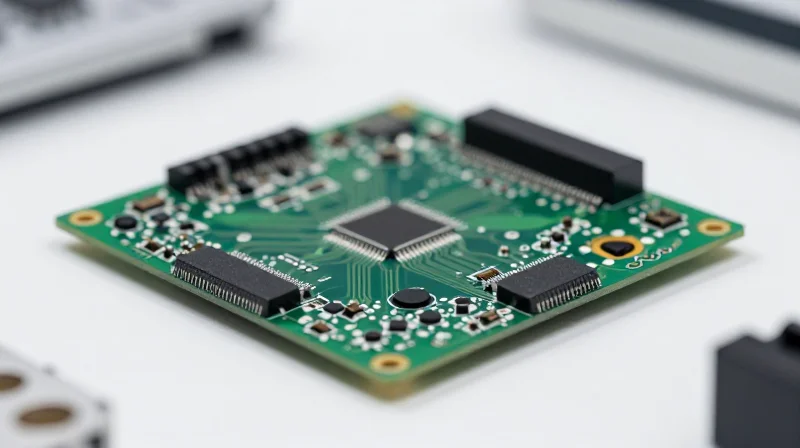
Quality control in high-speed electronics production is not merely about visual inspection but is defined by standardized process control. A capable PCBA partner must provide objective evidence of their adherence to global benchmarks to minimize defect rates and ensure consistent performance across production runs.
| Certification/Standard | Primary Application | Impact on Production |
|---|---|---|
| ISO 9001:2015 | Quality Management Systems | Ensures consistent processes and management oversight. |
| IPC-A-610 | Acceptability of Electronics | The definitive standard for PCBA workmanship and soldering quality. |
| ISO 13485 | Medical Devices | Critical for high-reliability or sensitive medical-grade electronics. |
| RoHS/REACH | Environmental Compliance | Mandatory for international market entry and material safety. |
Auditing Quality Management Systems (QMS)
Beyond paper certifications, a physical or virtual audit of the manufacturing floor is necessary to verify the culture of quality. Look for documented procedures that govern non-conforming materials and the efficacy of their automated optical inspection (AOI) workflows.
- How do I verify the effectiveness of their inspection process?
Request a history of First Article Inspection (FAI) reports and verify that their AOI machines are calibrated regularly according to a documented maintenance schedule. - Is internal traceability mandatory?
Yes. A partner should be able to provide component-level traceability, allowing you to trace any board back to its specific batch of components and production timeline. - What should I look for during a facility walkthrough?
Observe ESD (Electrostatic Discharge) protocols, climate-controlled storage for moisture-sensitive components (MSD), and the clear separation of scrapped or reworked units from production goods.
Ultimately, your PCBA partner acts as an extension of your own brand. If they lack the infrastructure to maintain compliance, you risk product recalls and reputational damage. Prioritize partners who invite transparency regarding their QMS and provide clear KPIs regarding their internal defect rates.
Technological Capability and Prototype Support

The Strategic Importance of DFM Integration
A superior PCBA partner acts as an extension of your engineering team. Effective Design for Manufacturing (DFM) is not merely a checklist; it is an iterative process that begins during the schematic phase to identify potential assembly bottlenecks, signal integrity risks, or component footprint constraints before a single board is produced. By integrating DFM early, you avoid costly re-spins and minimize the time wasted during the transition from the lab to the factory floor.
Evaluating Prototyping Agility and NPI Capability
Rapid consumer electronics launches depend on a partner's ability to pivot quickly between prototype iterations and pilot production runs. True agility requires dedicated NPI lines that are separated from high-volume production streams to prevent scheduling conflicts and ensure that specialized attention is paid to small-batch builds.
| Capability Metric | Prototype Focus | Mass Production Focus |
|---|---|---|
| Line Configuration | Flexible, manual-assisted cells | Fully automated, high-speed SMT |
| Component Sourcing | Distributor speed & availability | Strategic volume procurement |
| Process Engineering | Rapid DFM/DFT adjustments | Six Sigma efficiency optimization |
| Lead Times | 24-72 hours | Defined volume schedules |
Common Pitfalls in Partner Assessment
- Does the partner provide a DFM report?
Avoid partners who simply manufacture to print. An expert partner provides a comprehensive DFM/DFA analysis report that highlights suggested board layout improvements to increase yield. - Are prototype and production teams siloed?
Ensure your partner has a unified data management system so that lessons learned during the prototype phase are automatically incorporated into the final production documentation. - What is their technical support model?
Look for partners who offer direct access to process engineers rather than just account managers, ensuring technical roadblocks are resolved in real-time.
Ultimately, the right partner should demonstrate maturity in transitioning from NPI to production by maintaining documentation traceability. This ensures that the exact process specifications validated in your prototype are replicated identically when you scale to tens of thousands of units.
Geopolitical Considerations and Logistic Efficiency
Balancing Geographic Strategy and Operational Velocity
Selecting a turnkey PCBA partner requires a strategic trade-off between the cost advantages of offshore manufacturing and the agility provided by nearshore or domestic facilities. For consumer electronics, where market windows are narrow and demand is volatile, the geographic location of your partner directly influences your ability to perform rapid iterations and manage logistical risks.
| Feature | Domestic/Nearshore | Offshore/Asia |
|---|---|---|
| Lead Times | Fast (days to weeks) | Long (weeks to months) |
| Shipping Costs | Lower | Higher (Volatile) |
| Communication | Real-time/Synchronous | Time-zone offset |
| IP Protection | Higher Regulatory Enforcement | Variable/Site-dependent |
Key Logistical Considerations
- How do trade policies impact product costs?
Geopolitical tensions often manifest in tariff fluctuations and export controls. A partner with a diversified manufacturing footprint or a 'China Plus One' strategy can mitigate sudden tax increases or trade route blockages. - Why is communication latency a risk?
In rapid product development, a 12-hour time difference can double the time required to resolve a DFM issue. Partners who provide dedicated project management teams working in your time zone facilitate faster decision-making. - How does shipping method affect speed-to-market?
Ocean freight is cost-effective but rigid. Air freight offers speed but erodes margins. Choosing a partner with a logistical hub closer to your final assembly facility allows for lower-cost surface transit, saving significant budget on scale-up.
Ultimately, the optimal partner is one who offers logistical transparency. Before finalizing your partnership, audit their ability to provide real-time tracking of component procurement and finished goods, as visibility is the most effective tool for mitigating the inherent risks of a globalized supply chain.
Financial Stability and Partner Reliability
The Risks of Financial Instability in PCBA Partnerships
Selecting a turnkey PCBA provider is not merely a technical decision; it is a financial one. An undercapitalized partner faces significant risks, including supply chain disruptions, inability to purchase long-lead components, and potential bankruptcy mid-production. For a rapid-launch consumer electronics product, these failures translate into catastrophic delays, lost market windows, and wasted capital.
Verifying Operational Continuity
Beyond balance sheets, reliability is defined by a manufacturer’s resilience. A dependable partner maintains diverse supplier networks and sufficient cash flow reserves to buffer against market volatility. During your vetting process, prioritize transparency in their business health indicators.
| Indicator | Why It Matters | Verification Method |
|---|---|---|
| Ownership Structure | Determines long-term stability vs. speculative exit | Review corporate filings and history |
| Component Sourcing Leverage | Ensures priority allocation during shortages | Assess volume history with major distributors |
| Operational Liquidity | Supports scaling without production halts | Request audited financial statements |
Due Diligence FAQ
- How can I assess a private manufacturer's financial health?
While private firms are not required to disclose public records, you can request an executive summary of their recent growth, bank references, and credit report ratings from trade credit bureaus. - Does the size of the PCBA facility correlate with stability?
Not always. A hyper-specialized mid-sized shop may be more agile and stable than a massive factory struggling with overhead. Look for consistent capacity utilization rates rather than just total square footage. - What contractual clauses protect me from partner insolvency?
Include 'Termination for Convenience' clauses, retain rights to your technical IP and manufacturing files, and ensure your contract explicitly lists component ownership protocols should the manufacturer cease operations.
Conducting the On-Site Audit

Verifying Production Reality Through On-Site Audits
The transition from digital files to physical hardware is where many consumer electronics projects falter. Conducting an on-site audit allows you to confirm that the technical claims made during the vetting phase are matched by actual factory floor practices. You are not just looking for clean floors; you are looking for process discipline, data integrity, and the ability to scale rapidly under pressure.
The On-Site Audit Checklist
- ESD Control Implementation
Check for mandatory grounding straps, conductive flooring, and ionization fans. Inadequate Electrostatic Discharge (ESD) protocols in consumer electronics lead to latent component failures that only manifest after the product reaches the consumer. - Digital Manufacturing Integration
Observe how the shop floor receives work instructions. High-performing partners use Manufacturing Execution Systems (MES) to push real-time data to assembly stations rather than relying on outdated printed travelers. - NPI Workflow Separation
Confirm that there is a dedicated area for New Product Introduction. If your urgent, prototype-heavy project is fighting for line time with high-volume legacy orders, your launch schedule will suffer. - Component Traceability
Validate their incoming quality control. A world-class partner should be able to scan a reel of components and immediately trace it back to the manufacturer, batch number, and inspection report.
Audit Focus: Maturity Models
| Feature | Reactive Partner | Proactive Partner |
|---|---|---|
| Shop Floor Data | Manual logs/Paper records | Real-time MES monitoring |
| Equipment Maintenance | Fix-on-failure | Predictive sensor-based maintenance |
| Change Management | Verbal instructions | Automated ECO system |
During your visit, request to see a 'live' run. Observe the interaction between the engineering team and the machine operators. If communication is seamless and adjustments to SMT programs are made with clinical precision, you have found a partner capable of handling the volatility inherent in rapid consumer electronics launches.
Selecting the right turnkey PCBA partner is a strategic business decision that directly impacts your brand's reputation and bottom line. By prioritizing transparent supply chains, verified quality standards, and genuine manufacturing scalability, you mitigate risk and accelerate your time-to-market. Ready to scale your production with confidence? Contact our engineering team today to discuss your next PCBA requirements and see how our turnkey solutions can keep you ahead of the competition.
