
In the high-stakes world of biometric security, the smallest component failure can result in massive operational costs and a loss of user trust. As manufacturers face mounting pressure to reduce field failures, the silent culprit is often low-grade PCB design. This article analyzes how upgrading your PCBA standards transforms your bottom line from a reactive cost center to a proactive competitive advantage.
The Real Cost of Cheap Components in Security Devices
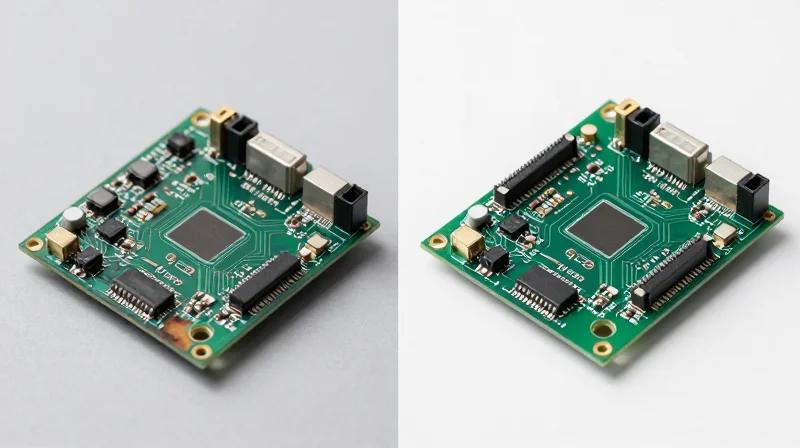
In the pursuit of aggressive price points for smart home security devices, manufacturers often succumb to the allure of low-cost, unverified electronic components. While these savings appear on the Bill of Materials (BOM), they trigger a cascade of hidden costs that inevitably result in a negative impact on overall ROI. Reliability is not merely a technical metric; it is a fundamental driver of profitability, where premature component failure leads to expensive logistics, warranty overheads, and irreversible brand degradation.
Direct and Indirect Economic Consequences
The financial impact of using budget-grade capacitors, microcontrollers, or power management ICs extends far beyond the initial procurement phase. The following table illustrates the divergence between upfront savings and total lifecycle costs.
| Cost Category | Budget-Grade Components | High-Reliability Components |
|---|---|---|
| BOM Impact | Low Initial Expense | Premium Initial Investment |
| Field Failure Rate | High (3-5% annualized) | Low (<0.1% annualized) |
| Warranty Servicing | Extensive/Manual Processes | Minimal/Automated |
| Brand Equity | High Risk of Erosion | High Trust Retention |
Quantifying the Cost of Failure
When a smart lock fails in the field, the cost of replacement often exceeds the original manufacturing cost by a factor of ten. This includes return shipping, diagnostic labor, replacement unit costs, and the customer service resources dedicated to managing consumer frustration. In high-reliability PCB design, investing in qualified, industrial-grade components mitigates these reactive expenses, transforming a variable cost center into a stable, predictable financial model.
- Why do low-cost components fail more frequently in security devices?
Security devices often operate in harsh, fluctuating environments—such as exterior doors exposed to temperature extremes—which degrade sub-standard components that lack industrial-grade thermal ratings. - Does higher component cost justify the ROI?
Yes. The reduction in Return Merchandise Authorization (RMA) rates and support overhead typically recovers the higher initial component cost within the first six months of deployment. - How does PCB quality impact long-term brand equity?
Smart locks are mission-critical security devices; a single failure leads to a loss of user trust, which is significantly more expensive to regain than the cost difference between premium and budget components.
Anatomy of a Reliable Biometric PCBA
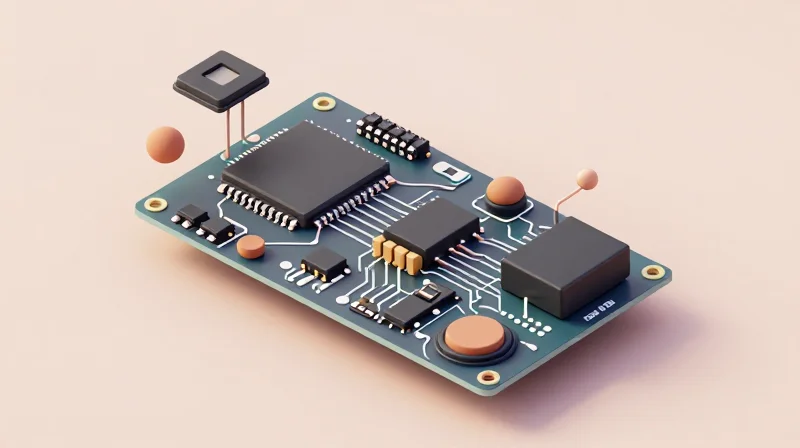
The Pillars of Biometric PCBA Reliability
Reliability in biometric smart locks is not accidental; it is engineered through a hierarchy of component selection and board-level protection. A failure-resistant PCBA prioritizes signal integrity for fingerprint sensors and utilizes automotive-grade power regulation to survive the unpredictable electrical environments of residential door hardware.
| Component Category | Consumer-Grade Approach | Reliable Industrial Approach |
|---|---|---|
| Power Management | Basic LDOs prone to thermal spikes | Buck-boost regulators with transient suppression |
| Biometric Interface | Unshielded traces susceptible to EMI | Differential signaling with impedance control |
| ESD Protection | Minimal TVS diodes on exposed ports | Multi-stage ESD protection on all I/O |
Mitigating Field Failures Through Design Rigor
Engineers must design for the 'worst-case' scenario, specifically regarding electrostatic discharge (ESD) and extreme temperature fluctuations. Because biometric sensors are frequently touched by users carrying residual static charge, the PCBA must integrate robust transient voltage suppression (TVS) arrays specifically tuned to the sensor's communication protocol.
- Why is power conditioning critical?
Biometric sensors are highly sensitive to voltage ripples. Poor power regulation causes sensor lockups and false rejection errors that lead to costly warranty claims. - Does conformal coating provide enough protection?
While coating prevents corrosion in humid environments, it cannot compensate for poor component selection; it is a secondary defense, not a replacement for high-grade hardware. - How does PCB layout impact security?
Proper trace routing and ground plane segmentation prevent cross-talk, ensuring the raw biometric data remains pristine before it reaches the secure element for encryption.
Data-Driven Failure Analysis: Why Precision Matters

Data-Driven Failure Analysis: Why Precision Matters
In the context of smart lock security, failure is not merely a technical inconvenience—it is a significant liability. Precision-driven failure analysis moves beyond reactive troubleshooting to a proactive model where data points, such as thermal cycling stress and capacitor ESR (Equivalent Series Resistance) degradation, guide the engineering process. By mapping failure modes to specific environmental and electrical stressors, manufacturers can shift from generic consumer specifications to application-specific design, directly optimizing ROI through increased mean time between failures (MTBF).
Common Failure Vectors in Smart Lock PCBA
| Failure Mode | Primary Trigger | ROI Impact |
|---|---|---|
| Solder Joint Cracking | Thermal expansion/vibration | High warranty replacement cost |
| Capacitor Electrolyte Leakage | Voltage spikes/heat stress | Increased technical support burden |
| Microcontroller Latch-up | ESD/EMI interference | Direct product recall liability |
Frequently Asked Questions
- How does failure data analysis directly improve ROI?
By identifying the exact component stress that leads to field failure, designers can over-engineer only critical paths, avoiding excessive costs while significantly reducing expensive warranty claims and field support operations. - Why is thermal cycling data critical for smart locks?
Smart locks are often installed in high-fluctuation environments; data-driven analysis of thermal coefficients prevents board-level delamination and solder fatigue, which are primary drivers of long-term failure. - Is real-world failure analysis worth the R&D investment?
Yes. The upfront investment in detailed failure analysis and rigorous qualification testing is consistently lower than the cumulative cost of repeated hardware revisions, negative brand reputation, and logistics overhead from field failures.
The ROI of Durability: Balancing Design Costs with Warranty Savings
The Financial Equilibrium of Engineering Investment
The return on investment (ROI) for smart lock hardware is often misunderstood as a simple trade-off between manufacturing speed and unit cost. In reality, the decision to invest in high-reliability PCB design shifts the financial burden from unpredictable reactive spending (warranty claims, on-site repairs, customer churn) to predictable proactive capital expenditure. By optimizing thermal dissipation, selecting industrial-grade capacitors, and implementing robust ESD protection during the initial design phase, manufacturers effectively shorten the path to profitability.
| Financial Metric | Low-Reliability Design | High-Durability Design |
|---|---|---|
| Upfront R&D Cost | Lower | Higher |
| Field Failure Rate | 5% - 12% | < 0.5% |
| Warranty Servicing | Heavy/Reactive | Minimal/Planned |
| Customer Lifetime Value | Low (Churn driven) | High (Brand loyalty) |
Calculating the Total Cost of Ownership (TCO)
When calculating the TCO, one must account for the 'hidden' costs of failure. Every warranty replacement is not just the cost of a new PCB; it includes logistics, technician dispatch, technical support time, and brand reputation degradation. High-quality PCB design acts as an insurance policy. A $2 increase in per-unit component quality can often prevent a $200 field service event, creating an exponential return on the initial engineering investment.
- How does PCB durability directly influence warranty reserves?
Lower failure rates allow companies to reduce the percentage of revenue set aside for warranty reserves, effectively freeing up cash flow that would otherwise be tied to potential liabilities. - Is the initial ROI of higher design costs justifiable for consumer markets?
Yes, as the market matures, consumer sentiment is increasingly prioritizing 'install and forget' reliability, meaning durable hardware reduces the high acquisition costs associated with replacing defective units. - What is the primary driver of PCB-related warranty savings?
The primary driver is the reduction of 'No Fault Found' returns and field failures caused by environmental factors like thermal fatigue or moisture ingress, which high-durability design patterns explicitly address.
Enhancing End-User Trust Through Consistent Performance
The Direct Correlation Between Reliability and Brand Equity
For end-users, a smart lock is not merely a piece of hardware; it is a critical component of their home security infrastructure. When a PCB fails or exhibits intermittent performance—due to thermal stress, solder joint fatigue, or power instability—the user’s perception of security is compromised. Consistent performance acts as a silent assurance of safety, directly influencing customer retention rates and minimizing the high costs associated with negative brand sentiment and product returns.
Performance Metrics and User Perception
| Performance Factor | Technical Impact | End-User Sentiment |
|---|---|---|
| Latency Response | Optimized Firmware/Hardware Path | High reliability/Professionalism |
| Power Efficiency | Stable Voltage Regulation | Reduced maintenance/Convenience |
| Thermal Stability | Proper Component Derating | Perceived safety/Longevity |
Frequently Asked Questions on Trust and Design
- How does PCB reliability directly improve ROI?
Reliability lowers the Cost of Poor Quality (COPQ) by reducing warranty claims, technical support overhead, and customer acquisition costs driven by churn, ultimately protecting the lifetime value of the customer. - Is aesthetic design more important than PCB reliability?
While aesthetics drive initial purchase interest, PCB reliability drives brand loyalty. A beautiful lock that fails to open is a liability that causes immediate reputational damage and long-term revenue loss. - Can engineering for longevity be cost-justified?
Yes. The incremental cost of high-grade capacitors and robust circuit protection is marginal compared to the compounded cost of RMA logistics, replacement inventory, and the negative word-of-mouth that stems from product failure.
Mitigating Environmental Risks for Outdoor Access Control
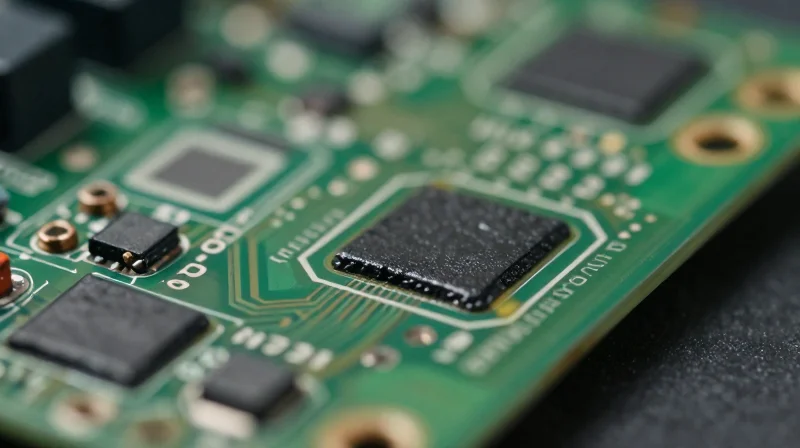
For smart locks deployed in outdoor settings, the PCB serves as the primary barrier against harsh environmental stressors. Exposure to wide temperature fluctuations and high humidity levels without adequate protection leads to solder joint fatigue, trace corrosion, and rapid component degradation. By integrating high-grade materials and specialized protective layers during the design phase, manufacturers can significantly reduce field failures, thereby protecting the brand's reputation and minimizing costly warranty interventions.
The Role of Protective Coatings and Substrates
Selecting the right PCB substrate and applying conformal coatings are the most effective defenses against environmental ingress. Advanced materials like polyimide or high-Tg FR-4 offer superior thermal stability, while conformal coatings—such as silicone, acrylic, or parylene—create a chemical barrier that shields sensitive electronics from moisture, salt spray, and condensation.
| Protective Method | Primary Benefit | Cost-Efficiency |
|---|---|---|
| Conformal Coating | Moisture/Corrosion Shield | High ROI; prevents field failure |
| High-Tg FR-4 Substrate | Thermal expansion resistance | Moderate; reduces solder cracking |
| Potting Compounds | Vibration/Impact resistance | High; ideal for extreme shock |
Key Considerations for Outdoor Reliability
- Why is the Glass Transition Temperature (Tg) important?
A high-Tg substrate prevents the PCB from becoming soft or unstable during extreme heat cycles, which is critical for maintaining mechanical integrity in outdoor smart locks. - How does conformal coating impact long-term maintenance?
By preventing dendrite growth and oxidation caused by humidity, conformal coating drastically extends the Mean Time Between Failures (MTBF), reducing site visits and replacement overhead. - Can industrial-grade components offset initial design costs?
Yes. While premium components carry a higher upfront cost, they are engineered to withstand broader temperature ranges, negating the need for expensive climate-control housings.
Investing in robust environmental hardening is not an optional expense but a strategic financial decision. By prioritizing these design elements, companies shift their business model from reactive repair cycles to proactive, long-term asset reliability, which ultimately maximizes the ROI of their smart lock product line.
Strategic Sourcing: Partnering with Quality-Focused Manufacturers
Selecting the right manufacturing partner is not merely a procurement task but a critical engineering decision that dictates the final product's reliability and field longevity. For biometric security applications, where failure is not an option, partnering with manufacturers that hold strict quality certifications is essential to avoiding costly recalls and brand damage.
Criteria for Evaluating PCB Manufacturers
| Evaluation Criterion | Significance for Smart Locks | Expected Quality Standard |
|---|---|---|
| Certification | Compliance with industry standards | ISO 9001, ISO 14001, IATF 16949 |
| Biometric Precision | Accuracy of sensor signal processing | High-tolerance surface mount technology |
| Supply Chain | Consistency of component supply | Traceable, high-grade silicon sourcing |
| Testing Rigor | Identifying defects before shipping | Automated Optical Inspection (AOI) + X-Ray |
Key Questions for Supplier Vetting
- How do you ensure IPC Class 3 compliance?
For high-reliability electronics, IPC Class 3 is the gold standard; verify that your partner has the specialized manufacturing processes and rigorous inspection capability to meet these strict thresholds. - What is your approach to DFM (Design for Manufacturing) feedback?
A true partner proactively identifies potential PCB layout issues that could lead to signal interference or hardware failure in biometric modules, saving significant costs during the prototyping phase. - How do you manage counterfeit component risks?
Reliable suppliers maintain a closed-loop, authorized supply chain to ensure that critical components like fingerprint sensors and MCUs are genuine, preventing security vulnerabilities and device malfunctions.
Ultimately, the cost-benefit analysis favors a premium manufacturing partner. While unit prices may be slightly higher than entry-level contract manufacturers, the reduction in warranty claims, the elimination of field failures, and the strengthening of customer trust provide a superior long-term ROI. Vetting a partner based on their commitment to quality management systems ensures that your PCB design translates into a market-ready, secure, and reliable smart lock.
Future-Proofing Your Smart Locks

The rapid evolution of biometric and wireless technology necessitates that smart lock PCBs be designed with an eye toward long-term viability. By integrating scalable hardware architectures, manufacturers can ensure that their products remain relevant as new authentication protocols and security standards emerge, protecting the initial capital investment while reducing the total cost of ownership.
Designing for Technological Agility
Robust PCB design serves as the foundation for future-proofing. Engineers must prioritize high-density interconnects and auxiliary expansion headers that allow for seamless integration of future modules, such as advanced NFC chips or biometric sensors, without requiring a complete hardware redesign.
| Future-Proofing Strategy | ROI Benefit | Implementation Complexity |
|---|---|---|
| Modular Expansion Headers | Delayed hardware obsolescence | Moderate |
| Over-Provisioned Memory/Flash | Supports firmware updates for years | Low |
| Field-Programmable Gate Arrays | Hardware-level protocol flexibility | High |
Key Considerations for Long-Term Adaptability
- Why is over-provisioning memory critical?
Allocating extra RAM and flash storage allows for future security patches and feature enhancements, preventing forced hardware upgrades due to software limitations. - How does PCB modularity affect manufacturing costs?
While it may slightly increase initial design costs, modularity significantly lowers long-term ROI by allowing incremental updates rather than total product redesigns. - What role does power management play in future-proofing?
Designing with efficient, flexible power rails enables the integration of more power-hungry sensors or advanced wireless radios in future iterations of the product.
Standardizing Communication Protocols
Adopting universal standards like Matter or Thread at the PCB level ensures that the device can communicate across diverse ecosystems. Implementing these protocols within the initial PCB layout eliminates the need for expensive gateway redesigns as home automation standards shift.
Prioritizing high-grade PCBA design is not just a technical upgrade; it is a financial strategy that mitigates risk and builds a legacy of reliability. By reducing field failures, you protect your margin and reinforce your reputation as a trusted security provider. Contact our engineering team today to discuss how we can elevate the durability and performance of your next-generation biometric access systems.
