
In the high-stakes world of cardiology manufacturing, the tension between aggressive cost-per-unit targets and the unwavering requirement for patient safety is a persistent challenge. How can manufacturers scale production of complex high-voltage devices like AEDs without sacrificing quality? This article explores a proven case study in design-for-manufacturing (DFM) optimization that transformed production overhead while upholding the most stringent industry certifications.
The Challenge: Balancing Cost and Compliance in MedTech
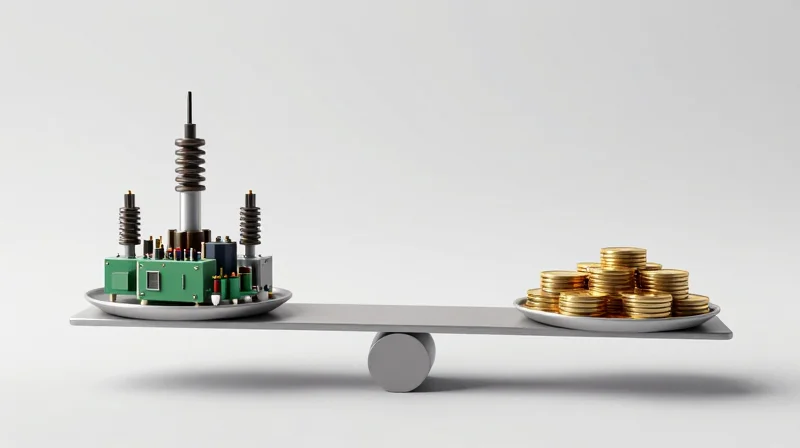
The Conflict Between Fiscal Efficiency and Regulatory Rigor
In the high-stakes environment of Automated External Defibrillator (AED) manufacturing, the pursuit of Return on Investment (ROI) is frequently stifled by the technical necessity of high-voltage component reliability. Unlike standard consumer electronics, AED circuitry requires high-dielectric strength components that are subject to rigorous verification under ISO 13485 and IEC 60601 standards. Cost-cutting initiatives that prioritize lower-tier components often lead to catastrophic failure rates during final validation, resulting in delayed time-to-market and increased total cost of quality.
Key Procurement and Compliance Hurdles
| Challenge | Impact on ROI | Compliance Risk |
|---|---|---|
| Supply Chain Volatility | High inventory carrying costs | Potential for counterfeit materials |
| Component Certification | Extended lead times for qualification | Non-compliance with IEC 60601-1 |
| Design Change Costs | Rework and re-validation expenses | Regulatory filing delays |
Frequently Asked Questions Regarding AED Assembly
- Why is cost-cutting in high-voltage PCB assembly particularly risky?
Any reduction in component quality or dielectric spacing to save pennies can lead to insulation breakdown, potentially resulting in device failure during a life-critical event. - How does regulatory compliance affect procurement ROI?
Stringent documentation requirements for traceability and environmental compliance (such as RoHS and REACH) add administrative overhead that must be balanced against the lower unit price of raw components. - Can automated testing bridge the gap between cost and quality?
Yes, implementing In-Circuit Testing (ICT) and Automated Optical Inspection (AOI) early in the production cycle identifies defects before they reach the expensive high-voltage testing phase.
The Fundamentals of Design for Manufacturing (DFM) in Medical Devices
Defining DFM in the High-Voltage Medical Context
In the context of Automated External Defibrillators (AEDs), DFM is the systematic process of designing circuit boards that not only meet stringent clinical safety standards but are also optimized for automated assembly. For high-voltage applications, this involves precise component spacing, optimized trace geometry to prevent arcing, and the selection of standardized, globally available components. By integrating DFM during the prototyping phase, manufacturers ensure that the transition to full-scale production remains free of costly design iterations that could trigger mandatory regulatory recertification.
Early-Stage Integration vs. Late-Stage Remediation
| Parameter | Early-Stage Integration | Late-Stage Remediation | ||||||
|---|---|---|---|---|---|---|---|---|
| ROI Impact | Significant long-term savings | High cost of engineering change orders | Risk Exposure | Minimal; compliance baked into design | Severe; potential for device failure | Production Speed | Accelerated time-to-market | Bottlenecked by rework cycles |
Key Pillars of DFM for AED PCB Assembly
- Standardization of High-Voltage Components
Prioritizing components with high availability reduces supply chain volatility and ensures that the BOM is resilient against component obsolescence. - Automated Testing Readiness
Design for test (DFT) features, such as accessible test points for high-voltage isolation checks, allow for rapid, automated verification on the production line. - Thermal and Creepage Optimization
Optimizing PCB layout for thermal dissipation and regulatory creepage distances prevents failures in the field and minimizes the board footprint.
Ultimately, DFM is not merely a cost-reduction exercise; it is a risk-mitigation strategy. By aligning engineering requirements with manufacturing capabilities early, firms can maximize ROI by eliminating non-value-added activities and ensuring the product is robust enough to perform reliably under the extreme conditions required of life-saving medical equipment.
Optimizing PCB Assembly for High-Voltage Cardiology Equipment
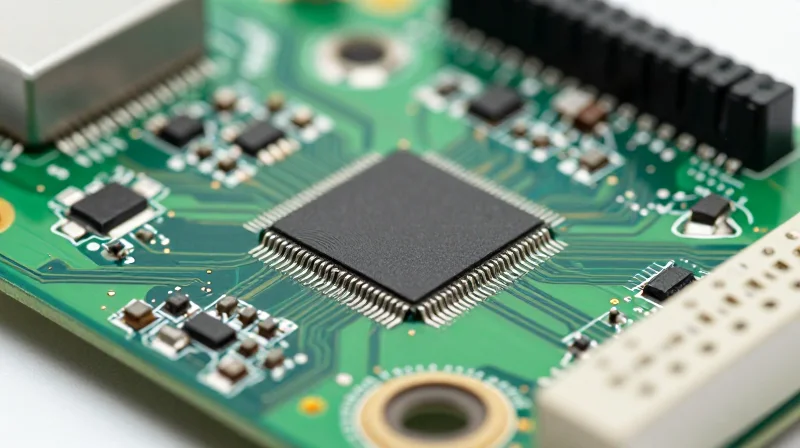
Mitigating High-Voltage Discharge Risks During Assembly
Optimizing assembly for high-voltage cardiology equipment begins with stringent dielectric spacing and creepage management. Manufacturers must implement automated conformal coating and vacuum-based potting processes to ensure the structural integrity of high-voltage capacitors and discharge circuits, preventing field failures that erode ROI through costly recalls.
Techniques for Production Efficiency
| Process Strategy | ROI Impact | Key Benefit |
|---|---|---|
| Automated Optical Inspection (AOI) | High | Early detection of solder bridging in HV paths |
| Precision Conformal Coating | Medium | Improved long-term dielectric reliability |
| Modular Assembly Lines | High | Reduced labor overhead and cycle time |
Advanced Quality Assurance for Cardiac Circuitry
Maintaining a high ROI in AED production relies on minimizing rework through aggressive testing at the board level. By integrating In-Circuit Testing (ICT) with high-potential (hipot) testing, manufacturers can validate isolation integrity without delaying the assembly flow.
- How does automated coating improve ROI?
Automated coating ensures uniform dielectric protection, reducing human error, material waste, and the likelihood of post-production failures. - What role does thermal management play?
Proper thermal dissipation prevents premature degradation of high-voltage components, directly extending the service life and market value of the AED. - Can DFM reduce assembly cycle time?
Yes, by designing for automated assembly rather than manual placement, companies can achieve higher throughput and more consistent quality.
Supply Chain Resilience and Material Rationalization
The Strategic Role of Material Rationalization
Material rationalization involves consolidating a diverse bill of materials into a smaller, standardized set of high-performance components. In the context of AED high-voltage assemblies, this strategy reduces procurement complexity, minimizes inventory carrying costs, and enhances quality control. By leveraging fewer, higher-volume components, manufacturers gain stronger bargaining power with suppliers and reduce the risk of variability that could trigger costly re-validation processes under ISO 13485 standards.
Comparing Sourcing Strategies
| Sourcing Strategy | Cost Impact | Risk Profile | Compliance Effort |
|---|---|---|---|
| Single-Source Custom Components | High (Volume Dependent) | High (Supply Disruption) | Moderate |
| Multi-Source Standardized Components | Low (Economy of Scale) | Low (Redundancy) | High (Validation Required) |
| Hybrid Strategic Sourcing | Optimal | Managed | High (Initial Only) |
Ensuring Compliance During Supply Diversification
Diversifying the supply chain for critical AED components must never compromise device integrity. Transitioning to new suppliers or standardized components requires rigorous change control protocols. Manufacturers should utilize a robust CAPA system to document every material shift, ensuring that all substitute high-voltage capacitors or controllers meet existing electrical safety and performance specifications defined in the Device Master Record (DMR).
Frequently Asked Questions
- How does component standardization affect FDA validation?
Standardization reduces the frequency of design modifications, but any change in form, fit, or function requires a formal impact assessment per FDA 21 CFR 820.30. - Can material rationalization improve product yield?
Yes, by utilizing standardized, well-characterized components, assembly processes become more repeatable, significantly reducing solder defects and improving the final testing yield of high-voltage boards. - What is the best way to mitigate risk with critical high-voltage suppliers?
Implement a tiered supplier strategy that maintains primary partnerships with high-reliability vendors while qualifying secondary 'drop-in' alternatives that meet the exact physical and electrical requirements of your design.
Leveraging Automated Testing for Yield Improvement

The Economic Impact of Automated Diagnostic Testing
In high-voltage medical manufacturing, the cost of a defect grows exponentially as it moves through the assembly line. By integrating Automated Optical Inspection (AOI) and In-Circuit Testing (ICT) at the earliest possible manufacturing stages, companies can identify faults before expensive conformal coating or final casing processes occur. This shift-left approach to testing not only preserves high-value substrates and components but also provides critical process data that drives continuous improvement in machine calibration and solder paste deposition accuracy.
Comparative Analysis: Manual vs. Automated Testing Regimes
| Feature | Manual Testing | Automated Testing |
|---|---|---|
| Detection Latency | High (Post-Assembly) | Low (Real-time) |
| Error Rate | Subjective/Variable | Consistent/Repeatable |
| ROI Contribution | Minimal due to rework | High via yield optimization |
Strategic Implementation of ICT and Flying Probe
High-voltage AED boards contain complex circuitry that requires rigorous validation of isolation distances and dielectric strength. Flying probe testing offers a flexible, low-setup-cost alternative for mid-volume production, while In-Circuit Testing remains the gold standard for high-volume efficiency. Both methods allow for non-destructive testing that ensures high-voltage safety rails meet strict medical standards while isolating shorts or open circuits that could lead to field failures.
Frequently Asked Questions on Testing Optimization
- How does automated testing affect FDA compliance?
Automated testing provides objective, time-stamped digital records that simplify the documentation process for ISO 13485 audits and FDA 21 CFR Part 820 requirements. - Is it cost-effective for high-voltage PCBs?
Yes. Given the high cost of individual components within cardiac AED circuits, the prevention of even a small percentage of scrap loss provides a rapid return on investment.
Case Study: Achieving Overhead Reduction Through Strategic Re-Design
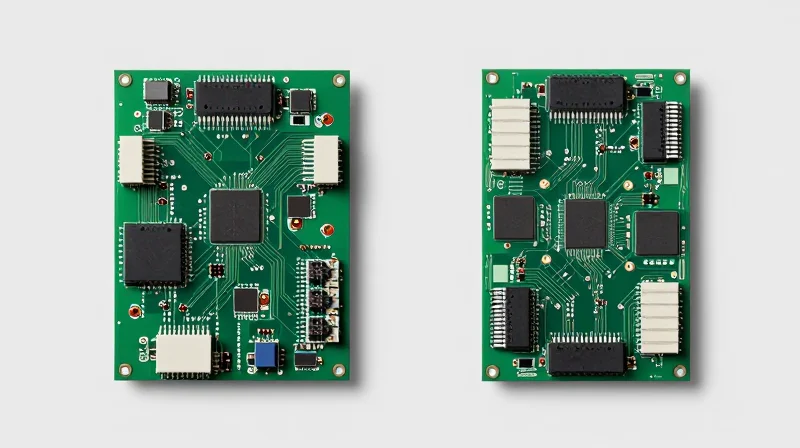
The Challenge: Balancing High-Voltage Requirements with Cost Pressures
A leading AED manufacturer faced margin compression due to labor-intensive manual assembly processes and high failure rates in high-voltage capacitors during final testing. The objective was to refine the PCB assembly (PCBA) strategy to enable automated assembly while maintaining strict ISO 13485 and FDA Class III regulatory standards.
Strategic Redesign Initiatives
- Consolidation of High-Voltage Components
Redesigned the board layout to shift from multiple scattered power stages to a centralized, surface-mount power module, reducing trace length and parasitic inductance. - Automated Handling Integration
Modified PCB fiducial markers and added specialized edge tooling to ensure compatibility with high-speed SMT pick-and-place robotics. - Thermal Management Optimization
Replaced manual heat-sink attachment with integrated board-level thermal vias, eliminating the need for auxiliary hardware and manual adhesive application.
Performance and ROI Comparison
| Metric | Legacy Process | Optimized DFM Process |
|---|---|---|
| Assembly Time (per unit) | 48 Minutes | 12 Minutes |
| First-Pass Yield | 88% | 97.5% |
| Manual Intervention Points | 14 | 3 |
| Total Overhead Cost | Baseline | -22% |
Lessons for Medical Manufacturers
The transition proved that even in high-voltage environments where precision is paramount, DFM principles can yield significant ROI. By aligning physical board layout with automated assembly requirements, the manufacturer minimized human error and drastically reduced WIP (Work-in-Progress) inventory, ultimately achieving a payback period of only eight months.
Maintaining Stringent Safety Protocols During Production Scaling
Safeguarding Safety Profiles During Scale-Up
Scaling production for high-voltage AED components requires a delicate balance between increased throughput and stringent safety standards. To prevent costly re-validation cycles, manufacturers must employ a 'Design for Quality' approach, where process changes are mapped against the original Device Master Record (DMR) to ensure that high-voltage insulation, creepage, and clearance remain strictly within defined tolerances.
Strategic Change Control and Compliance
Effective scaling mandates a robust Change Control Board (CCB) process. Every modification—whether in assembly methodology or component sourcing—must undergo a formal risk assessment under ISO 14971. By leveraging 'Equivalence Analysis,' manufacturers can determine if a modification triggers a mandatory FDA submission or if it can be documented via internal letter-to-file.
| Scaling Action | Risk Factor | Mitigation Strategy |
|---|---|---|
| New SMT Equipment | Traceability Gaps | Automated Data Logging (MES integration) |
| Second-Source Components | Dielectric Integrity | Verification of Material Specs (CofC) |
| Increased Throughput | Process Drift | In-line AOI/AXI inspection |
Common Scaling Challenges
- How do I avoid re-validation when changing assembly equipment?
Utilize Installation Qualification (IQ), Operational Qualification (OQ), and Performance Qualification (PQ) protocols to demonstrate that the new equipment meets or exceeds the output specifications of the previous system. - Does component miniaturization impact high-voltage safety?
Yes, smaller components can impact creepage and clearance distances, necessitating a comprehensive review of dielectric strength and isolation barrier integrity against IEC 60601-1 standards. - Can software-driven testing replace manual inspection during scaling?
Automated Optical Inspection (AOI) and Flying Probe Testing are essential for maintaining safety profiles, as they provide consistent, high-speed verification that exceeds the reliability of human oversight.
The Future of Scalable Medical Device Manufacturing

The Evolution of Scalable Manufacturing
As medical device demands increase, the transition from traditional assembly lines to adaptive, data-driven ecosystems is essential. By implementing high-fidelity digital twins—virtual replicas of the entire PCB assembly process—manufacturers can simulate high-voltage stress testing and assembly variations before physical production begins, significantly mitigating risk and accelerating time-to-market.
Strategic Technological Integration
Future-proofing AED production requires a shift toward autonomous, connected manufacturing cells. The synergy between Artificial Intelligence (AI) for predictive maintenance and real-time IoT monitoring ensures that assembly lines remain within exact tolerances, which is vital for high-voltage reliability.
| Technology Feature | ROI Driver | Impact on Scaling |
|---|---|---|
| Digital Twins | Reduced Prototyping Cost | Accelerated Validation Cycles |
| AI-Predictive Maint. | Minimized Downtime | Consistent Output Quality |
| Smart Robotics | Lower Labor Overhead | Enhanced Precision at Speed |
Frequently Asked Questions
- How do digital twins impact regulatory compliance?
Digital twins serve as a comprehensive documentation platform, allowing manufacturers to demonstrate process stability and safety margins to regulators with high-granularity data. - Is the transition to smart factories cost-prohibitive for SMEs?
While initial investment is significant, the modular implementation of smart factory components allows for scalable upgrades that provide cumulative ROI through waste reduction and higher yields. - Will automation compromise high-voltage safety standards?
On the contrary, automated assembly ensures consistent application of insulation and component spacing, reducing human error which is often the primary cause of safety non-compliance.
By shifting from reactive cost management to proactive DFM strategies, manufacturers can achieve the dual goal of high-margin production and uncompromising safety. Implementing these strategies is no longer optional for those looking to lead in the cardiology space. Contact our engineering team today to audit your current production pipeline and identify your potential for measurable ROI improvement.
