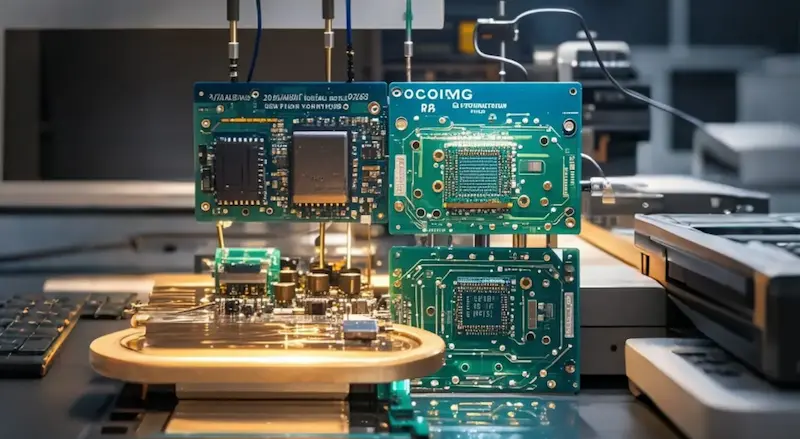
Introduction: Incoming inspection is the first step in SMT assembly quality control and is critical to final product quality. Strict inspection of raw materials—components, PCBs, solder paste, and adhesives—prevents defective parts from entering the production line, avoiding rework, returns, and reputational damage.
Description: Based on AnyPCBA's small-to-medium volume PCB and PCBA manufacturing experience, this guide explains SMT incoming quality control—component inspection, PCB board checks, solder paste verification—and how moving quality control upstream reduces risk and cost.
Incoming inspection is the first step in SMT assembly quality control and is critical to ensuring final product quality. Strict inspection of raw materials prevents non-conforming parts from damaging company reputation and causing financial losses such as rework, rework loops, and returns. When receiving materials, each component should be checked against the supplier's specification sheet to confirm it meets standards.
The importance of SMT incoming inspection lies in ensuring that all materials entering the production line—including components, PCB boards, and various SMT processing materials (such as solder paste and adhesives)—meet quality standards. The quality of these components and materials directly determines the functionality and reliability of the final product.
Through strict incoming inspection, you can evaluate component electrical parameters, solderability of terminals and leads, and check PCB design rationality and pad solderability. This upstream quality management helps identify and resolve potential problems early, prevents defective parts from entering production, reduces downstream rework and repair costs, and protects product quality and reputation.
Therefore, SMT incoming inspection is not only about ensuring raw material quality, but also about moving the quality control point upstream—effectively reducing quality risk and cost while safeguarding overall product quality.
Electronic component incoming inspection is an indispensable step for ensuring product quality and production stability. It aims to identify and resolve raw material issues early, maintaining smooth production and product reliability. The inspection process covers the following key areas.
Confirm that components have no physical damage, deformation, or corrosion, and that they match order specifications.
Check that component model numbers, specifications, and parameters match procurement requirements.
Ensure component leads meet soldering process requirements and provide good electrical connections.
Inspect solder joints of assembled components to ensure strong connections with no cold solder joints or missed joints.
Verify component functional specifications to ensure performance meets product design requirements.
Ensure correct materials are used and prevent counterfeit or inferior products from entering the production line and affecting final product quality.
PCB board inspection is an important step for ensuring performance and reliability, covering appearance, dimensions, physical characteristics, material quality, and functional testing. The inspection flow is as follows.
Confirm the PCB surface is clean and free of deformation or corrosion.
Use calipers to measure and confirm PCB dimensions meet design requirements.
For standard PCBs, keep warpage between 0.70% and 0.75%. For boards with BGA components, this value should be more strictly controlled within 0.5%.
Check solder mask thickness consistency, ensure uniform color without fogging or color variation, and confirm the surface is smooth without obvious scratches or unevenness.
Ensure pad surfaces are flat, free of poor cutting or burrs, and that the minimum pad size is no less than 150 microns.
Perform transmit and receive performance testing at rated voltage to confirm the PCB circuit functions properly.
Place the board at -10°C and 70°C for 12 hours, then perform load testing to ensure the PCB works properly under extreme temperature conditions.
Check whether PCB packaging is intact to prevent deformation or leakage during transport.
Verify that label information on the PCB matches component model numbers, specifications, and other data in the order.
Solder paste inspection is an important part of ensuring soldering quality and product reliability in SMT production. As the key material connecting electronic components to the PCB, solder paste composition and performance directly affect final product quality. Comprehensive inspection is therefore essential, covering the following areas.
Confirm that key ingredients such as solder, binders, and thickeners meet specified ratios and standards to ensure solder paste quality.
Check solder paste anti-splatter characteristics during soldering to prevent solder from splashing onto other components, affecting circuit performance or causing short-circuit risk.
Ensure residue left after solder paste use is pure and free of impurities, and does not contain bubbles or other defects that could affect electrical performance.
Test solder paste oxidation resistance during storage and use to avoid poor soldering or increased contact resistance caused by oxidation.
Evaluate solder paste wettability—its ability to spread evenly and fully cover the soldering area when heated—to ensure good electrical connections.
Assess solder paste wear resistance during subsequent use to ensure solder joints remain stable over long-term use.
As a factory focused on small-to-medium volume PCB and PCBA manufacturing, AnyPCBA has accumulated years of experience in incoming quality control, moving quality control upstream to prevent defective parts from entering the production line.
Our manufacturing capabilities cover 2–64 layers, including HDI, rigid-flex, and high-frequency hybrid. We hold ISO 13485 (medical) and IATF 16949 (automotive) certifications.
For SMT incoming quality control, our DFM review and production preparation focus on:
Component appearance, specifications, solderability, and material certification
PCB warpage, solder mask quality, pad dimensions, and electrical performance
Solder paste composition, anti-splatter, residue, oxidation resistance, and wettability
Prevention and traceability of counterfeit components
Batch records and traceability for critical materials
Our engineers help you anticipate incoming material risks before production, so your boards are not only buildable, but stable and reliable.
If you're working on an SMT assembly project, or want to learn more about our incoming quality control process, contact us through our website.
What challenges have you encountered in SMT incoming quality control? Share your experience in the comments.