
The smart home ecosystem is at a crossroads. As consumers demand seamless interoperability and reduced latency, hardware manufacturers face the critical decision of choosing the right communication protocol for their PCBA designs. From the ubiquitous reach of WiFi to the low-power efficiency of Zigbee and the revolutionary promise of Matter, we break down how to align your hardware with the future of connectivity.
The Current Landscape of IoT Connectivity
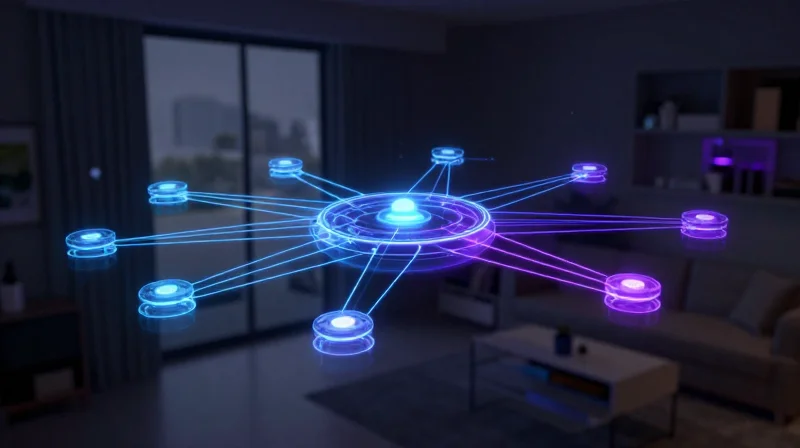
The Connectivity Fragmentation Challenge
For years, the smart home market has been characterized by fragmentation. Smart plug manufacturers were forced to commit to specific wireless ecosystems, often limiting consumer choice and complicating the development of PCBA (Printed Circuit Board Assembly) hardware. Because WiFi, Zigbee, and proprietary protocols operated in silos, achieving cross-platform compatibility required expensive bridge devices or complex cloud-based API integrations.
Comparative Landscape of Primary Protocols
| Protocol | Primary Use Case | Power Consumption | Ecosystem Compatibility |
|---|---|---|---|
| WiFi | High-bandwidth data | High | Broad (Direct Cloud) |
| Zigbee | Mesh networking | Low | Restricted (Hub-dependent) |
| Matter | Unified interoperability | Optimized | Universal (Local Control) |
The Shift Toward Unified Standards
The introduction of the Matter standard marks a pivotal transition in smart plug design. By abstracting the application layer from the physical radio, Matter allows developers to design PCBA hardware that communicates seamlessly across IP-based networks. This shift reduces the reliance on manufacturer-specific cloud dependencies and promotes local, low-latency execution of energy management tasks.
Key Industry Trends
- Why is local control becoming a priority?
Local control improves privacy, security, and response times for energy monitoring, reducing dependency on external cloud servers. - How does multi-protocol support impact PCBA design?
Modern smart plugs now often integrate combo-chips that support WiFi and Thread, enabling simultaneous legacy support and future-proof Matter connectivity. - Is Zigbee still relevant in the age of Matter?
Yes, Zigbee remains highly efficient for low-power sensor networks, though it is increasingly being integrated into Matter-compatible bridges.
WiFi-Based PCBA Architectures: Pros and Cons
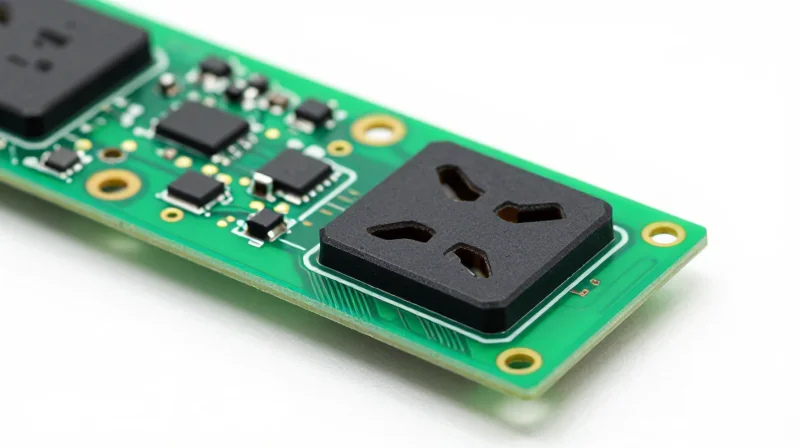
The Architecture of WiFi-Integrated Smart Plugs
WiFi-based PCBA architectures rely on direct communication between the smart plug and the local wireless access point. Unlike mesh protocols that require an intermediary hub, these devices utilize the standard 802.11 b/g/n protocols to bridge directly to the cloud. This design simplifies the user experience by eliminating hardware prerequisites, making it the most accessible entry point for consumers integrating smart energy monitoring into their existing home network infrastructure.
Comparative Analysis: WiFi vs. Mesh Alternatives
| Feature | WiFi PCBA | Mesh (Zigbee/Matter) |
|---|---|---|
| Hub Requirement | None (Direct to Router) | Required |
| Power Consumption | Higher (Active Radio) | Low (Sleep Modes) |
| Network Scalability | Limited (Router Load) | High (Self-Healing) |
| Latency | Low (Direct Path) | Variable (Hop-dependent) |
Strategic Pros and Cons
- Direct Cloud Connectivity
The absence of a hub significantly reduces the barrier to entry for end-users, lowering initial costs and simplifying the installation process. - High Data Throughput
WiFi allows for high-bandwidth data transmission, ideal for real-time telemetry and advanced energy usage analytics that require frequent firmware updates. - Network Congestion
A high density of WiFi devices can overwhelm standard home routers, potentially leading to instability in larger smart home deployments. - Energy Constraints
WiFi radios consume significantly more power than low-energy mesh alternatives, which can complicate the thermal design of compact smart plug PCBAs.
While WiFi remains the dominant protocol due to its ubiquitous nature, engineering a reliable smart plug PCBA requires careful consideration of the power budget and the RF environment. Developers must balance the convenience of direct cloud access with the inherent limitations of standard home router capacities to ensure long-term device reliability.
Zigbee and Thread: The Low-Power Powerhouses
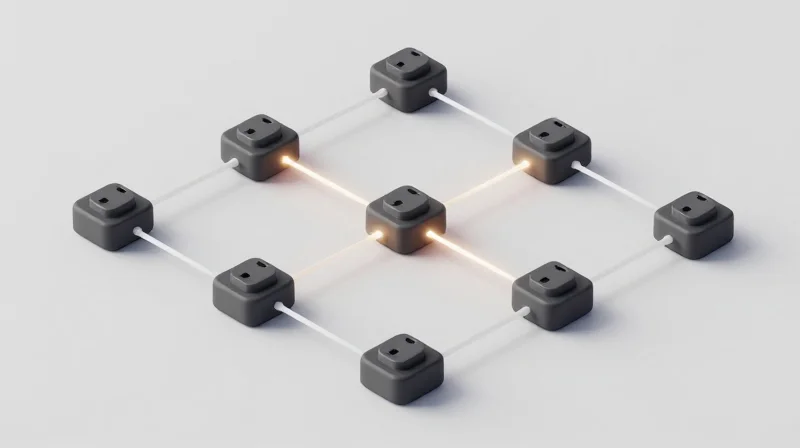
The Architecture of Mesh Networking
Unlike traditional star topologies that rely on a single central gateway, Zigbee and Thread employ mesh networking to extend signal range and reliability. In a smart plug context, this means that every powered-on plug acts as a signal repeater, or 'router node.' By creating a self-healing fabric, these protocols ensure that smart plugs remain connected even if a primary router node goes offline or is relocated, drastically reducing the latency and packet loss common in high-density WiFi environments.
Comparative Efficiency: Zigbee vs. Thread
| Feature | Zigbee (IEEE 802.15.4) | Thread (IP-Based) |
|---|---|---|
| Network Layer | Zigbee Pro | IPv6 / 6LoWPAN |
| IP Compatibility | Requires Gateway/Bridge | Native IP Connectivity |
| Latency | Low | Ultra-Low |
| Self-Healing | Standard Mesh | Robust Mesh (No Single Point of Failure) |
Why Smart Plug PCBA Design Favors Mesh
When designing smart plug PCBA, developers must prioritize low-power consumption without sacrificing constant availability. Mesh-capable chips allow the device to maintain a 'sleep' state while still routing traffic for other devices in the network. This 'always-connected' mesh capability is precisely why these protocols are superior for smart energy monitoring and management applications where power efficiency and network stability are critical.
Frequently Asked Questions
- Do I need a separate gateway for Thread smart plugs?
Thread is IP-based and supports direct communication with border routers, significantly simplifying the network setup compared to legacy Zigbee systems. - How does mesh networking improve smart plug reliability?
By forming a mesh, devices bypass signal dead zones and create redundant paths, ensuring the smart plug stays responsive even in complex building environments. - Are these protocols power-efficient?
Yes, both protocols operate on the IEEE 802.15.4 standard, which is specifically engineered for low-power operation compared to the high-power requirements of standard WiFi radios.
The Matter Revolution: Why It Matters for Hardware
The Matter Revolution: Why It Matters for Hardware
Matter functions as a unifying language for smart home devices, operating above the physical and network layers. For smart plug PCBA manufacturers, this means the end of single-ecosystem constraints. By adopting Matter, a single hardware design can achieve native compatibility across Apple Home, Google Home, Amazon Alexa, and Samsung SmartThings simultaneously, drastically reducing the complexity of SKU management and software maintenance.
Bridging the Protocol Gap
Matter does not replace existing protocols like WiFi or Thread; rather, it abstracts them. It utilizes standard IP-based communication to ensure that regardless of the underlying hardware transport, the application-level data remains consistent. This simplifies the development cycle because engineers no longer need to write custom integration code for every major smart home platform.
| Feature | Legacy Protocol Approach | Matter Protocol Approach |
|---|---|---|
| Ecosystem Support | Fragmented (Select one or many) | Unified (Universal compatibility) |
| Onboarding | Complex/Manual | Simplified/Standardized |
| Software Stack | Proprietary/Cloud-heavy | Standardized/Local-first |
| Maintenance | High effort per platform | Streamlined updates |
Key Advantages for PCBA Designers
- How does Matter simplify PCBA development?
It allows designers to focus on a single, standardized software stack that works across all ecosystems, eliminating the need for platform-specific hardware certification. - Does Matter affect power consumption?
Yes, by utilizing Thread as an underlying transport layer, Matter-enabled smart plugs can achieve significantly lower power profiles compared to traditional WiFi-only architectures. - What is the impact on user onboarding?
Matter introduces a unified Commissioning process, removing the common frustration of needing separate apps to link hardware to different voice assistants.
By shifting the focus from platform-specific integration to protocol-standardized communication, hardware manufacturers can future-proof their smart plug designs against the rapid churn of ecosystem-specific updates. This transition is not merely a software upgrade but a fundamental change in the hardware development lifecycle, prioritizing local-first reliability and cross-platform flexibility.
Comparative Analysis: Power, Latency, and Scalability
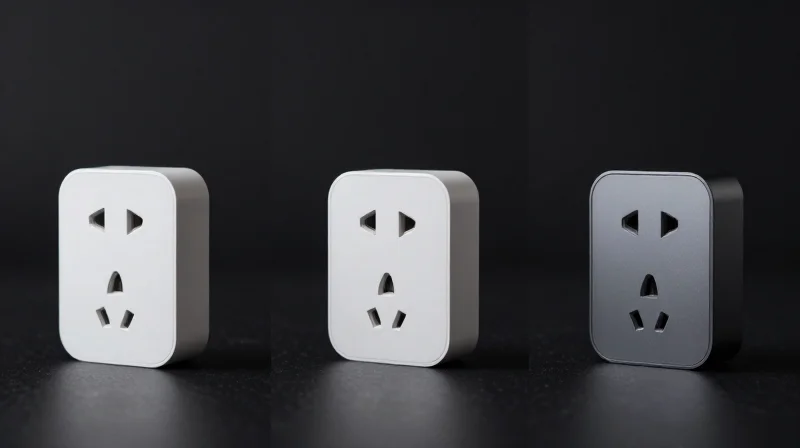
Selecting the optimal communication protocol for smart plug hardware requires balancing the immediate performance needs of the device against the long-term architectural requirements of a smart home ecosystem.
Performance Matrix
| Metric | WiFi | Zigbee | Matter (over Thread) |
|---|---|---|---|
| Power Consumption | High (Continuous) | Very Low (Battery/Mains) | Low |
| Latency | Low (but congestion sensitive) | Low (Local mesh) | Low |
| Network Scalability | Limited by AP capacity | High (Self-healing mesh) | High (Distributed) |
| Data Throughput | High | Low | Moderate |
Technical Considerations for PCBA Design
WiFi-based smart plugs remain popular due to direct router connectivity, but they introduce significant overhead for PCBAs, requiring larger power supplies to manage peak radio currents and active power management. Conversely, Zigbee and Thread utilize 802.15.4 radio standards, offering superior power efficiency and robust mesh networking. While Zigbee relies on a dedicated bridge or hub, Matter (specifically when implemented over Thread) provides a future-proof abstraction layer that allows devices to communicate locally without cloud reliance, significantly reducing latency and enhancing privacy.
Frequently Asked Questions
- Does Matter increase the hardware cost of a smart plug?
Initially, yes. Implementing Matter requires additional flash memory and RAM to accommodate the protocol stack, which may necessitate a more capable microcontroller than a simple WiFi-only plug. - Which protocol offers the best response time for remote switching?
Thread and Zigbee typically offer more consistent local response times because they operate on a dedicated low-power mesh network that avoids the traffic contention commonly seen on crowded 2.4GHz WiFi channels. - Is scalability an issue for WiFi-based smart plugs?
Yes, as the number of WiFi devices grows, the consumer's router becomes a bottleneck, often leading to packet loss and dropped connections; Zigbee and Thread networks scale better by offloading traffic to a mesh topology.
Cost Implications for PCBA Design
The choice between WiFi, Zigbee, and Matter is not merely a technical preference but a financial decision that cascades through the entire product lifecycle. WiFi modules often carry a higher per-unit silicon cost but benefit from massive economies of scale and direct-to-cloud connectivity, whereas Zigbee and Matter-over-Thread solutions typically require additional investment in gateway infrastructure and specialized radio components.
Comparative Cost and Complexity Matrix
| Protocol | BOM Complexity | Unit Cost | Infrastructure Requirement |
|---|---|---|---|
| WiFi | Low (Direct to Router) | Moderate | None |
| Zigbee | High (Radio + Gateway) | Low | Hub Required |
| Matter (Thread) | Medium (Multiprotocol) | High | Thread Border Router |
Manufacturing and Deployment Considerations
Beyond the bill of materials, manufacturers must account for certification and manufacturing overheads. WiFi certification remains straightforward, but Matter-enabled devices demand rigorous security provisioning and software-level certifications that can significantly impact time-to-market. Additionally, the need for radio frequency (RF) shielding and specialized antenna design in Zigbee and Thread modules can increase PCB footprint and board-level manufacturing complexity.
Frequently Asked Questions
- Does switching to Matter increase the PCB BOM cost?
Yes, generally. Matter-certified devices often require more robust memory and flash storage to handle the protocol stack, alongside specialized silicon that supports Thread or multiprotocol connectivity. - Is WiFi always the most expensive option for long-term maintenance?
Not necessarily. While WiFi consumes more power and requires more cloud-side processing, it eliminates the need for a secondary hub, which lowers the barrier to entry and simplifies end-user support costs. - How does protocol selection impact manufacturing throughput?
Zigbee and Matter devices require additional provisioning steps during the assembly line to flash secure keys and configure network identifiers, which can slightly increase cycle times compared to simpler WiFi deployments.
Future-Proofing Your Product Roadmap
Designing for Protocol Agility
The most significant risk in smart energy hardware design is platform lock-in. As standards like Matter gain traction, the shift away from proprietary silos is mandatory. Engineers should adopt an SoC-agnostic approach by utilizing modular daughter-board designs or SoCs with high memory headroom, which allows for over-the-air (OTA) updates that could potentially transition devices from single-protocol firmware to multi-protocol support.
Strategic Hardware Architecture Comparison
| Strategy | Implementation | Future-Proofing Capability |
|---|---|---|
| Hybrid Radio (WiFi + Thread) | Integrating multiple antennas/chips | High: Supports legacy WiFi and new Matter/Thread |
| Modular PCBA | Separated RF and Power stages | Medium: Allows RF module upgrades |
| Firmware-Defined Protocol | High-memory SoC focus | High: Capability to add protocols via OTA |
Frequently Asked Questions on Long-Term Scalability
- Is a hybrid WiFi/Thread radio worth the BOM cost increase?
For premium smart plug segments, the added cost is justified by the ability to operate across both legacy and next-gen smart home networks, drastically reducing consumer support friction. - Can current Zigbee plugs be updated to Matter?
Most can only be updated if they have a Zigbee-to-Matter bridge, as the underlying hardware often lacks the memory or processing power required for the Matter stack. - What is the most critical component for future-proofing?
Flash memory capacity is the most critical element; future protocol updates often require larger memory footprints than initial product launches anticipate.
Ultimately, manufacturers must balance the immediate need for low-cost BOMs with the long-term reality of software-defined interoperability. By selecting SoCs that are officially qualified for the latest connectivity standards, you ensure that your hardware remains a viable, updatable asset in the consumer's home for years rather than months.
Technical Considerations for RF Shielding and Certification
RF Integration and EMI Challenges
Integrating WiFi, Zigbee, and Matter radios into a compact AC-powered PCBA introduces significant electromagnetic interference (EMI) risks. Because smart plugs switch high-voltage loads, the proximity of the AC/DC converter and relay components to the RF antenna can cause desensitization, leading to connection drops and reduced throughput.
To mitigate these issues, engineers must prioritize trace impedance matching and proper grounding strategies. Using a four-layer PCB stack-up is recommended, with a dedicated ground plane directly beneath the RF circuitry to minimize path noise.
Regulatory Certification Requirements
Achieving compliance for smart plugs is a multi-step process involving intentional and unintentional radiator testing. Manufacturers must navigate regional standards such as FCC (USA), CE/RED (EU), and ISED (Canada), which govern spectral emission and human exposure limits.
| Certification Category | Primary Focus | Regulatory Impact |
|---|---|---|
| FCC Part 15 / CE RED | RF Spectral Compliance | Ensures device operates within allowed frequency bands. |
| EN 301 489 | EMC/ESD Robustness | Ensures device is immune to external interference. |
| Matter Certification | Interoperability | Mandatory for 'Matter' branding and ecosystem trust. |
Frequently Asked Questions
- Does an FCC-certified module guarantee my device will pass?
No. While using a pre-certified radio module simplifies compliance, the host PCB layout, antenna integration, and AC power supply design are still subject to FCC Part 15 unintentional radiator testing. - How does relay switching affect RF performance?
Mechanical relays can create arc noise that interferes with RF signals; implementing snubber circuits or opting for solid-state relays (SSRs) can significantly improve the Signal-to-Noise Ratio (SNR) in crowded WiFi environments. - Why is Matter certification more complex?
Matter requires not only radio frequency compliance but also rigorous security testing and adherence to specific application-layer profiles to ensure universal device interoperability.
Selecting the right protocol for your smart plug PCBA is no longer just a technical choice; it is a business strategy that dictates your product's longevity in an interoperable market. Whether you prioritize the ease of WiFi or the robustness of a Matter-supported mesh network, balancing these factors is key to meeting modern consumer expectations. Ready to optimize your hardware roadmap? Contact our engineering team today to discuss your next PCBA prototype.
