
As global air quality standards tighten, consumer expectations for health-conscious appliances are hitting new peaks. For manufacturers, the challenge lies in moving beyond simple mechanical controllers toward sophisticated, cloud-connected ecosystems. This article explores why the shift to IoT-integrated PCBA solutions is no longer a luxury, but a necessity for surviving the competitive smart home market.
The Evolution of Air Purification Hardware
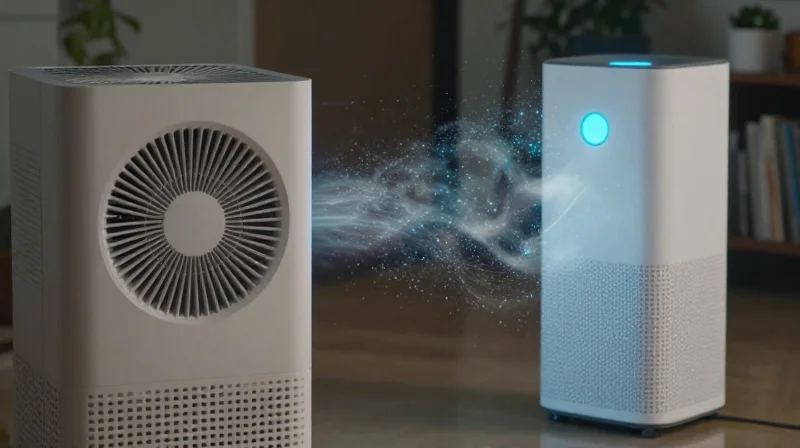
From Manual Operation to Automated Intelligence
The transition of air purification hardware is characterized by the movement away from static, user-operated controls toward autonomous, sensor-fused architectures. In the early stages of the industry, hardware was defined by rudimentary PCBAs (Printed Circuit Board Assemblies) featuring basic timing circuits and fixed-speed fan controllers. Today, hardware designs have shifted toward integrated platforms capable of real-time air quality indexing, ambient sensing, and network connectivity.
| Feature | Traditional PCBA | IoT-Enabled Controller |
|---|---|---|
| Control Logic | Fixed State/Manual | Dynamic/Algorithmic |
| Sensor Feedback | None or Simple Analog | Multi-parameter Digital |
| User Interface | Physical Buttons/Knobs | Cloud/App Integration |
| Data Processing | None | Edge/Cloud Analytics |
Key Evolutionary Milestones
- The Mechanical Era
Defined by simple AC motors and multi-stage toggle switches, where human intervention was the only trigger for adjustment. - The Sensor-Integrated Era
The introduction of discrete particulate matter (PM2.5) sensors allowed PCBAs to implement basic feedback loops, triggering fan speed increases during high-pollution spikes. - The IoT-Enabled Era
The integration of Wi-Fi/Bluetooth microcontrollers (MCUs) has transformed air purifiers into peripheral devices within the smart home ecosystem, enabling remote monitoring and adaptive learning patterns.
This evolution is not merely a cosmetic update but a fundamental architecture shift. By moving away from monolithic, single-purpose boards, manufacturers are now adopting modular IoT controllers that support OTA (Over-the-Air) firmware updates, ensuring hardware longevity in a rapidly changing technological landscape.
Anatomy of Legacy Controller Architectures
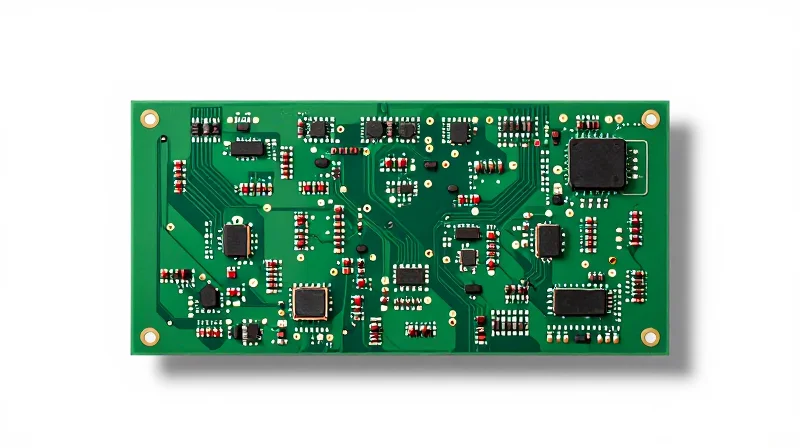
The Rigid Nature of Traditional PCBA Design
Traditional air purification systems operate on a closed-loop, deterministic architecture. The Printed Circuit Board Assembly (PCBA) acts as a static bridge between hardware sensors and electromechanical actuators. Because these controllers lack integrated processing power and communication stacks, they are confined to a hard-coded set of operating parameters defined at the factory. Any adjustment to performance or logic requires a physical board redesign, rendering these units effectively obsolete the moment they leave the manufacturing floor.
Functional Limitations of Legacy Hardware
- Fixed Logic Cycles
Control signals are governed by simple analog comparators or basic microcontrollers running firmware that cannot be updated or optimized post-deployment. - Limited Sensor Interoperability
Legacy boards are generally tethered to specific proprietary sensors, making it impossible to integrate advanced laser-based PM2.5 or VOC sensors without replacing the entire control module. - Lack of Diagnostic Telemetry
These systems provide no performance metrics. Users are forced to rely on timed filter replacement indicators rather than actual sensor data or airflow resistance analysis.
Legacy vs. Modern Controller Architecture Comparison
| Feature | Legacy PCBA | IoT-Enabled Controller |
|---|---|---|
| Logic Basis | Fixed/Hard-coded | Adaptive/AI-driven |
| Connectivity | None | Wi-Fi/Bluetooth/Cloud |
| Adaptability | Hardware Revision Only | Over-the-Air (OTA) Updates |
| Data Handling | Local Signal Processing | Edge and Cloud Analytics |
The fundamental flaw of the legacy architecture is its isolation. By decoupling the air purifier from the broader home ecosystem and the cloud, traditional boards remain blind to external environmental factors such as regional humidity, fluctuating pollen counts, or integration with smart HVAC systems. As consumer expectations shift toward intelligent, automated air quality management, the limitations of these 'dumb' circuits become a significant barrier to user satisfaction and product longevity.
Key Advantages of IoT-Integrated PCBA Solutions
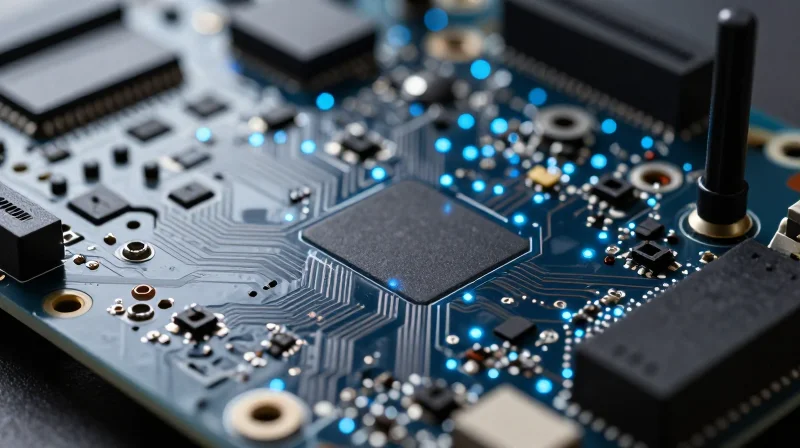
The Strategic Edge of Connected PCBAs
Integrating IoT directly into the printed circuit board assembly (PCBA) shifts air purification from a passive utility to an active, intelligent environment partner. Unlike legacy systems that rely on hard-coded logic, IoT-enabled controllers provide the continuous data stream necessary to optimize performance, reduce power consumption, and allow for manufacturer-led feature evolution through over-the-air (OTA) updates.
Core Capabilities Comparison
| Capability | Traditional PCBA | IoT-Enabled PCBA |
|---|---|---|
| Diagnostics | Manual troubleshooting | Automated real-time reporting |
| Updates | None (Hardware locked) | Over-the-air (OTA) firmware |
| Maintenance | Reactive (Fixed intervals) | Predictive (Usage-based) |
| Data Access | Local-only / Offline | Cloud-based remote access |
Key Advantages Explained
- Real-time Monitoring
IoT-enabled PCBAs transmit environmental data such as particulate matter levels, humidity, and volatile organic compounds (VOCs) to the cloud, allowing users to track air quality metrics in real time via mobile devices. - Remote Firmware Updates
Manufacturers can deploy critical security patches, algorithm improvements, and new functional features remotely, ensuring the device remains cutting-edge without requiring physical hardware intervention or unit replacement. - Predictive Maintenance
By analyzing filter saturation rates and motor health through high-resolution sensor telemetry, these systems alert users exactly when maintenance is needed, preventing unnecessary filter waste and system failure. - Optimized Power Efficiency
Advanced control logic adjusts motor speeds based on historical air quality trends and real-time inputs, significantly reducing energy consumption compared to traditional fixed-speed cycling.
Cloud Connectivity: Bridging Data and Decision Making

Beyond Local Limits: The Power of Cloud Computing
While traditional PCBAs are constrained by onboard microcontrollers with limited flash memory and processing power, cloud-based architectures remove these boundaries. By streaming sensor data to the cloud, air purifiers can leverage massive computational power to execute complex machine learning models, correlate local air quality with external weather patterns, and adapt purification strategies based on global usage trends.
| Feature | Legacy PCBA | IoT-Enabled Cloud Solution |
|---|---|---|
| Processing Power | Fixed/Low (On-device only) | Scalable (Cloud-based) |
| Algorithm Complexity | Basic threshold logic | Deep learning & predictive modeling |
| Environmental Data | Local sensors only | Sensor data + external API integration |
| System Adaptability | Static, non-updating | Real-time heuristic updates |
Enabling Advanced Analytical Capabilities
Cloud integration allows for the deployment of advanced predictive algorithms that anticipate pollution events rather than merely reacting to them. For example, by correlating indoor particulate matter (PM2.5) trends with local pollen counts and humidity indices fetched from external APIs, the system can automatically adjust fan speeds hours before a spike in indoor contamination occurs.
Frequently Asked Questions
- Why can't local microcontrollers handle these advanced algorithms?
Local controllers are designed for low power and high reliability; they lack the memory and multi-core processing architecture required for large-scale data modeling and persistent database queries. - Does cloud dependency impact the device's reliability during outages?
Modern IoT PCBAs use a hybrid approach where the device retains a local firmware 'fail-safe' logic, ensuring fundamental purification functions continue even if the cloud connection is momentarily interrupted. - How does cloud connectivity improve filter longevity?
By analyzing cumulative airflow and particulate load patterns in the cloud, the system provides accurate 'remaining useful life' metrics, moving from arbitrary timer-based alerts to precision-based maintenance scheduling.
Hardware Reliability and Security Standards
Hardware Reliability Standards in IoT Air Purification
As air purifiers evolve from simple electromechanical devices to complex IoT nodes, hardware reliability must transcend basic component longevity. Modern smart controllers require high-MTBF (Mean Time Between Failure) components that can withstand constant thermal cycling and high-frequency communication protocols. Ensuring reliability involves implementing rigorous power management systems to protect sensitive Wi-Fi and Bluetooth modules from voltage spikes caused by heavy motor startup loads.
Security Standards for Connected Controllers
Integrating connectivity into air quality management introduces new attack surfaces. Manufacturers must adopt a 'Security by Design' approach, shifting away from default-password legacy systems toward cryptographically secure hardware architectures. This includes the use of Secure Elements (SE) or Trusted Execution Environments (TEE) to store encryption keys and authenticate firmware updates, ensuring that the device remains shielded from unauthorized access or malicious code injection.
| Feature | Legacy PCBA | IoT-Enabled Controller |
|---|---|---|
| Security Architecture | None (Open Logic) | Hardware-based Root of Trust |
| Firmware Updates | Manual Physical Reset | Signed Over-the-Air (OTA) |
| Data Privacy | Not Applicable | AES-256 Encryption |
| Vulnerability Patching | Impossible | Automated Remote Patches |
Frequently Asked Questions on Hardware Security
- How does hardware-level encryption benefit the user?
It ensures that sensitive air quality data or personal usage habits cannot be intercepted during transmission between the home and the cloud, protecting user privacy. - Why are secure boot sequences critical for IoT air purifiers?
A secure boot process prevents the execution of unsigned or tampered firmware, effectively neutralizing attempts by bad actors to compromise the device's logic or internal network access. - Does advanced security increase the hardware BOM cost?
While components like Secure Elements do add to the Bill of Materials, they significantly reduce the long-term risk of mass recall or data breach liabilities, providing a superior return on investment.
Consumer Market Adoption Trends
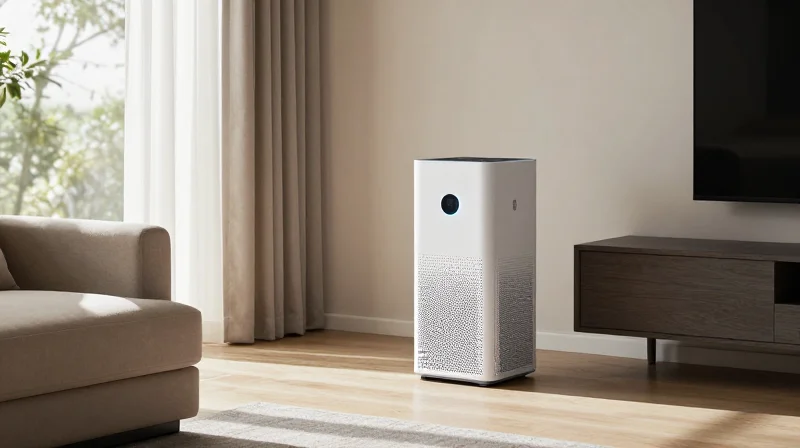
The Shift Toward Connected Wellness
Modern consumers no longer view air purifiers as simple 'set-it-and-forget-it' appliances. The market is witnessing a clear migration toward IoT-enabled controllers, driven by a desire for quantifiable health data and seamless smart home integration. Users are prioritizing devices that provide actionable insights, such as real-time indoor air quality (IAQ) tracking and filter lifespan analytics, which are only possible through connected hardware architectures.
| Feature Driver | Traditional PCBA Consumer Perception | IoT-Enabled Controller Consumer Value |
|---|---|---|
| Operational Control | Manual or basic timers | Voice commands & remote app control |
| Health Visibility | None (Blind operation) | Detailed IAQ analytics & trends |
| Maintenance | Reactive (Wait for light to blink) | Predictive (App notifications/Auto-order) |
| Device Lifespan | Static functionality | Value growth via OTA updates |
Key Drivers of Market Growth
- Ecosystem Interoperability
Consumers favor devices that communicate with existing platforms like HomeKit, Alexa, or Google Home, allowing for automated routines such as 'increase fan speed when smart sensors detect smoke'. - Proactive Health Data
The ability to view air quality history on a smartphone creates a sense of empowerment, transforming a background utility into a core component of the user's home wellness strategy. - Future-Proofing
Over-the-air (OTA) update capabilities ensure that the device remains current, protecting the consumer's investment against rapid technological obsolescence.
As the price gap between basic PCBAs and smart controllers continues to narrow, OEMs that fail to integrate IoT capabilities risk becoming marginalized. The market trajectory is clear: the integration of smart hardware is no longer a luxury but a fundamental expectation for the modern, tech-conscious household.
Future-Proofing Your Product Roadmap

Designing for Technological Longevity
Future-proofing a product roadmap in the smart home sector requires moving away from monolithic, rigid PCB designs toward modular, firmware-upgradable hardware. As communication protocols like Matter or Thread emerge and sensor accuracy improves, the hardware must be able to accommodate these changes without requiring a complete redesign of the core assembly.
Architectural Comparison: Traditional vs. Modular
| Feature | Traditional PCBA | Modular IoT PCBA |
|---|---|---|
| Flexibility | Fixed; static functionality | Scalable; field-upgradeable |
| Life Cycle | Short; obsolescence-prone | Extended; modular upgrades |
| Integration | Proprietary/Closed | Interoperable/Open |
Strategic Roadmap Considerations
To stay ahead of market trends, manufacturers should prioritize Over-the-Air (OTA) update capability and support for multi-protocol connectivity. Investing in a hardware abstraction layer (HAL) during the design phase allows the software to interact with the hardware components seamlessly, insulating your product logic from changes in sensor or connectivity hardware.
- How can we ensure our hardware isn't obsolete in two years?
Design with modularity in mind, using daughterboards for connectivity modules so you can swap them out for newer standards without replacing the main controller. - Does modular hardware cost more upfront?
While the initial NRE cost and per-unit cost may be slightly higher, the long-term value lies in avoiding costly total hardware redesigns and building long-term brand loyalty. - What role does firmware play in longevity?
Firmware is critical; it allows you to refine sensor algorithms, fix security vulnerabilities, and push feature enhancements long after the unit has left the manufacturing floor.
Conclusion: The Smart Choice for Next-Gen Appliances
The Strategic Imperative for IoT Integration
The shift toward IoT-enabled controller solutions represents more than a technological upgrade; it is a fundamental shift in how air purification appliances interact with their environment and their users. By moving beyond the limitations of static PCBAs, manufacturers can implement cloud-based analytics, over-the-air (OTA) updates, and sophisticated sensor fusion. This transition ensures that products do not become obsolete the moment they leave the factory floor, providing a robust foundation for iterative improvements and enhanced customer satisfaction.
| Feature | Traditional PCBA | IoT-Enabled Controller |
|---|---|---|
| Functional Scope | Static, fixed logic | Dynamic, cloud-expandable |
| Product Lifecycle | Limited to hardware life | Extended via software updates |
| Data Utilization | Local/None | Deep predictive analytics |
| Market Position | Commoditized | Premium/High-value |
Ensuring Longevity and Brand Authority
Manufacturers that embrace IoT-enabled architectures secure their position as industry leaders. Beyond the immediate hardware advantages, the continuous feedback loop provided by IoT telemetry enables data-driven product roadmaps. This allows brands to anticipate consumer needs, optimize energy performance, and address security vulnerabilities before they impact the end user.
- Is the transition to IoT too complex for existing manufacturing lines?
Modern modular PCBA designs are specifically engineered to integrate IoT modules with minimal disruption, allowing for a phased transition from legacy hardware to fully connected systems. - Does connectivity compromise device security?
When built with industry-standard secure elements and encrypted communication protocols, IoT-enabled controllers provide a higher level of long-term security compared to traditional, non-patchable hardware. - Will consumers pay a premium for IoT features?
Data indicates that modern consumers view smart connectivity as a baseline requirement, favoring appliances that integrate with their smart home ecosystems and offer remote management capabilities.
The transition from legacy hardware to IoT-integrated systems is the decisive factor for air purification brands looking to lead the market. By prioritizing scalable, cloud-ready PCBA designs, manufacturers can deliver the precision and reliability that modern users demand. Ready to upgrade your product's intelligence? Contact our engineering team today to explore custom IoT controller solutions for your next project.
