
The smart home market is undergoing a fundamental transformation. As consumers demand seamless intelligence and lower energy bills, engineers are being pushed to reimagine the core hardware behind climate control. This report unpacks the technical evolution of PCB design and how low-power AI integration is replacing legacy architectures to define the next decade of intelligent buildings.
The Evolution of Smart Thermostat Hardware
The Shift from Electromechanical to Digital Control
The evolution of climate control hardware represents a shift from simplistic analog switching to complex, data-driven computational environments. Historically, thermostats functioned as basic bimetallic strips or mercury-tilt switches that physically completed a circuit to trigger HVAC systems. These mechanical components were durable but lacked the intelligence to optimize energy consumption, relying entirely on static temperature setpoints.
Generational Evolution of HVAC Control Architecture
| Generation | Control Logic | Hardware Interface | Connectivity |
|---|---|---|---|
| First Gen | Mechanical/Bimetallic | Analog Relay | None |
| Second Gen | Microcontroller (MCU) | LCD + Buttons | Proprietary RF |
| Third Gen | SoC/Edge AI | Touchscreen + Sensor Fusion | Wi-Fi/Zigbee/Matter |
Modern smart thermostats now utilize highly integrated System-on-Chip (SoC) architectures. These embedded systems integrate advanced sensor fusion, real-time wireless communication, and low-power processing cores that manage complex PID (Proportional-Integral-Derivative) algorithms. The transition from legacy PCBs to high-density interconnect designs has allowed for modularity, enabling the inclusion of environmental sensors such as VOC, CO2, and occupancy detection.
Key Questions Regarding Hardware Modernization
- How have PCB materials evolved for smart thermostats?
Early boards utilized basic FR-4 substrates for simple logic; modern designs now leverage advanced thermal management materials and compact HDI (High-Density Interconnect) layers to accommodate radio modules and high-speed processing without increasing unit volume. - Why is Edge AI integration now a hardware priority?
Processing data locally on the PCB via dedicated neural accelerators reduces latency and bandwidth costs, while also addressing privacy concerns by ensuring that occupancy patterns and usage data do not necessarily need to be sent to the cloud for basic optimization. - What is the primary challenge in next-gen thermostat hardware?
The central challenge is balancing the power requirements of high-performance SoCs with the strict energy constraints imposed by traditional HVAC wiring, which often lacks a common 'C-wire' for consistent power delivery.
Anatomy of a Modern Climate Control PCB
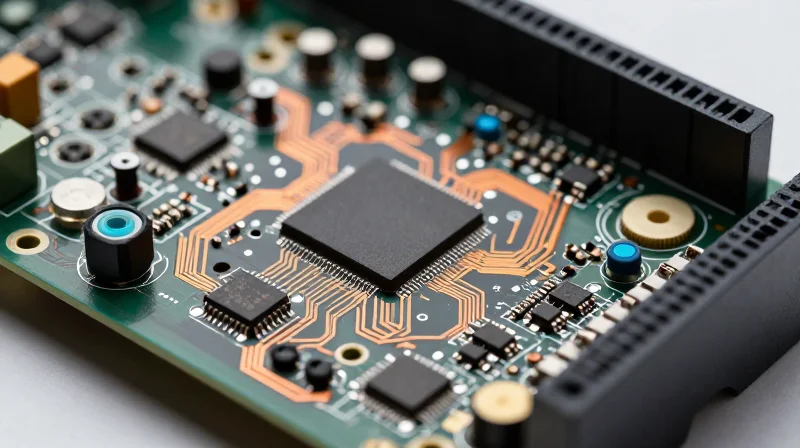
Core Architecture and Component Integration
The contemporary smart thermostat PCB is a masterpiece of density and efficiency, blending low-power consumption with multi-core processing capabilities. At its heart lies a modern MCU (Microcontroller Unit) or SoC (System-on-Chip) that handles real-time PID control loops, user interface rendering, and cloud communication protocols simultaneously. Unlike legacy controllers, modern boards utilize high-density interconnect (HDI) technology, allowing for miniaturized footprints while maintaining the necessary thermal management for sensitive sensors.
Critical PCB Modules
| Module | Primary Function | Key Requirement |
|---|---|---|
| Processing Unit | Logic & Control | Low power consumption |
| Precision Sensors | Environmental Data | High signal integrity |
| Connectivity | Wi-Fi/Thread/Matter | RF shielding |
| Power Management | Energy Conversion | High efficiency (Buck/Boost) |
Engineering Challenges in Climate Control PCBs
- How does self-heating affect sensor accuracy?
Internal heat from high-speed processors can drift ambient temperature readings; engineers must use strategic component placement and thermal isolation slots to decouple the sensor from heat-generating components. - Why is RF shielding crucial for smart thermostats?
With multiple radios (Wi-Fi, Bluetooth, Zigbee) in close proximity, robust shielding is required to prevent electromagnetic interference (EMI) from disrupting the analog-to-digital converters used for precise temperature measurement. - How is power efficiency achieved?
Modern boards utilize advanced Power Management Integrated Circuits (PMICs) that dynamically scale voltage and clock frequency, allowing the system to enter deep-sleep modes while still responding to wake-on-event signals.
AI Integration: The New Intelligence Layer
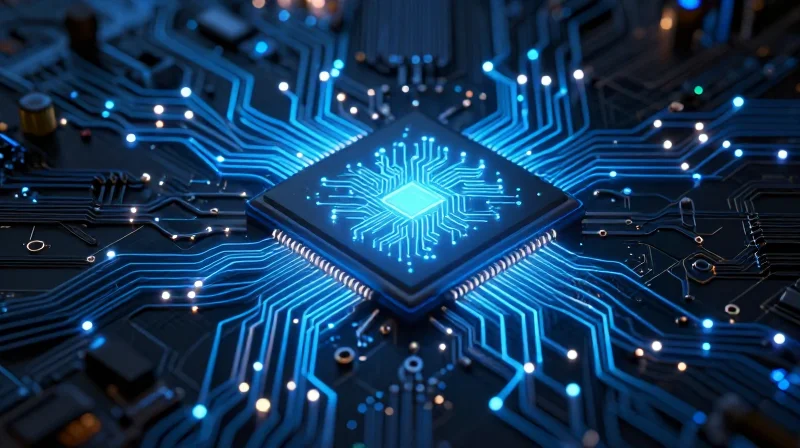
The Shift Toward Edge Intelligence
Integrating artificial intelligence directly into the thermostat—rather than relying on cloud-based processing—reduces latency, enhances privacy, and ensures functionality during internet outages. This architectural shift requires a transition from standard Microcontroller Units (MCUs) to System-on-Chips (SoCs) equipped with integrated Neural Processing Units (NPUs). These NPUs are optimized for inferencing tasks, such as occupancy detection and predictive climate modeling, without overloading the primary application processor.
Impact on PCB Design Constraints
The inclusion of NPUs introduces new challenges in PCB design, specifically regarding power distribution, signal integrity, and thermal dissipation. Higher computational demands require more robust power delivery networks (PDNs) to manage the voltage fluctuations inherent in AI workloads.
| Feature | Standard MCU System | AI-Integrated NPU System |
|---|---|---|
| Processing Focus | Control Logic & I/O | Parallel Tensor Acceleration |
| Power Draw | Low/Stable | Dynamic/High Burst |
| Data Handling | Cloud-Dependent | Edge-Local Inference |
| Thermal Profile | Minimal Heat Flux | High Localized Heat |
Frequently Asked Questions Regarding AI Integration
- Why do we need a dedicated NPU instead of using the existing CPU?
While a general-purpose CPU can execute AI algorithms, it is highly inefficient in terms of power-to-performance ratio. NPUs are architecturally designed to process massive parallel matrix operations, which significantly reduces the time and energy required to perform environmental inference. - How does AI integration affect the thermal management of the PCB?
AI inference creates localized heat spikes. Designers must account for increased copper pour areas for heat sinking and utilize specialized thermally conductive substrates or thermal vias to prevent localized overheating that could degrade the accuracy of onboard temperature sensors.
The Demand for Energy-Efficient Circuitry
Minimizing Quiescent Current in Thermostat Nodes
In the context of next-gen climate control, quiescent current—the power consumed by a device when idle—is the primary driver of battery degradation. To achieve multi-year battery life, engineers must transition away from legacy linear regulators towards high-efficiency buck-boost converters and ultra-low power sleep states. By integrating load switches and power-gating, designers can completely disconnect inactive sub-systems, such as redundant communication modules or peripheral sensors, during standby periods.
Strategic Power Management Components
| Component Type | Power Impact | Optimization Strategy |
|---|---|---|
| Voltage Regulator | High | Replace LDOs with Synchronous Buck Converters |
| Connectivity Module | Very High | Duty-cycling and Sleep-Mode Orchestration |
| Sensor Array | Moderate | I2C/SPI Power Gating |
Design Considerations for Battery-Operated Nodes
- How do NPUs affect power efficiency?
While NPUs increase peak power draw during inference, they significantly improve energy efficiency by processing data locally rather than transmitting raw sensor streams to the cloud, which is often the most power-intensive action. - What is the role of deep-sleep modes?
Deep-sleep modes allow the MCU to remain in a near-zero-current state, waking only on hardware interrupts from temperature threshold changes or user interaction, thereby drastically reducing average consumption. - Why prioritize low-leakage PCB substrates?
At ultra-low power levels, the PCB itself can act as a resistor; choosing low-loss materials reduces current leakage across traces, preserving energy for critical sensing tasks.
The path forward for smart climate control hardware lies in a holistic approach to energy budgeting. By treating every milliampere-second as a finite resource, developers can engineer PCBs that don't just 'work,' but thrive under strict power constraints, ensuring the next generation of smart thermostats is as sustainable as it is intelligent.
Comparing Legacy vs. Modern PCB Architectures
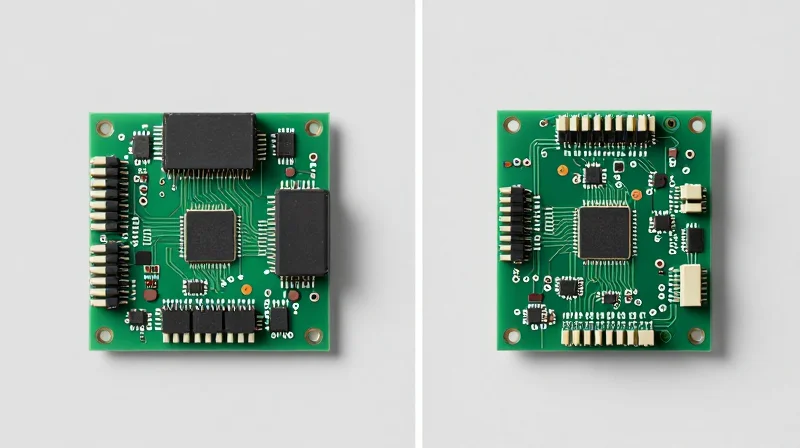
Legacy vs. Modern Architecture: Key Distinctions
The transition from legacy climate control systems to next-gen smart thermostats represents a fundamental shift in board-level engineering. Legacy designs relied heavily on discrete components, mechanical relays, and generous PCB footprints that favored simplicity and durability over integrated functionality. Conversely, modern architectures leverage System-on-Chip (SoC) integration, high-density interconnects (HDI), and advanced power management ICs (PMICs) to shrink form factors while significantly increasing computational overhead for AI and IoT connectivity.
| Feature | Legacy Architecture | Modern Architecture |
|---|---|---|
| Component Integration | Discrete, through-hole components | Highly integrated SoCs and SIPs |
| Board Density | Low (Single/Double layer) | High (HDI, 6+ layer stacks) |
| Thermal Management | Passive convective cooling | Active thermal via arrays/heat spreading |
| Power Efficiency | High idle consumption | Dynamic voltage scaling (DVS) |
Technical Trade-offs
- How does miniaturization affect thermal dissipation?
As component density increases, modern PCBs require advanced thermal via stitching and copper pour optimization to prevent localized hot spots that can degrade sensitive sensor accuracy. - Why is power management a critical differentiator?
Legacy systems utilized linear regulators that dissipated excess power as heat, whereas modern designs use high-efficiency switching regulators capable of deep-sleep modes, essential for battery-operated smart thermostats. - Does integration increase complexity for assembly?
Yes, moving from legacy through-hole designs to modern fine-pitch Ball Grid Array (BGA) packages necessitates stricter manufacturing tolerances and more complex X-ray inspection protocols.
Overcoming Thermal Management Challenges
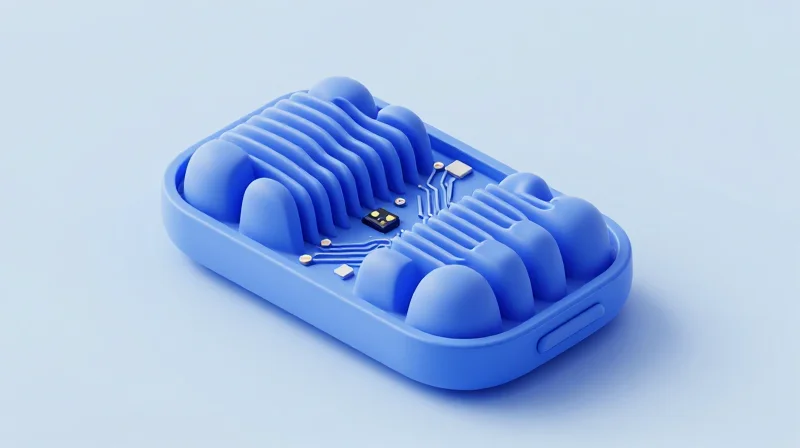
Managing Thermal Density in Compact Enclosures
As smart thermostats transition from basic scheduling to complex AI-driven predictive control, the integration of high-performance NPUs within small, wall-mounted enclosures creates significant thermal density challenges. Effective management relies on optimizing the thermal dissipation path from the silicon junction to the enclosure surface while maintaining a low-profile footprint.
Thermal Mitigation Strategies for Modern PCBs
Designers must move beyond passive dissipation to active layout strategies that distribute heat loads and utilize the PCB itself as a primary heat-spreading component.
| Strategy | Implementation Method | Primary Benefit |
|---|---|---|
| Thermal Vias | Copper-plated holes under NPU | Direct heat path to internal ground planes |
| Embedded Heat Spreaders | Copper coins or metal inserts | High thermal conductivity in hotspots |
| Surface Emissivity | Anodized coatings on housing | Improved radiative cooling efficiency |
Common Thermal Management FAQs
- How does PCB thickness impact thermal dissipation?
While thicker boards offer more copper volume for heat spreading, they also increase thermal resistance if the heat must travel through the dielectric layers to an external chassis. - Can AI-driven dynamic voltage scaling (DVS) reduce heat?
Yes, implementing precise DVS strategies allows the system to throttle clock speeds during low-activity cycles, significantly reducing power consumption and cumulative heat generation. - Is active cooling viable for wall-mount smart thermostats?
Active cooling, such as micro-fans, is generally avoided due to reliability concerns, noise, and mechanical wear; passive conduction and convective airflow remain the industry standard.
Ultimately, the success of next-generation climate control devices depends on co-designing the PCB layout with the chassis airflow. By leveraging high-conductivity thermal interface materials and strategic component placement, manufacturers can ensure the longevity of high-performance AI hardware without compromising device aesthetics.
Future-Proofing Your Hardware Design Pipeline
Designing for Seamless Interoperability
To remain competitive in the rapidly evolving smart home ecosystem, hardware engineers must prioritize architectural flexibility. The integration of Matter and Thread standards is no longer optional; it necessitates a design approach that decouples application-specific logic from communication stacks, ensuring that the hardware can support over-the-air (OTA) updates for future protocol iterations without requiring a full board redesign.
Strategic Component Selection for Longevity
- How do I ensure protocol compatibility?
Select System-on-Chips (SoCs) that offer hardware-accelerated IEEE 802.15.4 support and verified Matter certification pathways to ensure the radio subsystem can adapt to new connectivity requirements. - What memory considerations exist for future-proofing?
Increase your flash memory and SRAM allocation beyond immediate requirements. Future protocol stacks and edge-AI features often demand significantly larger memory footprints for secure boot and encrypted communication. - Is modularity necessary?
Yes. Utilize mezzanine connectors or modular RF daughterboards where space permits, allowing for hardware revisions to the wireless subsystem without redesigning the core climate-control circuitry.
| Feature | Legacy Approach | Future-Proofed Strategy |
|---|---|---|
| Connectivity | Proprietary/Single-Protocol | Matter/Thread/Multi-Protocol |
| Memory Capacity | Cost-Optimized (Minimum) | Over-Provisioned (Expansion Ready) |
| OTA Support | Basic Updates | Secure/Dual-Bank Memory Updates |
| Scalability | Rigid Monolithic | Modular/Hardware-Abstracted |
Best Practices for Implementation
# Example: Reserve memory for secure OTA and future protocol overhead
CONFIG_FLASH_SIZE_MIN = 2048KB  # Increased from 1024KB
CONFIG_RAM_SIZE_MIN = 512KB    # Increased from 256KB
# Ensure multi-protocol concurrency capability
CONFIG_THREAD_MATTER_CONCURRENT = TRUE
By prioritizing these architectural choices, manufacturers can significantly extend the product lifecycle of smart thermostats, ensuring compatibility with the next generation of home automation hubs while minimizing the cost and risk of hardware recalls.
Strategic Trends for the Next Decade
Strategic Trends for the Next Decade
The evolution of smart thermostats is shifting away from simple cloud-dependent logic toward local intelligence and deeply integrated sensor fusion. This strategic pivot requires PCB designs that prioritize low-latency processing, advanced power management, and hardware-level security to handle complex environmental data sets directly at the network edge.
Core Shifts in Architecture and Intelligence
| Technological Driver | Strategic Impact | PCB Design Requirement |
|---|---|---|
| Edge AI (TinyML) | Reduces latency and bandwidth | NPU-integrated SoCs and high-density interconnects |
| Sensor Fusion | Improves predictive accuracy | Multi-layered signal conditioning and EMI shielding |
| Energy Harvesting | Extends battery autonomy | Ultra-low quiescent current power rails |
Frequently Asked Questions on Future Trends
- How does sensor fusion change PCB layout complexity?
Integrating ultrasonic, CO2, and occupancy sensors on a single thermostat PCB demands precise signal path isolation to prevent crosstalk and maintain the high sensitivity required for accurate ambient modeling. - Will edge AI require dedicated processing hardware?
Yes, to support real-time thermal analysis without cloud latency, designers are increasingly moving toward SoCs that include dedicated Neural Processing Units (NPUs) to handle machine learning inference locally. - What is the role of advanced packaging in climate control?
System-in-Package (SiP) solutions are becoming essential to condense complex communication modules and AI compute units into the shrinking form factors demanded by modern industrial design.
The transition to AI-integrated, high-efficiency PCB architectures is no longer optional; it is the benchmark for the next generation of smart climate control. By optimizing power consumption and leveraging edge-AI, manufacturers can meet both consumer and environmental demands. Contact our engineering team today to learn how to modernize your PCB design for the smart home of the future.
