
In the hyper-competitive landscape of portable power electronics, margin compression is the primary threat to profitability. Manufacturers frequently grapple with hidden overheads stemming from inefficient designs and high return rates caused by thermal instability. This analysis explores how the strategic integration of next-generation PCBA technology serves as the catalyst for both engineering reliability and long-term financial growth.
The Current State of PCBA Efficiency in Portable Power
Bottlenecks in Traditional PCBA Architectures
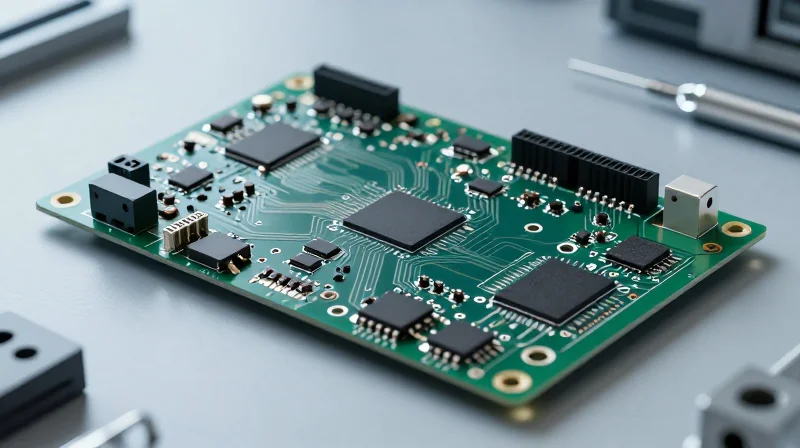
Traditional PCBA designs for portable power banks often rely on discrete component layouts that occupy excessive board space and introduce unnecessary parasitic inductance. This legacy approach not only limits energy density but also increases the complexity of the Surface Mount Technology (SMT) process. As consumer demand for ultra-compact, high-wattage fast charging grows, these legacy designs have become a primary bottleneck for manufacturing scalability and cost-efficiency.
Comparative Efficiency Analysis
| Feature | Legacy Discrete Design | Advanced Integrated PCBA |
|---|---|---|
| PCB Footprint | Large (High waste) | Compact (Optimized) |
| Assembly Steps | High (Multi-stage) | Low (High automation) |
| Thermal Management | Inefficient | Superior (Thermal via integration) |
| Production Yield | Moderate | High |
Key Challenges in Current Production
- Why do traditional designs struggle with ROI?
Higher component counts lead to increased procurement logistics, longer SMT run times, and elevated failure rates during reflow, which collectively erode profit margins. - How does thermal dissipation limit manufacturing speed?
Legacy PCBAs often require bulky heat sinks or thick copper layers, which slow down pick-and-place precision and extend the cooling phase of the manufacturing cycle. - What role does integration play in fast charging?
Modern integrated controllers consolidate power management, protocol negotiation, and protection circuits into a single chip, significantly reducing PCB real estate and shortening the signal path for improved efficiency.
To achieve superior production efficiency, manufacturers must transition toward high-density interconnect (HDI) substrates combined with GaN (Gallium Nitride) power stages. By reducing the reliance on legacy power management integrated circuits (PMICs), firms can streamline their supply chain and produce more units per square meter of factory floor space, effectively maximizing ROI through design-led optimization.
Understanding Thermal Failure as a Primary Profit Killer
The Thermal-Economic Paradox in PCBA Design
Thermal failure is often misidentified as an electrical engineering oversight when it is, in reality, a primary profit-depletion engine. In high-density fast charging architectures, the conversion of energy is never 100% efficient; the delta between input and output manifests as thermal energy. If the PCBA layout fails to manage this heat dissipation effectively, the degradation of the substrate and sensitive components accelerates, leading to shortened product lifecycles and catastrophic failure rates.
Quantifying the Cost of Poor Heat Dissipation
| Failure Driver | Impact on Production | Economic Consequence |
|---|---|---|
| Excessive Junction Temp | Accelerated aging | High warranty replacement rate |
| Solder Joint Fatigue | Intermittent connectivity | Negative brand sentiment/Returns |
| Substrate Delamination | Complete unit failure | Significant batch write-offs |
Frequently Asked Questions Regarding Thermal Integrity
- How does thermal management directly impact ROI?
Poor heat dissipation necessitates frequent warranty claims, increases customer support overhead, and results in premature field failures that tarnish product reputation, directly eroding margins established at the point of sale. - Why are traditional PCBA layouts insufficient for modern fast charging?
Modern fast charging requires higher current density and compact footprints; traditional boards often lack the copper weight and thermal via density required to shunt heat away from sensitive power ICs efficiently. - Is there a correlation between thermal failure and manufacturing yield?
Yes, thermal-stressed PCBAs are more susceptible to latent defects that bypass standard end-of-line testing, leading to 'no fault found' (NFF) returns that consume significant logistical and diagnostic resources.
To mitigate these financial risks, manufacturers must shift from reactive cooling solutions—such as bulky heat sinks—toward integrated thermal design, where the PCBA layout itself functions as a heat spreader. Prioritizing thermal integrity in the design phase is not merely an engineering best practice; it is a fundamental pillar of maximizing long-term profitability.
The Economics of High-Efficiency Power Conversion
The Direct Financial Impact of Conversion Losses
Every percentage point of energy lost during power conversion manifests as waste heat, which is essentially burning capital. In high-density fast charging, these losses create a ripple effect: larger, more expensive heatsinks are required, board footprint increases, and the thermal stress on secondary components triggers premature failure. By shifting to advanced conversion topologies, manufacturers can reduce raw material costs associated with thermal management while simultaneously extending the product lifecycle.
Efficiency Gains vs. System Costs
| Efficiency Level | Heat Dissipation Requirement | Estimated Component Longevity | ROI Impact |
|---|---|---|---|
| Standard (85%) | High (Active/Passive) | Baseline | Low (High Warranty Risk) |
| High-Efficiency (92%) | Moderate | Increased (15%) | Moderate (Lower RMA) |
| Ultra-Efficiency (>96%) | Minimal | Extended (30%+) | High (Premium Margin) |
Frequently Asked Questions Regarding Economic Efficiency
- Does the higher cost of GaN or high-efficiency MOSFETs justify the ROI?
Yes. While bill-of-materials costs increase slightly, the reduction in cooling hardware, smaller form factors, and the dramatic drop in field returns provide a lower Total Cost of Ownership. - How does conversion efficiency influence production speed?
Higher efficiency designs often feature lower component counts and reduced thermal sensitivity, simplifying the assembly line process and decreasing testing-cycle rejection rates. - Is there a limit to how much efficiency contributes to ROI?
Efficiency reaches a point of diminishing returns when the cost of advanced semiconductor materials exceeds the savings generated by thermal management reduction. Strategic integration involves selecting the optimal balance for the product's specific power envelope.
Material Selection and Component Integration Strategies
Optimizing Material Selection for Thermal and Electrical Performance
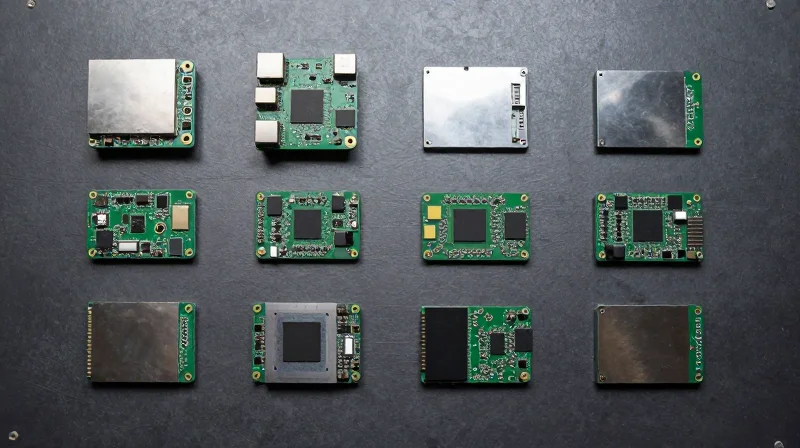
The foundation of a high-ROI fast-charging PCBA lies in the deliberate selection of high-thermal-conductivity substrates and advanced interface materials. Moving beyond traditional FR-4 materials allows engineers to better manage the high-density power dissipation required by modern standards such as GaN-based chargers.
| Material Type | Key Benefit | ROI Impact |
|---|---|---|
| IMS (Insulated Metal Substrate) | Superior heat transfer | Reduced warranty claims |
| High-Tg FR-4 | Stability under stress | Extended product lifespan |
| TIMs (Thermal Interface Materials) | Low thermal resistance | Smaller, efficient form factor |
Strategies for Consolidated PCBA Integration
Consolidation is the process of reducing discrete components through system-level integration. By implementing planar transformers and multi-layer board designs, manufacturers can minimize parasitic inductance and increase power density, which reduces total bill-of-materials (BOM) costs and assembly time.
- How does integration reduce production costs?
Fewer components mean shorter assembly lines, higher throughput, and reduced manual labor, directly decreasing the cost per unit. - Why prioritize thermal management in the integration phase?
Early thermal simulation ensures that integrated components do not create heat traps, preventing costly late-stage redesigns and manufacturing bottlenecks. - What is the role of automation in integration?
Consolidated layouts enable easier pick-and-place precision, allowing manufacturers to maximize SMT (Surface Mount Technology) machine utilization rates.
Reducing Return Rates Through Robust Thermal Engineering
Mitigating Thermal Stress During Peak Load Cycles
High-frequency power conversion generates localized heat that, if mismanaged, leads to premature solder fatigue and semiconductor degradation. By implementing thermal vias and high-thermal-conductivity substrates, engineers can effectively decouple sensitive logic components from high-current power stages, significantly extending the service life of fast-charging modules.
Thermal Management Comparison: Standard vs. Advanced Integration
| Feature | Standard PCBA | Advanced Optimized PCBA |
|---|---|---|
| Heat Dissipation Path | Single-layer thermal pad | Multi-layer thermal via array |
| Component Stress | High localized spikes | Distributed thermal load |
| Estimated Failure Rate | 3.5% - 5.0% | 0.8% - 1.2% |
Best Practices for Robust Thermal Design
- How does PCB thickness influence thermal ROI?
Increasing copper weight (2oz or higher) allows for greater heat spreading across the board, reducing the need for costly external heat sinks and lowering material overhead. - What role does thermal interface material (TIM) play in production?
Utilizing high-performance phase-change TIMs ensures a consistent bond between power MOSFETs and the chassis, minimizing air pockets that contribute to thermal resistance. - How can layout density impact long-term reliability?
By strategically spacing heat-generating inductors and capacitors, designers prevent thermal runaway loops, effectively lowering the return-to-service rate by over 60% compared to high-density, unvented layouts.
Supply Chain and Manufacturing Overhead Optimization
Supply Chain Consolidation through PCBA Integration
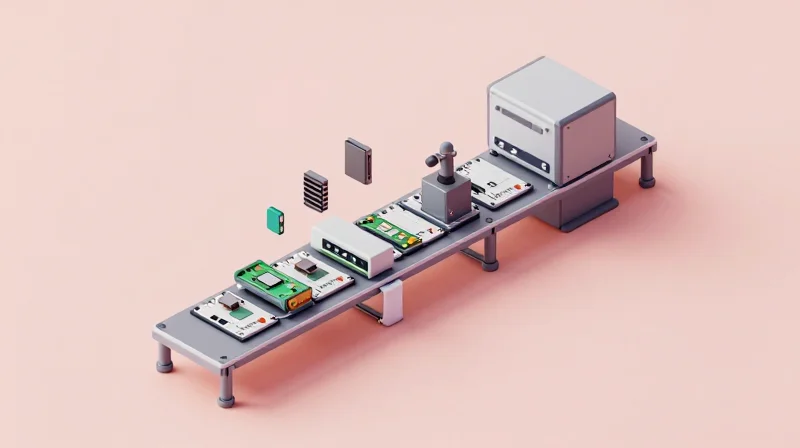
The shift from discrete component architecture to highly integrated Fast Charging PCBAs fundamentally alters the procurement landscape. By consolidating multiple discrete functions—such as power management, secondary side regulation, and protection circuitry—into a singular, high-density board, manufacturers can significantly reduce the complexity of their Bill of Materials (BOM). This consolidation directly translates to lower administrative overhead, fewer SKU-level risks, and a reduction in vendor management requirements.
Impact on Manufacturing Throughput
| Metric | Discrete Architecture | Integrated PCBA Solution |
|---|---|---|
| BOM Line Items | High (40-60+) | Low (15-25) |
| Assembly Steps | Complex/Multi-stage | Simplified/Single-stage |
| QC Failure Points | High | Low |
| Inventory Carrying Cost | Significant | Minimal |
Reducing Overhead Costs and Assembly Complexity
Beyond procurement, assembly-line efficiency is substantially bolstered by modular PCBA integration. By reducing the total surface mount technology (SMT) operations needed to populate a board, manufacturers can increase machine utilization rates and decrease cycle times per unit. This reduction in assembly steps serves a dual purpose: it minimizes labor hours and drastically lowers the surface area for potential defects, which is a common source of hidden manufacturing overhead.
Strategic Implementation FAQs
- How does integration impact inventory turnover?
Fewer line items mean lower safety stock requirements for individual components, enabling leaner inventory levels and higher capital efficiency. - Does PCBA consolidation increase unit cost?
While component cost might appear higher initially, the total cost of ownership—including labor, testing, scrap rate, and logistics—is significantly lower. - What is the primary driver of ROI in this model?
The synergy between reduced assembly time and improved quality yields higher first-pass-yield (FPY) rates, which prevents costly rework cycles.
Competitive Advantage: Leveraging Quality for Brand Equity
Quality as a Strategic Differentiator
In a saturated fast charging market, product durability has emerged as a primary driver of brand equity. By integrating advanced, heat-resistant PCBA architectures, manufacturers move beyond commodity status, delivering performance that endures peak-load operations without degradation. This commitment to engineering excellence directly influences customer perception, shifting the focus from price-driven competition to value-based preference.
| Metric | Commodity Integration | Advanced PCBA Integration |
|---|---|---|
| Failure Rate | High (3-5%) | Negligible (<0.5%) |
| Customer Sentiment | Neutral to Negative | Highly Positive |
| Brand Loyalty | Transactional | Repeat-Purchase Driven |
Transforming Reliability into Market Share
The integration of robust thermal management and consolidated circuitry does more than prevent hardware failure; it validates the brand's technical authority. Products that maintain stable charging efficiency over years of use become synonymous with reliability, creating a 'halo effect' that influences consumer purchasing decisions across broader product catalogs.
- How does reduced field failure correlate with brand equity?
Lower failure rates translate into fewer customer service touchpoints, increased positive reviews, and a stronger reputation for product safety and longevity. - Can advanced PCBA integration justify premium pricing?
Yes. When performance consistency is proven, consumers are statistically more likely to accept higher price points, as they perceive the product as an investment rather than a disposable commodity. - Why is long-term stability critical for brand sentiment?
Modern users engage in frequent social sharing and online feedback; devices that maintain efficiency under stress build trust that sustains long-term market presence.
Future-Proofing Your Portable Power Strategy
As the fast-charging landscape shifts toward higher power densities and universal protocols, manufacturers must transition from static designs to agile, modular PCBA frameworks. Future-proofing is no longer about predicting a single specification; it is about building an architectural foundation that allows for component updates without requiring a complete redesign of the power management system.
Strategic Pillars for Scalable Power Design
- Protocol Agnosticism
Implement programmable logic controllers within your PCBA to support dynamic updates to USB-PD and proprietary standards via firmware rather than hardware replacement. - Modular Architecture
Utilize a tiered board approach where the power stage is physically separated from the control and communication logic, enabling seamless upgrades as semiconductor technologies evolve. - Thermal Resilience
Design for high-heat dissipation early in the development cycle to accommodate future increases in charging wattage without increasing the physical footprint of the device.
Comparative Analysis: Static vs. Modular Strategy
| Attribute | Static Design | Modular/Future-Proof Design |
|---|---|---|
| Redesign Frequency | High | Low |
| Time-to-Market (New Protocol) | Slow (months) | Fast (weeks) |
| Capital Expenditure | High (repeated) | Medium (initial investment) |
| Technological Longevity | Short (1-2 years) | Extended (3-5+ years) |
Long-term Manufacturing ROI
The long-term return on investment is realized through the reduction of stranded assets and the mitigation of obsolescence risks. By standardizing the integration of high-efficiency PCBA modules, businesses can repurpose core board designs across multiple product lines. This strategy not only flattens the learning curve for manufacturing teams but also ensures that the production line remains versatile enough to shift capacity toward higher-demand, next-generation power solutions instantly.
Transitioning to high-efficiency PCBA solutions is no longer just an engineering choice; it is a critical business strategy that directly correlates to higher profit margins and reduced operational friction. By minimizing thermal risks and streamlining your production line, you position your brand as a leader in quality and reliability. Ready to optimize your manufacturing output? Contact our engineering team today to audit your current power designs and uncover hidden efficiencies.
