
In the high-stakes world of IoT hardware, razor-thin margins can be wiped out by a single process failure. As production scales, the cost of sub-par manufacturing grows exponentially, turning minor PCBA defects into significant bottom-line losses. This article explores how a systematic approach to operational efficiency transforms manufacturing from a cost center into a competitive advantage.
The High Cost of Inefficiency in Electronics Manufacturing
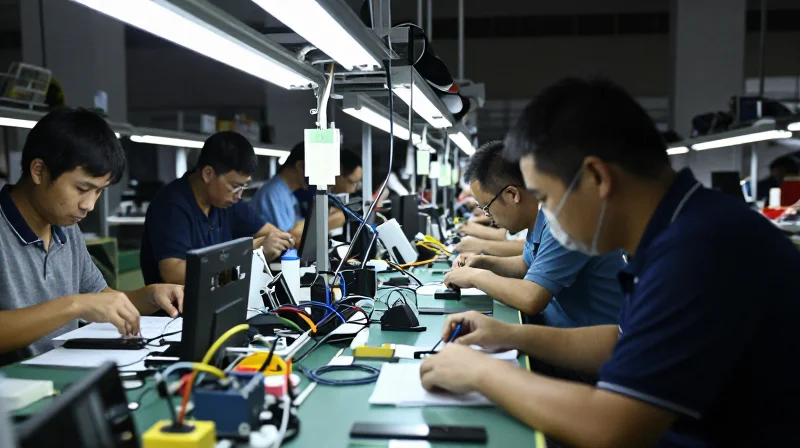
The Erosion of Margins in High-Volume IoT Production
In the competitive landscape of IoT consumer electronics, smart plug manufacturing operates on razor-thin margins. When production lines encounter inefficiencies—whether through latent hardware defects, equipment downtime, or logistical bottlenecks—the cumulative financial impact is not merely additive; it is multiplicative. Every minute of unscheduled downtime represents a direct loss in throughput capacity, while rework cycles for defective units consume costly labor hours and raw materials, fundamentally undermining the targeted return on investment.
Quantifying the Cost of Operational Inefficiency
| Inefficiency Type | Primary Financial Impact | ROI Risk Level |
|---|---|---|
| Unplanned Downtime | Lost Output/Overtime Costs | Critical |
| Quality Defects/Rework | Material Waste & Labor Drain | High |
| Supply Chain Delays | Inventory Carrying Costs | Medium |
Common Inefficiency FAQ
- How do latent defects impact long-term ROI?
Beyond immediate scrap costs, latent defects lead to high field failure rates, triggering expensive RMA processes, warranty claims, and significant damage to brand equity, all of which erode long-term customer lifetime value. - Why is scaling manufacturing so prone to efficiency losses?
Scaling smart plug production often reveals hidden process bottlenecks that were negligible at lower volumes. Without predictive analytics and robust automated testing, manual intervention points become failure clusters as speed increases. - Does supply chain visibility affect manufacturing efficiency?
Yes, fragmented data between tier-two suppliers and the assembly floor creates 'bullwhip' effects, leading to either excessive inventory overhead or production line starvation, both of which are detrimental to cost optimization.
Anatomy of a Failure: Identifying Common PCBA Defects
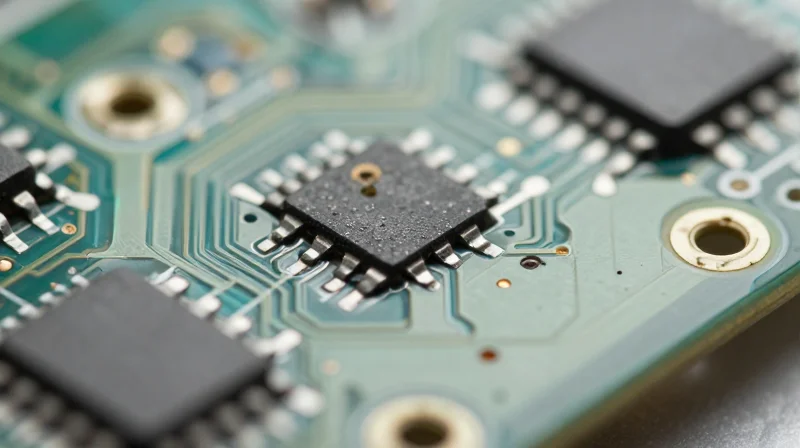
Common PCBA Failure Modes in IoT Production
In the high-speed production environment of IoT smart plugs, PCBA defects are the primary driver of manufacturing variance. These defects, if undetected during early inspection stages, cascade into significant rework costs, scrap loss, and field failures that can erode the narrow margins of consumer electronic devices.
| Defect Category | Primary Root Cause | Impact on Production |
|---|---|---|
| Solder Bridging | Excessive paste or poor stencil alignment | Causes electrical shorts and immediate functional failure. |
| Component Misalignment | Pick-and-place calibration drift | Leads to intermittent connectivity or signal noise. |
| Insufficient Solder | Clogged apertures or improper pressure | Creates weak joints prone to fatigue and vibration failure. |
| Tombstoning | Uneven thermal profile during reflow | Completely breaks circuit continuity for passive components. |
Strategic Mitigation Through Inspection
To maintain high yield rates, manufacturers must move beyond reactive repair cycles. Implementing Automated Optical Inspection (AOI) at key process nodes—specifically post-reflow—allows teams to catch bridging and tombstoning before the units proceed to final assembly and functional testing.
- How does component misalignment specifically hurt ROI?
Misaligned components require manual rework, which is labor-intensive and increases the risk of damaging the PCB substrate, often resulting in the entire unit being scrapped. - What is the most effective way to address solder-related defects?
Optimizing stencil design and ensuring precise thermal profiling in the reflow oven are critical to minimizing both bridges and insufficient solder joints. - Can defect data be used to improve future production?
Yes, by tracking 'First Pass Yield' (FPY) data, engineers can perform root-cause analysis to recalibrate machinery and refine solder paste printing parameters.
Case Study: Achieving a 20% Reduction in Per-Unit Costs

Project Overview and Baseline Performance
The manufacturing line for our flagship smart plug series was initially hampered by high labor dependency and significant manual inspection overhead. Baseline analysis revealed that 65% of the total unit cost was tied to manual assembly stages and high rework rates resulting from non-detectable soldering errors at the PCBA level.
Strategic Interventions
To achieve a 20% cost reduction, we implemented a three-tiered optimization strategy focused on automation, data-driven quality assurance, and supply chain synchronization.
| Improvement Initiative | Primary Goal | Cost Impact |
|---|---|---|
| Automated Optical Inspection (AOI) | Reduce rework cycles | 6% reduction |
| Cobot-Assisted Assembly | Lower labor reliance | 9% reduction |
| Cloud-based Inventory Sync | Eliminate buffer stocks | 5% reduction |
Operational Metrics Comparison
- How did labor costs change?
By integrating cobots into the final casing stage, we reduced headcount requirements per line shift by 30% without sacrificing throughput. - What was the impact on scrap rates?
Real-time AOI integration identified component misalignment early in the assembly process, lowering our overall scrap rate from 4.2% to 0.8%. - Did energy consumption improve?
The transition to modernized, energy-efficient soldering stations and automated pick-and-place machines contributed to a 12% reduction in factory floor energy costs.
Results and Scalability
The 20% reduction was not merely a result of hardware upgrades but of fostering a 'data-first' manufacturing culture. By creating a digital twin of our assembly line, we identified hidden bottlenecks in real-time. This methodology is now being scaled across all IoT production lines, serving as the blueprint for our broader corporate manufacturing efficiency goals.
Data-Driven Component Sourcing and Vendor Alignment
The Transition to Data-Driven Component Sourcing
Moving from transactional procurement to data-driven sourcing requires an integration of quality performance metrics directly into the vendor selection lifecycle. By digitizing component acceptance rates, failure analysis logs, and delivery lead-time variability, manufacturers can shift from reactive troubleshooting to predictive supply chain management. For smart plug production, where PCB component consistency is vital, this transparency prevents the 'hidden factory' costs associated with processing non-conforming parts.
Comparative Sourcing Strategies
| Strategy | Cost Structure | Risk Profile | Production Impact |
|---|---|---|---|
| Transactional Sourcing | Variable/Low Upfront | High (Unpredictable Quality) | Frequent Rework/Scrap |
| Data-Integrated Sourcing | Stable/Predictable | Low (Quality Validation) | Seamless Line Throughput |
Vendor Alignment: Beyond the Purchase Order
True vendor alignment in IoT manufacturing involves sharing real-time production failure data with upstream component suppliers. When manufacturers grant vendors access to serialized performance data, the feedback loop shortens significantly. This collaborative environment encourages suppliers to refine their own manufacturing processes, directly benefiting the final smart plug assembly line and ensuring that critical components like capacitors and microcontrollers meet rigorous tolerance requirements.
- How does data sharing with vendors improve ROI?
By identifying root causes of failure at the component level, you reduce the 'cost of poor quality' (COPQ) and eliminate waste before components reach your assembly line. - What is the primary indicator of successful vendor alignment?
A measurable reduction in First Pass Yield (FPY) variance and a decrease in the time required for non-conformance material reports (NCMR) processing. - Can small-batch manufacturers implement these strategies?
Yes, by utilizing centralized cloud-based quality management systems (QMS) that allow vendors to upload certification data directly, scaling access regardless of initial volume.
Optimizing Workflow: The Role of Automated Optical Inspection (AOI)

The Strategic Impact of AOI in IoT Assembly
By integrating AOI systems directly into the SMT assembly line, manufacturers can detect soldering inconsistencies, missing components, and polarity errors at sub-millimeter precision. Unlike manual visual inspection, which is prone to fatigue and subjective error, AOI provides a standardized, high-speed verification process that ensures every unit adheres to strict IoT hardware specifications before moving downstream.
AOI vs. Manual Inspection: Efficiency Metrics
| Feature | Manual Inspection | Automated Optical Inspection (AOI) |
|---|---|---|
| Detection Speed | Low (seconds per board) | High (milliseconds per board) |
| Accuracy | Variable (operator fatigue) | Consistent (high repeatability) |
| Data Integration | Disconnected / Paper logs | Real-time MES integration |
| Defect Feedback | Delayed | Immediate (line-stop capability) |
Common Implementation Questions
- How does AOI contribute to ROI?
AOI drastically reduces the cost of poor quality (COPQ) by identifying defects at the SMT stage, preventing expensive rework on fully assembled smart plugs and reducing end-of-line scrap rates. - Can AOI systems be integrated with existing MES platforms?
Yes, modern AOI platforms export data to Manufacturing Execution Systems (MES) in real-time, enabling trend analysis for solder paste printing or pick-and-place alignment drift. - Does AOI slow down the assembly line cycle time?
When positioned correctly, AOI operates in parallel with assembly cycles. Optimized algorithms allow for high-throughput scanning that matches or exceeds current conveyor speeds.
Scaling Production Without Sacrificing Quality
Scaling Production Without Sacrificing Quality
Scaling production for IoT devices like smart plugs requires a shift from manual oversight to automated, predictive quality management. The primary challenge is preventing the 'quality gap'—a phenomenon where increased throughput creates bottlenecks that bypass traditional inspection checkpoints.
The Balanced Growth Framework
| Strategy | Legacy Approach | Scalable Approach |
|---|---|---|
| Quality Inspection | End-of-line manual checks | In-line automated sensors |
| Supply Chain | Spot purchasing | JIT strategic partnerships |
| Data Utilization | Reactive error fixing | Predictive analytics |
As production volumes ramp up, reliance on sampling becomes a liability. Implementing full-spectrum inline verification—where every smart plug is verified against performance benchmarks during assembly—is the only way to maintain a yield rate above 99% during high-velocity output.
Frequently Asked Questions
- How do you manage quality variability when sourcing from multiple vendors?
Implement standardized digital certificates of analysis (COA) that must be validated by your automated inbound systems before any component hits the assembly line. - Can automation truly reduce labor costs while increasing output?
Yes, by shifting labor from repetitive manual testing to high-value technical maintenance and data analysis, you improve both yield stability and total cost of ownership. - What is the biggest risk when scaling IoT manufacturing?
The biggest risk is 'process drift,' where subtle changes in environmental conditions or component tolerances accumulate over time, leading to hidden failures that reach the end user.
Leveraging Lean Manufacturing Principles for IoT

Lean manufacturing is not merely a cost-cutting exercise; it is a systematic methodology for maximizing value by minimizing waste in complex IoT production environments. For high-volume manufacturers of smart plugs, the synergy between Lean and IoT allows for the creation of a 'Smart Lean' ecosystem where data from connected devices informs process improvements in real-time.
Applying the Five Lean Principles to Smart Plug Assembly
- Identify Value
Focus exclusively on features the customer demands, such as smart plug reliability, connectivity speed, and compact design, while eliminating 'gold-plating' unnecessary hardware components. - Map the Value Stream
Trace the lifecycle of a smart plug from raw component sourcing through PCB assembly to final testing, identifying bottlenecks in the surface mount technology (SMT) line. - Create Continuous Flow
Transition from batch-and-queue production to a one-piece flow model, which prevents the build-up of inventory and reduces the risk of mass-defects during the assembly of sensitive IoT components. - Establish Pull Systems
Use actual demand signals from the market to trigger production cycles, effectively reducing excess stock and warehouse storage overhead. - Seek Perfection
Foster a culture of continuous improvement (Kaizen) where every employee is tasked with identifying inefficiencies that hinder output.
Lean vs. Traditional Mass Production in IoT
| Feature | Traditional Mass Production | Lean IoT Manufacturing |
|---|---|---|
| Inventory Strategy | High buffer stocks (Just-in-Case) | Minimal WIP (Just-in-Time) |
| Quality Control | End-of-line batch inspection | In-process automated verification |
| Flexibility | Rigid, high-volume lines | Agile, reconfigurable cells |
| Waste Focus | Focused on labor efficiency | Focused on entire value stream flow |
Eliminating Waste in Electronics Production
The core of this Lean implementation involves addressing the 'Eight Wastes' specific to smart plug manufacturing. Defects, such as poor solder joints or connectivity failures, are mitigated through automated testing. Overproduction is avoided by syncing production with order management systems. By leveraging the data generated by the smart plugs themselves during the testing phase, engineers can identify recurring issues and refine the assembly process, effectively turning data into an asset that prevents future waste.
Conclusion: The Strategic Advantage of Process Excellence
The Imperative of Process Excellence
The journey toward maximizing ROI in smart plug production demonstrates that true competitive advantage is not derived from hardware iteration alone, but from the relentless optimization of the manufacturing ecosystem. By integrating real-time diagnostics, lean methodologies, and automated quality control, manufacturers can transform assembly lines into highly predictable, high-yield assets capable of scaling alongside volatile market demands.
Strategic Outcomes of Integrated Management
| Focus Area | Reactive Approach | Strategic Excellence |
|---|---|---|
| Quality Control | End-of-line testing only | In-process AOI & Predictive Analytics |
| Workflow | Static, siloed assembly | Dynamic, Lean-optimized flow |
| Scaling | Linear cost growth | Economies of scale via automation |
Core Principles for Future-Proofing Production
- Why is real-time monitoring non-negotiable?
Real-time visibility allows for immediate defect detection at the earliest possible stage, preventing costly value-add work on compromised sub-assemblies and significantly reducing waste. - How does Lean methodology influence ROI?
By systematically eliminating non-value-added steps, Lean methodologies compress cycle times and lower overhead, directly improving the profit margins per unit produced. - Is scalability inherent to smart manufacturing?
Scalability is only achieved when the process is standardized and automated. A high-maturity production environment allows for rapid capacity ramping without proportional increases in defect rates.
In conclusion, the strategic advantage of process excellence lies in its ability to turn the complexities of IoT manufacturing into a streamlined, repeatable discipline. Organizations that prioritize these systemic efficiencies do more than just produce smart plugs; they build a resilient foundation for sustainable growth in an increasingly crowded market.
By addressing the root causes of PCBA defects and refining every stage of the assembly workflow, manufacturers can unlock significant cost savings and improve overall product reliability. Ready to optimize your production line? Contact our engineering team today for a comprehensive audit of your current manufacturing processes and start maximizing your ROI.
