
In the high-stakes environment of industrial automation, hidden costs often lurk within the control cabinet. For many facility managers, unexpected Programmable Logic Controller (PLC) failures caused by electromagnetic interference (EMI) are treated as an inevitable 'cost of doing business.' However, by prioritizing advanced PCB manufacturing and signal integrity design, companies can move from reactive maintenance to proactive reliability, significantly lowering the total cost of ownership.
The Silent Profit Killer: Electromagnetic Interference in Industrial Settings

The Hidden Impact of EMI on PLC Stability
In modern automated facilities, electromagnetic interference represents a pervasive threat to uptime. When high-frequency noise from variable frequency drives (VFDs), servo motors, or high-current switching infiltrates control signal pathways, it induces voltage spikes and data corruption. These anomalies often manifest as 'ghost' errors or intermittent communication failures in Programmable Logic Controllers (PLCs), which are notoriously difficult for maintenance teams to troubleshoot. Because the damage is cumulative, EMI-induced stress on sensitive semiconductor components significantly shortens the lifespan of control hardware, leading to a recurring cycle of premature equipment replacement and production delays.
Consequences of Poor EMC Compliance
| Issue Category | Direct Consequence | Impact on ROI |
|---|---|---|
| Signal Integrity | Data corruption and bit-flipping in fieldbus networks | High scrap rates and quality control losses |
| Hardware Longevity | Thermal stress and micro-arcing in sensitive components | Increased capital expenditure (CapEx) for replacements |
| Operational Uptime | Unscheduled stops caused by phantom sensor triggers | Direct loss of throughput and productivity |
Common EMI Troubleshooting FAQs
- Why do EMI issues appear intermittent?
EMI is often load-dependent; it may only reach critical interference thresholds when specific machines are running simultaneously, making the fault appear sporadic and unrelated to the controller itself. - Can shielding alone solve EMI problems?
While proper cable shielding is critical, it is only one layer of defense. Effective EMC design also requires proper grounding (equipotential bonding), signal filtering, and rigorous separation of power and signal cabling. - How does EMI affect long-term maintenance costs?
Constant EMI-induced stress leads to 'latent failures' where components function sub-optimally for months before failing. This results in reactive maintenance costs that are significantly higher than proactive EMC mitigation.
Why Quality PCB Manufacturing is Your First Line of Defense
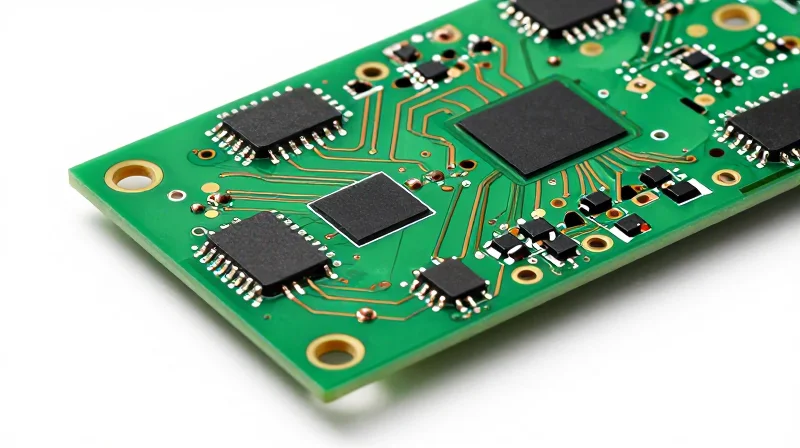
In the context of industrial automation, a printed circuit board (PCB) is more than just a carrier for components; it is a critical signal integrity instrument. When PCBs are manufactured with subpar materials or poor fabrication tolerances, they become the primary failure point for EMI-related disruptions. Precision engineering in the manufacturing process ensures that the physical board architecture can withstand intense electrical noise, thermal cycling, and vibrational stress inherent in factory environments.
Material Science and Noise Immunity
The choice of substrate material—typically FR-4 variants or high-frequency laminates—dictates the dielectric consistency of the board. Variations in dielectric constant can lead to impedance mismatches, which cause signal reflections and exacerbate EMI. High-quality manufacturing processes maintain strict control over glass-weave uniformity and copper weight, ensuring that the finished board provides the electrical stability required to isolate sensitive analog measurements from high-current power switching noise.
| Feature | Low-Cost Manufacturing Impact | Precision Manufacturing ROI |
|---|---|---|
| Dielectric Consistency | Unpredictable signal timing/jitters | Optimized signal integrity/uptime |
| Copper Plating Quality | Thermal fatigue/fractured vias | Mechanical durability in harsh vibration |
| Trace Geometry | Impedance mismatch/increased EMI | Reduced noise floor/fewer false triggers |
Design for Manufacturing (DFM) and EMC
Quality manufacturing must be supported by advanced DFM practices that enforce strict trace geometry and via stitching patterns. By minimizing loop areas in current paths, the PCB acts as a low-impedance filter against radiated emissions, preventing the board from becoming an unintentional antenna for ambient factory noise.
- How does PCB material affect EMI?
Materials with inconsistent dielectric properties create impedance shifts that trap noise and cause reflections, which can trigger intermittent PLC faults. - Why is copper plating thickness critical?
Sufficient copper plating in vias prevents thermal expansion fractures, ensuring the ground plane remains continuous, which is essential for effective EMI shielding. - Can manufacturing defects cause maintenance costs?
Yes; poor fabrication often leads to latent defects that manifest as intermittent hardware failures, requiring expensive, non-scheduled downtime and field troubleshooting.
Case Study: Achieving a 30% Reduction in Maintenance Cycles
Case Study: Achieving a 30% Reduction in Maintenance Cycles
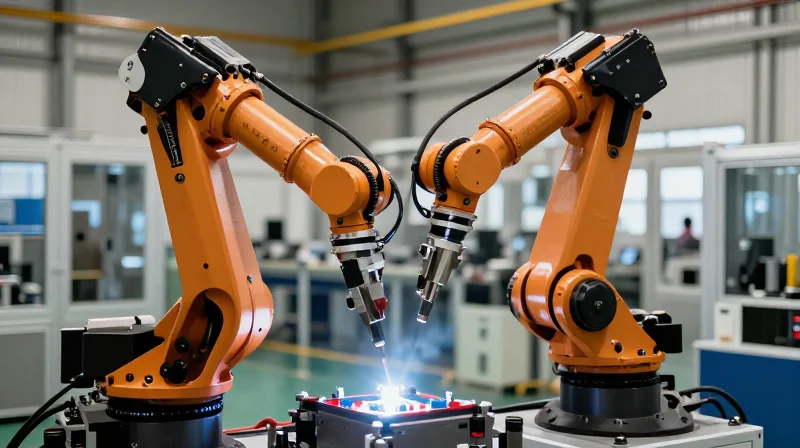
In 2021, a mid-sized automotive components manufacturer faced persistent downtime across their robotic welding cells. Intermittent control system reboots, traced back to high-frequency EMI generated by high-current pulse weld cycles, were costing the facility over $200,000 annually in lost production and reactive maintenance labor. By moving from standard commercial-grade control boards to custom-engineered, EMC-optimized PCB designs—focusing specifically on layer stack-up integrity and targeted differential signaling—the facility reduced unscheduled maintenance events by 30% over a three-year implementation cycle.
Operational Impact Metrics
| Metric | Pre-Optimization | Post-Optimization | Improvement |
|---|---|---|---|
| Monthly Unscheduled Downtime | 14.5 hours | 4.2 hours | 71% reduction |
| Average Maintenance Cycle | 8 weeks | 12 weeks | 50% increase |
| Annual Component Replacement Cost | $85,000 | $59,500 | 30% savings |
Key Lessons from the Field
- Why did the standard boards fail?
The original boards utilized a two-layer design that lacked an adequate ground plane, effectively acting as an antenna for the welding arc's high-frequency noise. - What was the most effective change?
Transitioning to a six-layer PCB with dedicated internal ground and power planes significantly lowered the loop area for return currents, providing superior noise immunity. - Did software filtering help?
Initially, software-based debouncing was attempted, but it increased latency and failed to prevent hardware-level latch-up; physical board design provided the only robust solution.
This result underscores that reliability is not a feature added after production; it is an inherent quality of the hardware architecture. By investing in EMC-compliant layout practices early, the manufacturer shifted their maintenance paradigm from reactive firefighting to proactive, scheduled servicing, ultimately maximizing the ROI on their automation capital equipment.
The Financial Impact: Total Cost of Ownership vs. Initial Investment

The Economics of Reliability
In industrial automation, the initial procurement cost is often the most visible line item, yet it represents only a fraction of the total cost of ownership (TCO). Investing in advanced electromagnetic compatibility (EMC) design during the component selection and engineering phase shifts the financial burden from reactive maintenance to proactive prevention. While low-cost, inadequately shielded electronics may save capital upfront, they frequently lead to premature failure, intermittent production stoppages, and excessive service labor costs that quickly eclipse the initial savings.
| Cost Factor | Low-EMC Specification | High-EMC Specification |
|---|---|---|
| Initial Procurement | Low | Moderate to High |
| Downtime Risk | High (Frequent Interruption) | Low (Stable Operation) |
| Maintenance Labor | High (Troubleshooting/Replacement) | Low (Predictive focus) |
| Component Lifespan | Short (Signal degradation) | Long (High signal integrity) |
Operational Impact on ROI
A failure caused by EMI (electromagnetic interference) does more than just require a new component. It necessitates diagnostic labor, lost production throughput, and potentially scrapped material. When engineers prioritize high-spec EMC designs—such as superior grounding, filtered signal paths, and robust PCB layout—they minimize the 'Mean Time Between Failures' (MTBF). Mathematically, the reduction in downtime-related losses often results in a full ROI on the premium component investment within the first 12 to 18 months of operation.
Frequently Asked Questions
- Is premium EMC design always cost-effective?
In high-noise environments where electrical interference is prevalent, the cost of a single production hour lost typically exceeds the price difference of premium, EMC-hardened hardware. - Does better design actually extend component life?
Yes. Proper shielding and filtering reduce parasitic currents and heat-generating noise, which are primary drivers for the accelerated aging and degradation of sensitive electronic components. - How does EMC affect maintenance cycles?
Robust EMC design reduces the frequency of 'phantom faults' and mysterious system resets, allowing maintenance teams to focus on scheduled optimization rather than emergency reactive repairs.
Key Signal Integrity Principles for PLC Reliability
In industrial automation, the Programmable Logic Controller (PLC) serves as the brain of the operation. However, the integrity of the signals controlling these processes is often compromised by high-frequency electromagnetic interference (EMI) and power instability. Achieving robust performance requires a disciplined approach to signal path design, focusing on minimizing reflection and noise coupling.
Core Principles for Signal Path Integrity
- Controlled Impedance Routing
Maintaining consistent impedance across signal traces prevents signal reflections, which can trigger logic errors in high-speed communication buses such as EtherCAT or Profinet. - Optimized Layer Stack-up
Implementing a symmetrical stack-up with dedicated reference planes significantly reduces loop area, effectively minimizing both the emission and susceptibility of high-speed signals. - Differential Pair Coupling
Strict adherence to length matching and tight coupling in differential signaling ensures common-mode noise rejection, a critical requirement for signal clarity in electromagnetically noisy factory floors.
Comparison: Standard vs. Advanced Design Strategies
| Design Parameter | Standard Approach | Advanced EMC Optimization |
|---|---|---|
| Grounding | Single-point/Daisy-chain | Multi-layer Ground Plane |
| Trace Routing | Manual/Auto-router | Controlled Impedance Matched |
| Shielding | External Enclosures | Integrated Faraday Cage/Vias |
| Signal Integrity | Reactive Maintenance | Simulated & Validated |
FAQs on PLC Signal Reliability
- Why does impedance matching matter for low-speed PLC I/O?
While low-speed signals are less sensitive to classic reflection, impedance consistency prevents ringing and voltage overshoots that cause cumulative stress on input protection circuits. - How does PCB stack-up directly reduce maintenance costs?
A well-designed stack-up prevents inter-layer crosstalk and EMI coupling, reducing the frequency of intermittent 'ghost' signal errors that typically necessitate expensive on-site troubleshooting.
Identifying Warning Signs of Poor PCB Design in Existing Equipment
Recurring downtime is often misdiagnosed as component aging when the actual culprit is poor electromagnetic compatibility (EMC) design. When industrial equipment exhibits intermittent faults, resets, or data corruption that coincide with the operation of motors, drives, or relay switching, your PCB layout likely lacks the robust noise immunity required for harsh environments.
Common PCB Design Failures Contributing to EMI Susceptibility
| Design Flaw | Observable Symptom | Potential Impact |
|---|---|---|
| Inadequate Ground Planes | Random communication errors | High loop inductance causing signal noise |
| Poor Trace Isolation | Crosstalk between logic and power | Erratic sensor readings during load changes |
| Missing Decoupling | Processor resets under transient load | Unstable power delivery to sensitive ICs |
Diagnostic FAQ: Distinguishing EMI from Hardware Failure
- How do I know if a fault is EMI-related rather than a component failure?
EMI issues are typically repeatable based on specific machine states—such as starting a motor or toggling a valve—whereas component failures are usually random or persistent regardless of process state. - Why does my equipment reset only when the facility climate control cycles?
Large inductive loads like HVAC contactors often create massive voltage transients; if your PCB lacks proper transient voltage suppression (TVS) or adequate input filtering, the ripple will penetrate the logic rail. - What is the 'Golden Sign' of a poorly shielded PCB?
If you observe communication jitter or packet loss when nearby high-current cabling is active, your PCB is likely operating as a receiving antenna due to lack of ground plane continuity or trace routing loops.
To mitigate these risks, audit existing equipment for ground loops and verify that high-speed signals are not routed across splits in the ground plane. Implementing these design-for-EMC (DFEMC) principles is the most cost-effective way to transition from reactive maintenance to stable, long-term ROI.
Best Practices for Sourcing Industrial-Grade PCB Partners
Sourcing a PCB manufacturer for industrial automation demands more than just competitive pricing; it requires a rigorous validation of technical competency in handling complex EMC design requirements. Partners who lack proficiency in controlled impedance, high-density interconnects, and specialized substrate materials often become the primary source of latent reliability failures in harsh electromagnetic environments.
Mandatory Quality Benchmarks
| Certification | Significance for Automation | Reliability Impact |
|---|---|---|
| ISO 9001 | Quality Management Systems | Ensures consistent batch quality and traceability. |
| IPC-A-600 Class 3 | Acceptability of Printed Boards | Critical for high-reliability/mission-critical hardware. |
| IATF 16949 | Automotive Quality Standard | Useful proxy for extreme thermal/vibration resistance. |
| UL 94V-0 | Flame Retardancy | Essential for fire safety in enclosed industrial cabinets. |
Technical Validation Checklist
- Does the vendor perform automated optical inspection (AOI) on 100% of panels?
In high-spec industrial PCBs, visual inspection is insufficient; AOI identifies micro-shorts and trace width variances that trigger EMI failures. - Can the manufacturer support non-standard stack-ups and blind/buried vias?
Advanced EMC design often necessitates specific layer architectures to manage crosstalk and signal integrity, which standard pool-fab processes cannot support. - Is there verified material traceability for high-Tg substrates?
Industrial environments require high Glass Transition Temperature (Tg) materials to prevent delamination during thermal cycling common in factory floors. - Do they provide DFM (Design for Manufacturing) feedback prior to tooling?
A high-quality partner will review your design files for impedance discontinuities before production, preventing costly batch rejections.
Evaluating Long-Term Partner Stability
The transition from prototype to mass production often reveals hidden vulnerabilities in a supplier's process. When auditing potential partners, prioritize those with dedicated engineering teams capable of interpreting complex Gerber and ODB++ datasets. Avoid suppliers that rely on automated, black-box manufacturing systems without human technical oversight, as these entities are ill-equipped to address the nuanced trace modifications required to pass rigorous EMC compliance testing in industrial automation.
Prioritizing high-quality PCB manufacturing is not just a technical upgrade; it is a strategic financial decision that directly impacts your bottom line. By mitigating EMI at the source, you ensure greater system longevity and operational consistency. Are you ready to optimize your infrastructure and eliminate recurring maintenance costs? Contact our engineering team today for a consultation on your next industrial design project.
