
In high-stakes industrial environments, the load cell PCBA acts as the silent engine behind every accurate measurement. From thermal drift to signal-to-noise ratios, selecting the wrong component can lead to catastrophic data inconsistency. This guide equips your engineering team with the technical blueprint to navigate procurement and maximize long-term sensor performance.
Understanding the Role of the PCBA in Load Cell Signal Processing
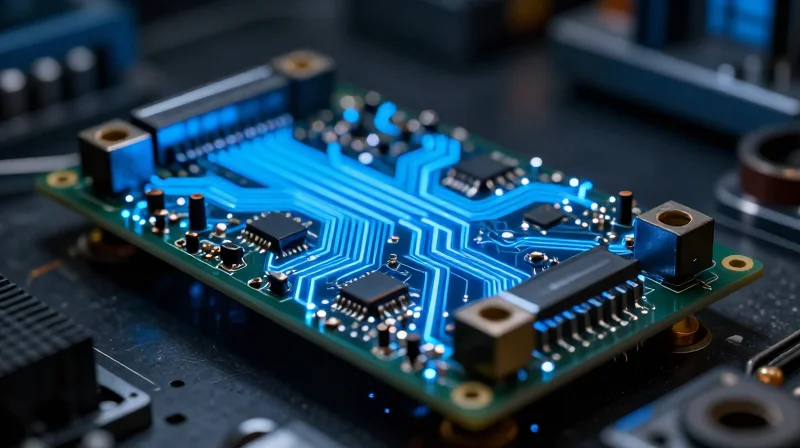
From Analog Millivolts to Digital Data
At its core, a load cell produces an extremely small analog voltage change, typically measured in millivolts per volt (mV/V), which is highly susceptible to electromagnetic interference and thermal drift. The PCBA acts as the primary signal processing unit that stabilizes, isolates, and translates this volatile analog signal into a reliable digital format. Without precise conditioning at the PCBA level, industrial controllers would receive noisy data, rendering high-accuracy weighing impossible in demanding factory environments.
Key PCBA Functions in Signal Processing
| Function | Role in Weighing | Impact on Accuracy |
|---|---|---|
| Excitation Voltage Regulation | Provides stable power to the strain gauge bridge | Eliminates drift caused by voltage fluctuation |
| Signal Amplification | Increases low-level mV signals for ADC processing | Maximizes signal-to-noise ratio |
| Analog-to-Digital Conversion | Translates voltage into readable binary values | Determines overall system resolution |
| Filtering | Removes high-frequency electrical noise | Stabilizes readings during mechanical vibration |
Common Implementation Questions
- Why is the proximity of the PCBA to the load cell important?
Minimizing the cable distance between the sensor and the PCBA reduces the injection of EMI and RFI, which are common in industrial settings and can severely degrade the millivolt-level signals before they reach the amplifier. - How does resolution in the ADC affect weighing performance?
Higher bit-depth ADCs allow for finer divisions of the load cell's output, enabling the system to detect minute weight changes while maintaining a wide total capacity range. - What role does thermal compensation play at the PCB level?
Sophisticated PCBs include circuitry to measure ambient temperature and apply software-based offset correction, ensuring the scale maintains accuracy across varying industrial temperatures.
Prioritizing ADC Resolution for High-Accuracy Weighing

Why ADC Resolution Dictates Weighing Accuracy
In industrial weighing, the ADC acts as the bridge between the analog strain gauge output and digital interpretation. A load cell generates a small millivolt signal proportional to the weight applied. If the ADC resolution is insufficient, the system will exhibit 'quantization noise'—where the smallest detectable weight increment is larger than the required measurement precision, leading to rounding errors and unstable readings.
Bit Resolution vs. Effective Resolution
Manufacturers often cite theoretical bit resolution (e.g., 24-bit). However, for industrial smart scales, 'Effective Resolution' (or ENOB—Effective Number of Bits) is the true indicator of performance. Noise from the power supply, environmental vibrations, and electromagnetic interference often consumes the least significant bits of an ADC, rendering them useless for high-precision weighing.
| ADC Resolution | Total Count Capability | Typical Application |
|---|---|---|
| 16-bit | 65,536 | Basic counting scales, low-accuracy checkweighing |
| 20-bit | 1,048,576 | Standard industrial bench scales |
| 24-bit | 16,777,216 | High-precision laboratory or precision batching |
Selecting the Right ADC for Your PCBA
- Should I always choose the highest bit count available?
Not necessarily. Higher resolution ADCs are more sensitive to noise. If the PCBA layout lacks high-quality filtering and low-noise voltage references, a 24-bit ADC may be noisier than a well-engineered 20-bit system. - How does integration time affect accuracy?
Longer integration times allow the ADC to sample more data, effectively averaging out high-frequency noise. This improves stability for slow, high-accuracy weighings but reduces the throughput of the scale. - Why is the voltage reference (VREF) critical?
The ADC resolution is meaningless if the reference voltage drifts due to temperature changes. Always prioritize PCBA designs that use low-drift, high-precision bandgap voltage references.
The Impact of Thermal Stability on Measurement Consistency
Mitigating Sensor Drift Through Thermal Compensation
Thermal drift occurs when electronic components, specifically resistors and voltage references within the PCBA, shift their operating values due to ambient temperature changes. To maintain measurement consistency, industrial-grade PCBAs must utilize precision components with low Temperature Coefficients of Resistance (TCR). Selecting a board with integrated software-based calibration algorithms allows for real-time compensation, effectively neutralizing the signal variance caused by thermal expansion and resistance shifts within the load cell bridge.
Comparative Component Analysis
| Component Type | Thermal Performance | Impact on Consistency |
|---|---|---|
| Standard Resistors | High Drift (>50ppm/°C) | Requires frequent recalibration |
| Precision Metal Foil | Ultra-low (<2ppm/°C) | Superior long-term stability |
| Standard Voltage Ref | Moderate Drift | Subject to baseline shifting |
| Low-Drift Bandgap Ref | Minimal Drift (<5ppm/°C) | Maintains stable excitation voltage |
Frequently Asked Questions Regarding Thermal Stability
- Why does my scale show different weights in the morning versus the afternoon?
This is likely caused by diurnal temperature cycling affecting the excitation voltage or the gain resistors on your PCBA. Selecting a board with lower TCR components will mitigate this fluctuation. - Is software calibration better than hardware component selection?
They are complementary. Hardware selection reduces the raw magnitude of drift, while software calibration cleans up the residual error. Relying solely on software is risky if the hardware baseline is inherently unstable. - What temperature rating should I specify for my industrial weighing PCBA?
For most industrial environments, look for components rated for at least -40°C to +85°C, ensuring the manufacturer provides stability specifications across that entire range.
Compatibility and Excitation Voltage Requirements
Selecting a PCBA that aligns with your load cell's excitation voltage is the foundational step in industrial weighing system design. Most industrial load cells are strain-gauge based, requiring a stable, regulated DC excitation voltage to produce a reliable output. Mismatched voltages can lead to non-linear outputs, thermal degradation of the gauge, or complete sensor failure due to excessive current draw.
Matching Voltage to Sensitivity
The load cell output signal is directly proportional to the excitation voltage (mV/V). If your load cell requires 10V but the PCBA provides 5V, your signal resolution will be effectively halved, making the system susceptible to noise. Conversely, exceeding the maximum rated excitation voltage will cause self-heating in the strain gauges, resulting in significant measurement drift.
| Excitation Type | Common Voltage | Typical Application |
|---|---|---|
| Standard Industrial | 10V DC | High-precision laboratory and heavy-duty industrial platforms |
| Portable/Low Power | 5V DC | Battery-operated scales and handheld weighing indicators |
| Advanced Precision | 2.5V DC | Micro-weighing and low-power IoT sensor nodes |
Frequently Asked Questions
- Can I use an unregulated power source for excitation?
No, load cells require a highly regulated, low-noise voltage supply. Any ripple or fluctuation in the excitation voltage will be amplified as noise in your measurement, leading to unstable digital readings. - Does the PCBA need to support remote sense?
For long cable runs, selecting a PCBA with remote sense capability is recommended. This allows the system to compensate for voltage drops across the wires, ensuring the load cell receives the exact intended excitation. - What happens if I under-power my load cell?
Under-powering results in a diminished signal-to-noise ratio. While the load cell may still function, you will lose significant bit-resolution at the ADC level, resulting in 'jumpy' or inaccurate weight increments.
Signal Filtering and Noise Rejection Techniques

In industrial environments, load cell signals—often at the microvolt level—are highly susceptible to electromagnetic interference (EMI) from motors, variable frequency drives, and heavy machinery. To achieve reliable measurement, the selected PCBA must incorporate a multi-layered approach to signal integrity, balancing hardware-level shielding with sophisticated digital signal processing (DSP) algorithms.
Hardware-Based Noise Mitigation Strategies
Before digital filtering can occur, the analog front-end must minimize environmental noise ingress. Look for PCBA designs that prioritize physical isolation and precise component placement to maintain a low noise floor.
| Feature | Industrial Impact | Implementation Priority |
|---|---|---|
| Differential Inputs | Rejects common-mode noise | Essential |
| Ferrite Beads/EMI Filters | Blocks high-frequency transients | High |
| Multi-layer PCB Ground Planes | Provides stable reference/shielding | High |
| Opto-isolation | Breaks ground loops | Medium |
Digital Signal Processing (DSP) Requirements
Once the analog signal is digitized, programmable digital filters allow the PCBA to strip away periodic mechanical vibrations and electrical hum. A robust smart scale PCBA should offer configurable filtering modes, such as Moving Average, Finite Impulse Response (FIR), or Infinite Impulse Response (IIR) filters, to adapt to specific weighing conditions.
- How do I choose between FIR and IIR filters?
FIR filters provide linear phase response and absolute stability, ideal for static weighing; IIR filters are more computationally efficient and effective for dynamic processes requiring faster settling times. - Why is a programmable cutoff frequency important?
Industrial noise profiles change; a programmable filter allows users to adjust the corner frequency to notch out specific 50Hz/60Hz mains hum or vibration frequencies unique to the installation site. - What is the role of the ADC in noise rejection?
The ADC's internal sampling rate and oversampling capability dictate the signal-to-noise ratio. Higher oversampling allows the digital filter to push noise into higher frequencies where it can be easily removed.
Communication Protocols for Seamless Industrial Integration

The bridge between a precision load cell and your facility's control architecture lies in the communication interface. Choosing the right protocol—whether serial, fieldbus, or industrial Ethernet—directly dictates the system's latency, diagnostic capabilities, and wiring complexity. A well-selected PCBA must support the specific physical layer and protocol requirements of your existing infrastructure to avoid costly conversion hardware and signal degradation.
Comparing Industrial Communication Standards
| Protocol | Primary Use Case | Topological Advantage | Key Limitation |
|---|---|---|---|
| RS-485 | Point-to-point/Multi-drop | Long-distance reliability | Requires custom master logic |
| Modbus RTU | Standard PLC integration | Universal compatibility | Slow response times |
| CAN bus | Automotive/High noise | Message prioritization | Limited cable length |
Frequently Asked Questions on Protocol Selection
- Why is Modbus RTU still the industry standard for load cell PCBAs?
Modbus RTU is favored for its simplicity and near-universal support across legacy and modern PLCs, allowing for easy integration without specialized drivers. - When should I prioritize CAN bus over RS-485?
Choose CAN bus if your application requires high immunity to electromagnetic interference and prioritized message handling, typically seen in multi-node, automated manufacturing cells. - How does protocol choice impact system latency?
Higher-level protocols like Modbus TCP or industrial Ethernet offer lower latency compared to serial-based protocols like Modbus RTU, which are subject to baud-rate bottlenecks and packet overhead.
When selecting your PCBA, verify that the board firmware implements these protocols natively. Relying on external protocol converters introduces extra points of failure and can compromise the integrity of weight measurement data due to buffer delays. Always ensure your chosen interface maintains Galvanic isolation to protect sensitive PCBA components from potential ground loops commonly found on the factory floor.
Environmental Hardening and Enclosure Considerations
In industrial weighing applications, a high-performance PCBA is only as reliable as the environment it operates within. Environmental hardening involves selecting ingress protection (IP) ratings, thermal management strategies, and vibration-dampening mounting solutions to prevent premature component failure due to dust, moisture, or mechanical stress.
Ingress Protection (IP) Standards
The ingress protection rating determines the ability of the enclosure to prevent solid objects and liquids from contacting sensitive electronics. For most factory floors, an IP65 rating is the bare minimum, while wash-down environments or outdoor installations often necessitate IP67 or IP69K ratings.
| Environment Type | Recommended IP Rating | Key Considerations |
|---|---|---|
| Dry/Clean Warehouse | IP54 | Basic protection against dust and minor debris. |
| General Industrial | IP65 | Protection against water jets and dust ingress. |
| Food/Wash-down | IP69K | Withstands high-pressure, high-temperature spray-downs. |
Mechanical Hardening and Vibration Resistance
Industrial settings frequently generate harmonic vibrations from heavy machinery. Without proper isolation, these vibrations can fatigue solder joints or cause connector failure. When selecting a PCBA, prioritize boards that feature conformal coating, heavy-duty through-hole components, and locking headers to maintain electrical integrity under mechanical load.
Environmental Hardening FAQ
- Is conformal coating necessary for all industrial PCBAs?
While not always mandatory, it is highly recommended to prevent short circuits caused by conductive dust or condensation in fluctuating humidity. - How does extreme temperature affect PCBA lifespan?
Temperature cycling leads to thermal expansion and contraction, which can stress board traces. Industrial-grade PCBAs utilize components rated for -40°C to +85°C to mitigate this risk. - Does a metal enclosure provide better protection than plastic?
Yes. Metal enclosures provide superior EMI shielding and thermal dissipation, both of which are essential for maintaining stable load cell measurements.
The Total Cost of Ownership: Reliability vs. Procurement Price
The Hidden Costs of Low-Cost Electronics
When sourcing smart scale PCBAs, procurement teams often focus exclusively on the unit price. However, in heavy industrial applications, a lower entry price frequently hides significant long-term liabilities. Cheaply manufactured boards often feature inferior voltage regulation, lower-grade capacitors, and lack robust EMI filtering. These compromises lead to early component failure, unstable weigh data, and increased frequency of recalibration. In a 24/7 production environment, even a single hour of unplanned downtime due to scale drift or component failure can cost significantly more than the price difference between a commodity board and an industrial-grade solution.
Comparative Analysis: Commodity vs. Industrial-Grade
| Feature | Commodity PCBA | Industrial-Grade PCBA |
|---|---|---|
| Failure Rate | High (Early mortality) | Low (Predictable lifespan) |
| Calibration Stability | Subject to drift | High thermal stability |
| Downtime Costs | Frequent interventions | Minimal maintenance |
| Total Cost (3 Years) | High (Due to replacements) | Low (Higher initial cost) |
Strategic Considerations for TCO
- How does component quality impact calibration frequency?
Lower quality components degrade under environmental stress, causing the sensor signal to drift. High-quality PCBAs utilize precision voltage references and low-drift amplifiers that maintain accuracy over much longer intervals. - What is the cost of unplanned maintenance?
Unplanned maintenance includes technician labor, lost throughput, and potential wasted inventory due to inaccurate weighing. Reliable PCBAs minimize these events by providing stable, repeatable performance. - Is 'over-specifying' worth the investment?
While you should avoid unnecessary features, investing in ruggedized, EMI-hardened electronics is never an over-specification in industrial weighing. It is an insurance policy against the environmental rigors of the factory floor.
To achieve the lowest Total Cost of Ownership (TCO), engineers must evaluate the PCBA based on its Mean Time Between Failures (MTBF) and its ability to maintain accuracy under load. Prioritize vendors who provide comprehensive technical documentation, test reports, and long-term supply chain availability. An industrial-grade PCBA represents a strategic asset that secures production continuity, whereas a discount board often serves only as a temporary fix that increases operational debt.
Selecting the right load cell PCBA is not merely a purchase decision, but a strategic investment in the longevity and precision of your weighing infrastructure. By focusing on signal integrity, thermal stability, and protocol compatibility, you can ensure your systems remain accurate for years. Contact our engineering consultants today to discuss your specific application needs and find the optimal PCBA solution for your requirements.
