
Modern security demands more than just optics; it requires a robust, high-performance heartbeat. Selecting the ideal PCB assembly (PCBA) for your security camera is a critical engineering decision that dictates everything from real-time analytics to 24/7 reliability. In this guide, we break down the complex variables involved in choosing the right mainboard to ensure your surveillance infrastructure is future-proof and resilient.
Evaluating Processing Power for Intelligent Analytics
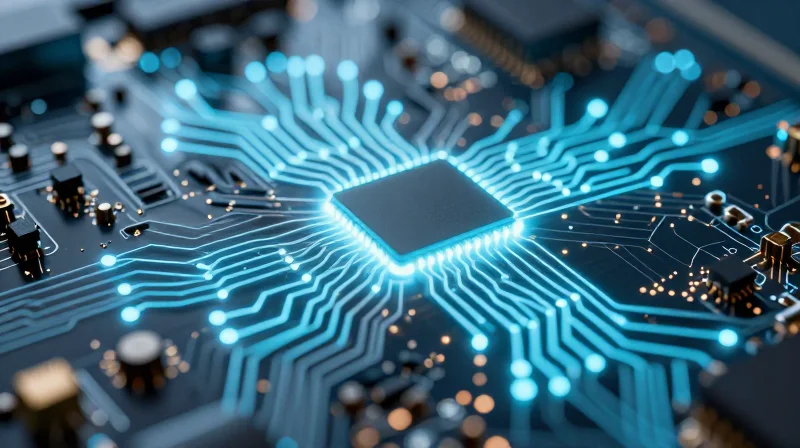
The Shift Toward AI-Driven Edge Computing
Modern surveillance systems have evolved from passive recording devices into active, AI-driven analytics hubs. To support real-time object detection, facial recognition, and behavioral analysis at the edge, the camera's mainboard must feature a System-on-Chip (SoC) capable of high TOPS (Trillions of Operations Per Second) performance. Selecting a board is no longer just about resolution support; it is about selecting an architecture that can handle neural network inference without inducing excessive latency or system overheating.
Critical Hardware Considerations
| Component | Performance Impact | Selection Criteria |
|---|---|---|
| NPU/SoC | AI Inference Speed | High TOPS/Watt efficiency ratio |
| RAM (LPDDR4x/5) | Data Throughput | High bandwidth for multi-stream processing |
| PCB Layering | Signal Integrity | Minimum 8-12 layer stackup for EMI control |
Impact on PCB Design and Thermal Management
High-performance SoCs generate significant localized heat. A robust mainboard design must incorporate efficient heat dissipation pathways, such as copper-filled thermal vias and direct integration with aluminum chassis heatsinks. Furthermore, as processing speeds increase, PCB signal integrity becomes paramount; high-frequency data traces require meticulous impedance control to prevent signal noise from compromising AI data accuracy.
Frequently Asked Questions
- Why is TOPS performance important for AI cameras?
TOPS measures the computational capacity of the NPU; higher values allow the camera to run more complex deep learning models locally without needing back-end server support. - How does PCB layer count affect camera reliability?
Higher layer counts allow for better shielding of high-speed signals, which minimizes crosstalk and EMI that could otherwise cause intermittent system crashes. - What should I look for in thermal design?
Prioritize mainboards that offer standardized thermal interface pads and support for high-efficiency heatsinks designed to keep the SoC within its safe operating temperature range under sustained 4K AI-analytics loads.
Advanced Thermal Management Strategies
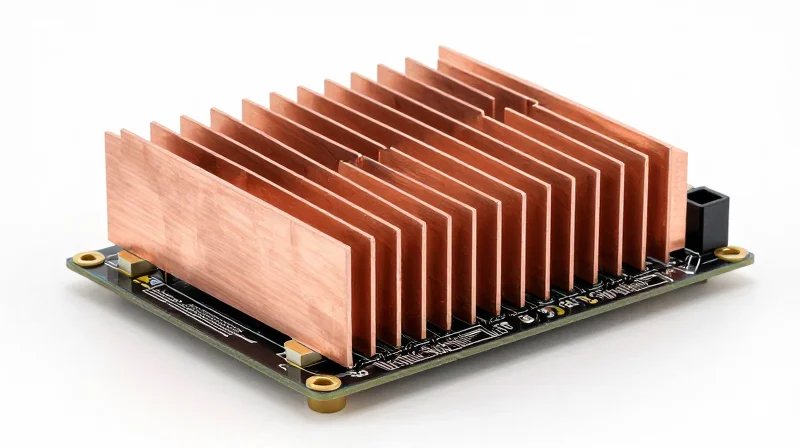
Optimizing Thermal Dissipation for High-Performance SoCs
As modern security cameras integrate complex AI analytics and high-bitrate video encoding, the underlying System-on-Chip (SoC) generates substantial heat. Without advanced cooling, the mainboard will trigger thermal throttling, resulting in dropped frames or system failure. Engineering teams must prioritize PCB substrate materials with high thermal conductivity, such as specialized FR-4 variants or metal-core printed circuit boards (MCPCBs), to effectively move heat away from critical processing components.
Material Selection and Heat Sinking Techniques
| Thermal Strategy | Mechanism | Ideal Application |
|---|---|---|
| Copper Vias | Conducts heat to internal ground planes | Multi-layer high-density PCB |
| Thermal Pads | Interfaces SoC to chassis housing | Compact dome or bullet cameras |
| Heat Pipes | Transfers heat to external fins | High-wattage PTZ systems |
Thermal Design FAQs
- Why is board layout critical for heat management?
A well-planned layout minimizes the distance between the SoC and the camera housing, allowing the enclosure itself to act as a primary heat sink through thermal conductive paths. - When should an engineer opt for a metal-core PCB?
MCPCBs should be selected when high-power LEDs and heavy AI processing occur simultaneously, as they provide superior heat spreading compared to standard glass-epoxy substrates. - How does ambient temperature impact component selection?
For outdoor installations, components must be rated for industrial temperature ranges (-40°C to +85°C) to withstand both solar gain and internal heat generation.
Signal Integrity and High-Speed Data Transmission
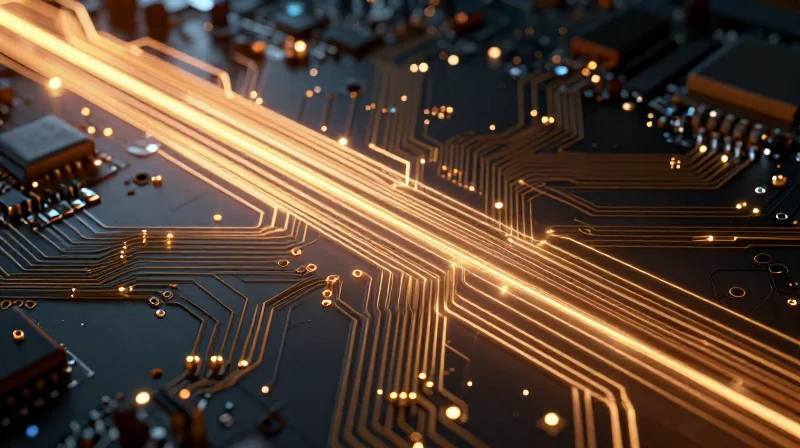
Signal Integrity in High-Resolution Surveillance
In modern 4K surveillance systems, the mainboard serves as a high-speed highway for massive data throughput. As pixel counts and frame rates increase, the integrity of high-speed differential signals—such as MIPI CSI-2 for image sensors or PCIe lanes for AI accelerators—becomes critical. Any degradation in these signals due to electromagnetic interference (EMI) or impedance mismatches manifests as frame drops, motion artifacts, or total link failure.
Key Design Considerations for Signal Stability
| Parameter | Impact on Stability | Design Requirement |
|---|---|---|
| Trace Impedance | Causes signal reflection and data corruption. | Strict 90-ohm or 100-ohm differential control. |
| Via Stubs | Creates resonant frequencies and signal attenuation. | Use back-drilling or blind/buried vias. |
| Ground Plane | High EMI sensitivity for high-speed signals. | Continuous solid reference planes beneath traces. |
Engineers must employ multi-layer PCB designs to isolate high-speed digital signals from noisy switching power supplies. By utilizing guard traces, stitching vias, and maintaining controlled impedance throughout the stack-up, manufacturers ensure the camera's front-end sensor data reaches the ISP without distortion.
Frequently Asked Questions
- Why is trace length matching critical for 4K cameras?
Length matching prevents skew between differential pairs, ensuring that data bits arrive simultaneously and minimizing jitter in high-speed protocols like LVDS or MIPI. - How does shielding prevent interference in enclosed housings?
Effective shielding, such as grounded metal cans over RF-sensitive components and ferrites on cabling, prevents internal high-speed noise from corrupting low-level image sensor data. - Does PCB material selection matter for 4K performance?
Yes; high-performance surveillance boards often use mid-to-high Tg (glass transition temperature) laminates with low dielectric loss (Df) to ensure signal attenuation remains minimal at high frequencies.
Power Delivery and Energy Efficiency
Optimizing PoE Integration and Power Regulation
Effective power delivery is the foundation of high-performance surveillance systems, particularly when powering resource-intensive AI analytics and motor-driven PTZ features. Selecting a mainboard with an efficient Power over Ethernet (PoE) controller is critical to reducing board-level heat generation. High-quality synchronous buck converters and low-dropout regulators (LDOs) should be used for power rail distribution, as they minimize electromagnetic interference (EMI) that can otherwise degrade sensitive CMOS image sensor data.
PoE Standard and Efficiency Comparison
| PoE Standard | Max Power (PSE) | Application | Efficiency Impact |
|---|---|---|---|
| IEEE 802.3af | 15.4W | Standard Fixed | Low |
| IEEE 802.3at | 30.0W | AI Edge Cameras | Moderate |
| IEEE 802.3bt | 60W+ | PTZ & Multi-sensor | High |
Minimizing Noise and Power Consumption
To maintain 4K video signal integrity, developers must focus on power plane decoupling and filtering. Even minor ripple currents on the image sensor power rail can manifest as rolling interference patterns or 'noise' in the low-light footage. Implementing a multi-stage power conditioning strategy ensures that the power delivery network (PDN) remains stable under the burst loads typical of AI inferencing cycles.
- How does power ripple affect image quality?
Power ripple creates noise in the Analog-to-Digital Converter (ADC) of the image sensor, often causing visual artifacts or graininess in low-light environments. - What is the benefit of synchronous rectification?
Synchronous rectification replaces standard diodes with MOSFETs, significantly reducing conduction losses and improving the overall power efficiency of the mainboard. - Why should I prioritize low-ESR capacitors?
Low-Equivalent Series Resistance (ESR) capacitors provide faster transient response and lower heat dissipation, which is essential for stable power delivery during high-compute analytics spikes.
Reliability and Environmental Hardening
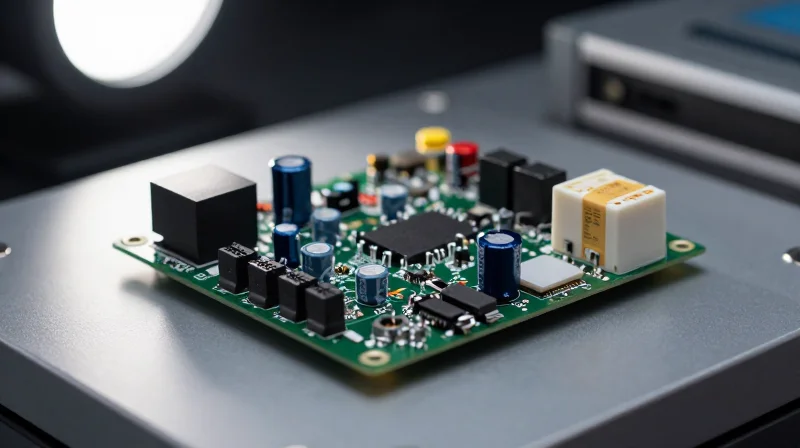
Deploying security cameras in outdoor or industrial environments requires more than standard consumer-grade components. A mainboard designed for reliability must employ automotive or industrial-grade silicon, conformal coating, and vibration-resistant mounting to ensure continuous uptime and signal stability in harsh, unpredictable conditions.
Environmental Resilience Standards
| Environmental Factor | Hardening Strategy | Key Metric |
|---|---|---|
| Temperature Extremes | Industrial-grade components (-40°C to +85°C) | Operating Range |
| Humidity/Condensation | Silicone or acrylic conformal coating | IP-Rating Compatibility |
| Constant Vibration | Surface-mount locking connectors & underfill | MIL-STD-810G Compliance |
Critical Reliability FAQs
- Why is conformal coating necessary?
Conformal coating provides a protective barrier against moisture, dust, and corrosive pollutants that lead to dendrite growth and short circuits on the PCB surface. - Does vibration impact high-speed data signals?
Yes, chronic vibration can lead to micro-fractures in solder joints or connector pin fatigue, which degrades high-speed differential signal integrity and induces packet loss. - What is the importance of MTBF in this context?
Mean Time Between Failures (MTBF) should be calculated based on the specific thermal profile of your installation; components rated for higher junction temperatures will inherently offer better MTBF in high-heat outdoor enclosures.
To achieve maximum longevity, designers should specify capacitors and resistors with low ESR (Equivalent Series Resistance) and thermal tolerance. Furthermore, ensuring that the mainboard utilizes gold-plated contacts and anti-vibration mechanical standoffs is essential for installations located near heavy machinery or high-traffic areas.
Security Firmware and Hardware-Level Encryption
In the modern surveillance landscape, a camera is only as secure as its physical mainboard. To prevent sophisticated cyberattacks—such as firmware tampering and unauthorized root access—designers must prioritize boards that integrate hardware-based root of trust (RoT) solutions directly into the PCBA architecture.
The Role of TPM 2.0 and Secure Boot
The foundation of hardware-level security relies on the Trusted Platform Module (TPM) 2.0 standard. By embedding a dedicated cryptographic processor on the mainboard, the camera can securely store identity keys, certificates, and encryption tokens that are inaccessible to the main system OS. When paired with Secure Boot, which uses cryptographically signed firmware images, the system ensures that only manufacturer-authorized software executes during the startup sequence, effectively neutralizing boot-level malware.
Comparison of Security Implementations
| Feature | Legacy Implementation | Modern Secure PCBA |
|---|---|---|
| Boot Process | Unverified execution | Cryptographically signed boot |
| Key Storage | Software-based / Flash | Hardware-isolated TPM |
| Firmware Update | Open verification | Encrypted rollback protection |
| Anti-Tamper | None | Physical tamper-detect sensors |
Frequently Asked Questions
- Why is a physical TPM chip better than software encryption?
Software-based encryption relies on the main CPU, which can be compromised if the OS is breached. A physical TPM acts as a separate, hardened vault that remains secure even if the primary processor is running malicious code. - How does hardware encryption impact video stream latency?
Modern high-performance mainboards utilize hardware-accelerated encryption engines (such as AES-NI) that perform stream encryption in real-time, resulting in negligible latency impacts while ensuring data privacy. - Does secure boot complicate firmware updates?
While it requires the update file to be signed by the manufacturer, it ensures that an attacker cannot upload custom firmware to gain control of the camera, thus providing necessary protection for high-security environments.
Supply Chain and Component Lifecycle Planning
Mitigating Obsolescence Risk in High-Performance PCBA Design
Selecting a high-performance mainboard is not merely a technical decision but a long-term commercial commitment. In the rapidly evolving surveillance market, components such as image sensors, SoCs (System-on-Chips), and power management ICs often reach their end-of-life (EOL) faster than the cameras themselves. To avoid premature redesigns, engineers must prioritize vendors who offer extended lifecycle support and maintain robust roadmaps that guarantee component availability for five to ten years.
| Component Category | Risk Factor | Mitigation Strategy |
|---|---|---|
| SoC / Processor | High (Architecture Shifts) | Partner with Tier-1 vendors with 7+ year longevity |
| Image Sensors | Medium (Interface Updates) | Standardize on global-shutter modules with pinned-out compatibility |
| Passive/Memory | Low (Commodity) | Maintain dual-sourcing documentation for secondary parts |
Best Practices for Lifecycle Management
- How can I verify component longevity during the design phase?
Utilize PCN (Product Change Notification) monitoring services and ensure that your design BOM (Bill of Materials) is cross-referenced against manufacturer longevity programs before finalizing the schematic. - Why should I avoid 'bleeding edge' components?
While cutting-edge chips offer superior processing, they are often in short supply or subject to rapid iteration; choosing 'proven' enterprise-grade silicon ensures a more stable supply chain for commercial deployments. - What role does modular design play in sustainability?
Designing with modular sub-systems—such as removable camera sensor boards or pluggable communication modules—allows you to update critical parts of the system without requiring a complete mainboard redesign.
Ultimately, a resilient supply chain strategy involves building deep partnerships with distribution channels and component manufacturers. By locking in long-term availability guarantees early in the development cycle, you safeguard your surveillance architecture against supply chain disruptions and unexpected costs associated with component phase-outs.
Regulatory Compliance and Quality Certification
Navigating Global Regulatory Standards
Achieving market viability for modern surveillance systems requires strict adherence to international safety and emission standards. Ensuring your PCBA design is compliant from the prototyping phase minimizes costly delays, re-testing fees, and potential recalls. Engineers must prioritize design-for-compliance (DFC) methodologies to pass electromagnetic compatibility (EMC) and environmental toxicity tests.
| Certification | Region | Primary Focus |
|---|---|---|
| FCC | USA | Electromagnetic Interference (EMI) limits |
| CE | Europe | Health, safety, and environmental protection |
| RoHS | Global | Restriction of hazardous substances |
| WEEE | Europe | Electronic waste collection and recycling |
Common Compliance Queries
- Why is RoHS compliance critical for surveillance PCBA?
RoHS compliance restricts the use of specific hazardous materials like lead and mercury. Failing this certification prohibits your product from entering the EU market and increasingly impacts access to other global regions due to environmental supply chain mandates. - How does EMI testing affect the selection of mainboard components?
High-speed processors and clock signals can generate significant electromagnetic interference. Choosing components with built-in shielding and designing PCB layouts that minimize trace length and loop area are essential to passing FCC/CE radiated emission tests. - Does an ISO 9001 certified manufacturer guarantee product quality?
While ISO 9001 validates that the manufacturer follows consistent quality management processes, it does not guarantee the performance of the specific electronic design. You must pair certification with independent stress testing and validation of the mainboard's thermal and power stability.
Strategic Implementation of Quality Controls
Beyond mandatory certifications, implementing internal quality protocols such as IPC-A-610 standards for electronics assembly ensures long-term reliability. By selecting a PCBA manufacturing partner that performs automated optical inspection (AOI) and X-ray inspection on BGA components, you verify the integrity of high-density interconnects, which is vital for the longevity of high-performance surveillance hardware.
Choosing the right PCBA is the cornerstone of building a reliable, high-performance security system. By carefully balancing processing needs with thermal performance and hardware-level security, you ensure your cameras perform flawlessly in any environment. If you are ready to optimize your hardware roadmap, contact our engineering team today to discuss your project requirements.
