
In the hyper-competitive world of portable audio, the Printed Circuit Board Assembly (PCBA) acts as the heart of your device. A failure in component selection doesn't just mean a poor listening experience; it results in high return rates and eroded brand equity. This guide provides the strategic framework necessary to select a PCBA that balances raw performance with market-ready reliability.
Understanding the Role of the PCBA in Audio Fidelity
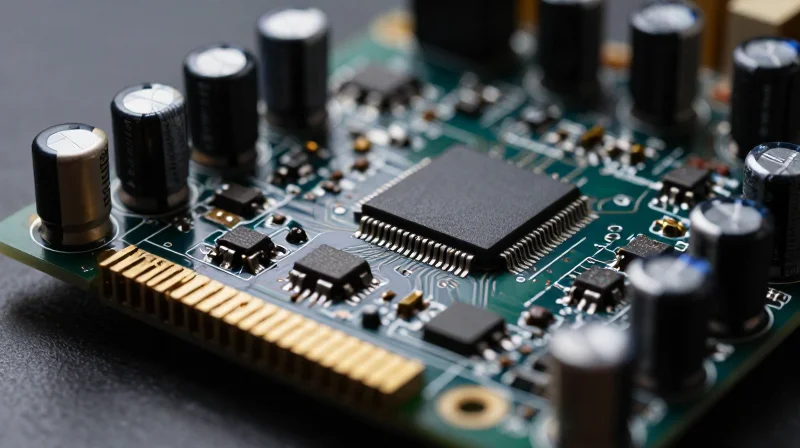
The PCBA as the Central Nervous System
In high-fidelity portable audio, the PCBA is far more than a mounting platform for components; it is the central nervous system where every digital instruction is transformed into an acoustic event. The quality of audio reproduction relies heavily on the design of the signal path, the precision of the Digital-to-Analog Converter (DAC), and the efficiency of the integrated power management system. Any jitter in the clocking, noise in the power rails, or interference within the board layout can lead to harmonic distortion and diminished clarity, directly undermining the goal of achieving high-fidelity sound.
Critical Performance Factors
| Component Category | Impact on Audio Fidelity | Key Design Consideration |
|---|---|---|
| DAC/DSP Integration | Determines signal resolution and frequency response accuracy. | Low THD+N performance |
| Power Rail Isolation | Reduces floor noise and prevents switching interference. | High-grade LDO regulation |
| Wireless Frontend | Maintains data integrity for high-bitrate streaming. | Antenna placement and EMI shielding |
Frequently Asked Questions
- How does PCB layout affect sound quality?
Improper trace routing can lead to electromagnetic interference (EMI) and crosstalk. A high-fidelity design requires dedicated ground planes and strict isolation between high-speed digital signals and sensitive analog audio lines. - Is Bluetooth signal stability relevant to fidelity?
Yes. If the PCBA layout causes packet loss or jitter, the internal DAC must compensate or drop data, resulting in audible artifacts and a reduced soundstage. - Why is power supply rejection ratio (PSRR) important?
A high PSRR ensures that ripples or noise from the battery or charging circuitry do not bleed into the audio signal, keeping the noise floor low enough for true hi-fi performance.
Prioritizing Power Efficiency for Portable Longevity

Optimizing Power Architecture for Extended Playback
For portable high-fidelity speakers, the PCBA must strike a delicate balance between audiophile-grade signal processing and aggressive power management. Efficiency is dictated by the selection of Class-D amplifiers, low-quiescent current voltage regulators, and the integration of dynamic power scaling algorithms that adjust power consumption based on real-time audio dynamics.
Efficiency Comparison: Component Selection
| Component Type | Efficiency Impact | Recommendation |
|---|---|---|
| Amplifier Class | High (90%+) | Class-D with low THD |
| Regulator Type | Moderate | Synchronous Buck Converter |
| Idle Consumption | Critical | Micro-amp Sleep Modes |
Critical Power Management Strategies
Achieving longevity requires more than just a large battery; it demands a power-aware design methodology. Designers must prioritize components that support 'Deep Sleep' states and efficient DC-DC conversion to minimize heat dissipation—a secondary indicator of wasted energy.
- How does Class-D efficiency affect audio quality?
Class-D amplifiers are highly efficient, converting battery energy directly to sound with minimal heat loss, which prevents thermal throttling and ensures consistent fidelity over long sessions. - Why is quiescent current important for portables?
Quiescent current is the energy consumed when the speaker is on but not playing audio; low quiescent components ensure your battery does not drain rapidly during standby. - Can firmware improve battery life?
Yes, advanced power-gating firmware can disable unused sub-circuits or Bluetooth radio features during low-activity periods, significantly extending overall playback time.
Selecting the Right Bluetooth Chipset
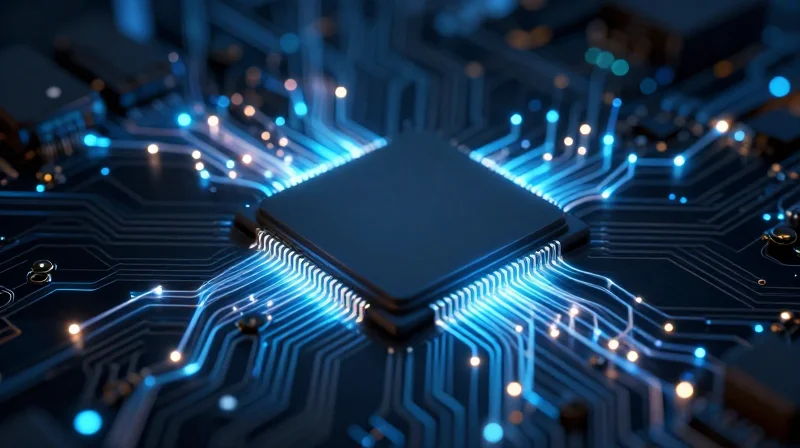
The Bluetooth chipset serves as the primary engine for data transmission and digital-to-analog conversion in any portable speaker. Choosing the right silicon involves evaluating the SoC's signal-to-noise ratio (SNR), supported codec library, and its ability to maintain stable throughput in environments crowded with RF interference.
Essential Codec Support for High-Fidelity Audio
For high-fidelity applications, the chipset must go beyond the basic SBC codec to support high-bitrate streaming technologies. The following table compares common codecs utilized in modern PCBA designs.
| Codec | Bitrate | Application | Fidelity Level |
|---|---|---|---|
| SBC | 328 kbps | Universal compatibility | Standard/Lossy |
| aptX HD | 576 kbps | High-res wireless | Near-CD |
| LDAC | 990 kbps | Audiophile streaming | High-Res |
Technical Considerations for Chipset Selection
- Connection Stability
Prioritize chipsets with advanced antenna diversity and Bluetooth 5.2 or higher to ensure robust links and reduced packet loss in signal-congested areas. - Latency Management
For synchronized audio-visual performance, look for SoCs offering 'Low Latency' modes which reduce audio delay to below 40ms, a necessity for gaming or video consumption. - DSP Capabilities
Select a chipset with a programmable Digital Signal Processor (DSP) that allows for fine-tuning frequency response, active crossover implementation, and dynamic range compression.
Power Efficiency and Integration
High-fidelity audio processing consumes significant power. It is essential to select a chipset that utilizes a low-power architecture without sacrificing processing headroom. A well-integrated PCBA should feature efficient clock management to ensure that the DAC/AMP stage is optimized during periods of high-resolution playback, preventing premature battery depletion while maintaining output integrity.
Optimizing Signal-to-Noise Ratio (SNR) for Crystal Clear Sound
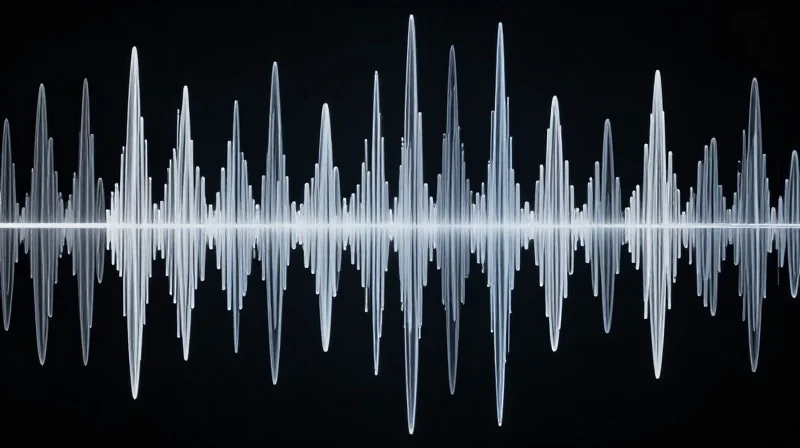
Minimizing the Noise Floor in Compact Designs
To achieve high-fidelity audio, the PCBA layout must isolate the sensitive analog signal path from the high-frequency switching noise inherent in Class-D amplifiers and Bluetooth modules. Signal-to-noise ratio (SNR) is directly impacted by ground plane integrity and the physical placement of decoupling capacitors. Engineers must prioritize a multi-layer PCB design that utilizes dedicated ground planes to provide a low-impedance return path, effectively shunting electromagnetic interference (EMI) away from the audio signal chain.
Critical Layout Techniques for SNR Enhancement
| Design Factor | Technical Objective | Impact on Audio |
|---|---|---|
| Trace Separation | Isolate analog and digital lines | Reduces digital crosstalk |
| Ground Plane | Solid copper pours | Lowers total harmonic distortion |
| Component Placement | Tight decoupling capacitor loops | Minimizes power supply ripple |
Frequently Asked Questions Regarding PCBA Noise
- How does PCB layer count affect SNR?
A 4-layer board is generally superior to a 2-layer board as it allows for dedicated ground and power planes, significantly reducing the loop area for high-frequency return currents. - Why is power supply filtering crucial for SNR?
Bluetooth modules often cause high-frequency spikes; robust LC filtering on the VCC line prevents this noise from modulating the audio signal. - Does component quality influence the noise floor?
Yes, using low-ESR capacitors and high-precision resistors in the signal path directly minimizes thermal and electronic noise floor contributions.
Thermal Management and Enclosure Integration
Thermal Management Challenges in Compact PCBAs
In high-fidelity portable speakers, the intersection of high-power Class D amplification and constrained physical space creates significant thermal density. As power outputs increase to drive premium drivers, PCBAs generate substantial heat that must be dissipated to prevent thermal shutdown or the permanent degradation of sensitive passive components. Engineers must prioritize efficient heat sinking strategies, such as integrating thermal vias into the PCB stack-up to transfer heat directly to the chassis, or utilizing aluminum-backed thermal pads between power-intensive ICs and the enclosure structure.
Integration Strategies for Performance
| Strategy | Thermal Benefit | Audio Impact |
|---|---|---|
| Thermal Vias | High dissipation to PCB layers | Prevents clipping due to throttling |
| Aluminum Heat Spreader | Direct chassis coupling | Maintains low THD at high volumes |
| Passive Convection | Airflow channels in enclosure | Reduces internal noise floor |
Enclosure Design and Resonance Control
Integrating a PCBA into a portable enclosure requires balancing heat dissipation with acoustic isolation. A common pitfall is 'thermal boxing,' where heat becomes trapped in airtight chambers designed to enhance bass response. To mitigate this, developers should use high-density thermal interface materials (TIM) to bridge the gap between heat-producing components and external structural elements, effectively turning the enclosure into a massive passive heatsink. Furthermore, ensure that the mechanical mounting of the PCBA uses rubber standoffs to prevent high-frequency vibrations from damaging solder joints over time.
Frequently Asked Questions
- How does overheating impact audio quality?
Thermal stress can cause Class D amplifiers to engage thermal protection circuits, leading to audible clipping, intermittent drops in output, or premature failure of capacitors which degrades frequency response. - Can I use plastic enclosures for high-output speakers?
Yes, but they require careful design. You must integrate metal mounting brackets or dedicated internal heat sinks that contact the enclosure walls to ensure consistent thermal transfer away from the PCBA.
Evaluating Component Quality and Supply Chain Stability
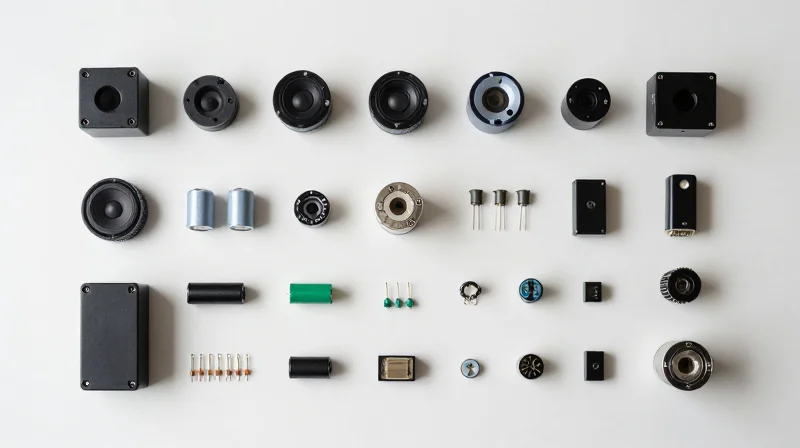
The Critical Role of Component Quality in Audio Signal Paths
In high-fidelity portable audio, the integrity of the signal path is dictated by the passive components surrounding the DAC and amplifier. Utilizing generic or low-grade capacitors and resistors can introduce phase distortion, thermal noise, and frequency roll-off, effectively nullifying the benefits of a premium Bluetooth chipset. For a professional-grade PCBA, engineers must specify components with tight tolerances and high-stability dielectric materials to ensure audio consistency across varying temperature ranges and battery discharge states.
| Component Type | Performance Impact | Recommended Standard |
|---|---|---|
| Input/Output Capacitors | Affects DC blocking and transient response | C0G/NP0 Ceramic or high-grade Film |
| Resistors (Signal Path) | Influences thermal noise and harmonic distortion | Thin-film, 0.1% Tolerance |
| Power Decoupling | Controls ripple and ripple-induced noise | Low-ESR Electrolytic or Tantalum |
Assessing Manufacturer Credibility and Supply Chain Robustness
Supply chain instability represents the greatest threat to product lifecycle. Beyond pricing, you must vet manufacturers based on their procurement transparency, component traceability, and adherence to IPC standards. A credible partner should demonstrate clear protocols for handling electronic component obsolescence and maintain strict quality control regimes—such as Automated Optical Inspection (AOI) and X-ray inspection for BGA packages—to mitigate the risk of intermittent failures in the field.
- How can I verify if a manufacturer uses authentic premium components?
Demand a formal Bill of Materials (BOM) that specifies manufacturers and part numbers. Cross-reference these with authorized distributors and perform random batch testing to verify specifications against the datasheet. - What should be included in a component obsolescence strategy?
A proactive manufacturer will provide quarterly EOL (End of Life) notifications and offer qualified drop-in replacements, ensuring that redesigns are not forced by mid-production supply shocks. - Does PCBA cleaning and inspection affect audio quality?
Yes. Residue from flux or improper cleaning can create leakage currents on high-impedance signal traces, leading to parasitic noise. Ensure the manufacturer adheres to strict ISO-certified cleanliness standards.
Regulatory Compliance and Certification Standards
Achieving market readiness for high-fidelity audio products requires more than superior acoustic performance; it demands strict adherence to regional regulatory frameworks. Failure to secure the necessary certifications can result in costly product recalls, import seizures, and significant damage to brand reputation. When selecting a PCBA, prioritize manufacturers that demonstrate transparent compliance histories and provide pre-certified modules.
Key Regulatory Certifications for Bluetooth Audio
| Certification | Region | Focus Area |
|---|---|---|
| FCC Part 15 | United States | Electromagnetic interference and radio frequency emissions. |
| CE Marking | European Union | Health, safety, and environmental protection standards. |
| Bluetooth SIG | Global | Interoperability and adherence to Bluetooth protocol standards. |
| RoHS/REACH | Global | Restriction of hazardous substances in electronic components. |
Ensuring Global Market Access
When sourcing your PCBA, verify if the manufacturer utilizes pre-certified Bluetooth modules. Using a pre-certified module significantly reduces the testing overhead during the Bluetooth SIG qualification process, as the radio hardware has already been vetted. Always ensure that the PCBA supplier provides a comprehensive Technical Construction File (TCF) containing the test reports required for CE and FCC DoC (Declaration of Conformity).
Frequently Asked Questions
- Why is Bluetooth SIG certification mandatory?
Bluetooth SIG certification is a legal requirement for any product utilizing the Bluetooth trademark. It ensures your device communicates seamlessly with other Bluetooth-enabled products and adheres to the specified wireless protocols. - Does an FCC-certified PCBA guarantee my end product is compliant?
Not necessarily. While the PCBA is certified, the final enclosure, power supply, and cable routing significantly impact radiated emissions. You must perform final integration testing to ensure the complete device complies with FCC limits. - How do RoHS and REACH influence component selection?
These standards restrict the use of lead, mercury, and other hazardous materials. Selecting a PCBA that is fully RoHS compliant is mandatory for European market access and demonstrates a commitment to sustainable manufacturing.
Future-Proofing Your Design
Strategic Integration for Long-Term Value
To ensure your high-fidelity audio product remains competitive, selecting a PCBA with modularity and software upgradability is essential. As consumer standards shift toward advanced power delivery and synchronized multi-device ecosystems, the underlying hardware must be capable of adapting to new protocols without requiring a complete hardware redesign.
Essential Future-Ready Features
- USB-C Power Delivery (PD)
Moving beyond standard charging, USB-C PD allows for faster charging times and universal compatibility, aligning your device with modern regulatory trends and consumer convenience. - OTA Firmware Updates
Implementing Over-the-Air update capability allows you to patch bugs, improve audio DSP tuning, and add feature sets post-launch, significantly extending the product lifecycle. - Multi-Speaker Pairing Protocols
Selecting a chipset that supports advanced broadcasting protocols like Auracast or proprietary daisy-chaining ensures your device can scale as part of larger audio networks.
Comparative Analysis of Scaling Technologies
| Feature | Legacy Approach | Future-Proof Standard |
|---|---|---|
| Charging Port | Micro-USB | USB-C with PD |
| Firmware | Static/Factory Only | OTA (Over-the-Air) |
| Connectivity | Single Point | Multi-Speaker Array |
| Audio DSP | Fixed EQ Profiles | Programmable/App-Linked |
Ultimately, the decision to prioritize these features reduces the risk of technical obsolescence. By selecting a PCBA architecture that supports expandable memory for larger firmware payloads and robust processing headroom, you protect your brand reputation by delivering a device that actually improves over time.
Selecting the right PCBA is the difference between a generic consumer gadget and a market-leading audio product. By prioritizing power efficiency, chipset integration, and audio fidelity, you ensure your device stands out. Ready to elevate your hardware design? Contact our engineering team today to discuss your project requirements and start building a better audio experience.
