Functional Testing (FCT): The Final Step in PCBA Quality Assurance

2025.12.27

In the intricate world of electronics manufacturing, where precision and reliability are paramount, the journey from design to a fully functional product is paved with numerous quality control checkpoints. Among these, Functional Testing (FCT) stands as the ultimate guardian, a crucial final step ensuring that every Printed Circuit Board Assembly (PCBA) performs exactly as intended. Just as a maestro conducts a symphony to ensure every instrument plays in harmony, FCT orchestrates the final verification, bringing all components together to validate the circuit's intended purpose. This article delves into the critical role of FCT in PCBA quality assurance, offering an in-depth look at how Zero One Solution Limited leverages this essential process to deliver unparalleled reliability in our rapid prototyping and full-scale manufacturing services.

What is Functional Testing (FCT) and Why is it Indispensable?

Functional Testing (FCT) is the critical final stage in Printed Circuit Board Assembly (PCBA) quality assurance, designed to verify that the assembled board performs its intended functions under real-world operating conditions. Unlike tests that focus solely on individual components or circuit integrity, FCT simulates the actual use of the product to ensure that all integrated components work harmoniously and deliver the expected performance. This comprehensive validation is indispensable because it directly confirms the product's readiness for market, catching potential issues that might escape earlier testing phases and safeguarding against costly failures, recalls, and reputational damage.

At its core, FCT acts as the ultimate gatekeeper, confirming that the PCBA not only meets specifications but also operates reliably and efficiently as a complete system. It moves beyond passive checks to active performance evaluation. The primary purpose is to identify and rectify any defects that could lead to functional failures in the field. This includes verifying power management, signal integrity, communication protocols, user interface responses, and any other critical operational parameters specific to the device.

The indispensability of FCT stems from several key factors:

  • Ensures End-User Satisfaction
    A product that functions correctly out-of-the-box is fundamental to customer satisfaction and loyalty. FCT directly validates this experience.
  • Reduces Post-Production Costs
    Catching functional defects before shipment significantly lowers expenses related to warranty claims, returns, repairs, and potential product recalls.
  • Validates Design and Manufacturing Processes
    FCT provides feedback on the overall effectiveness of the design and manufacturing processes, highlighting areas for improvement in both.
  • Confirms System Integration
    It verifies that all individual components and subsystems work together as intended, a crucial step often missed by earlier, component-level tests.
  • Meets Regulatory and Compliance Standards
    For many products, functional testing is essential to ensure compliance with industry regulations and performance standards.

In essence, Functional Testing is not just a quality check; it's a performance guarantee. For any electronics manufacturer, particularly those focusing on rapid prototyping and delivering high-quality PCBA solutions like Zero One Solution Limited, robust FCT is a non-negotiable step towards market success.

The Evolution of FCT: From Basic Checks to Complex Simulations

Functional Testing (FCT) has evolved significantly from its rudimentary beginnings to become a sophisticated cornerstone of modern electronics quality assurance. Initially, FCT primarily focused on simple go/no-go checks, verifying basic power-up sequences and the functionality of individual components. As electronic devices became more complex, integrating microprocessors, advanced communication protocols, and intricate software, the scope and depth of FCT had to expand dramatically.

In its early stages, FCT often involved manual inspection and basic stimulus-response tests. A technician might manually operate switches, connect external equipment, and observe indicator lights to confirm a Printed Circuit Board Assembly (PCBA) was functioning as intended. This approach was time-consuming, prone to human error, and increasingly insufficient for the intricate functionalities of even moderately complex electronics.

The advent of microcontrollers and programmable logic introduced the possibility of automated testing. Test jigs equipped with basic switches and relays, controlled by simple microcontrollers, began to replace manual operations. This allowed for more repeatable and slightly more complex test routines. The focus shifted from just verifying individual components to confirming the interaction between them and basic system operations.

Today, FCT has transformed into a highly advanced discipline. Modern FCT setups involve sophisticated test fixtures, often custom-designed, that can interface with dozens or even hundreds of test points simultaneously. These fixtures are controlled by powerful computers running complex test software. The tests now simulate real-world operating conditions, execute intricate software routines, test communication interfaces, verify data integrity, and even perform stress testing to ensure reliability under various loads. This evolution mirrors the increasing complexity of the PCBs and electronic systems we are tasked with testing, allowing us to ensure that every product leaving our facility, especially our rapid prototypes, meets the highest standards of performance and reliability.

The transition can be summarized as follows:

  • Early FCT (Pre-microprocessor era)
    Manual verification, basic power checks, single-component testing.
  • Automated Basic FCT (Microcontroller era)
    Simple automated sequences, stimulus-response tests, basic system interaction verification.
  • Advanced FCT (Modern era)
    Complex test routines, simulated real-world conditions, software execution, communication protocol testing, stress testing, comprehensive data validation.

Key Components and Methodologies in a Typical FCT Setup

Functional Testing (FCT) is the crucial final stage in PCBA quality assurance, designed to simulate real-world operating conditions and verify that the assembled Printed Circuit Board Assembly (PCBA) performs its intended functions. A typical FCT setup is a sophisticated system comprising essential hardware and software elements, meticulously configured to validate product performance comprehensively before it reaches the end-user. At Zero One Solution Limited, we understand that a robust FCT setup is paramount for ensuring reliability and customer satisfaction.

The core of any FCT setup revolves around these key components:

  • Test Fixtures (Jigs/Bed of Nails)
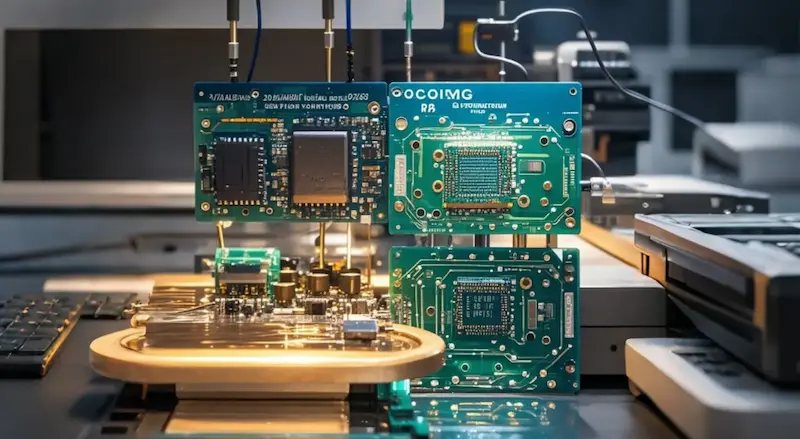
    These are custom-designed mechanical interfaces that physically connect the PCBA under test to the testing equipment. They provide precise electrical contact to all relevant test points, power rails, and communication interfaces on the PCBA, ensuring accurate and repeatable measurements.
  • Test Program Software
    This is the 'brain' of the FCT system. It's a custom-written application that dictates the sequence of tests, expected results, and pass/fail criteria. The software communicates with the test hardware to control stimuli, acquire data, and analyze the PCBA's response.
  • Test Equipment
    This includes a range of specialized instruments such as power supplies, oscilloscopes, digital multimeters (DMMs), signal generators, logic analyzers, and potentially more complex equipment like spectrum analyzers or specialized RF testers, depending on the PCBA's functionality.
  • In-Circuit Emulators (ICE) or Debug Interfaces
    For microcontrollers and processors, ICE or debug interfaces (like JTAG) are often integrated to allow low-level access, firmware loading, and direct control/monitoring of the device during testing.
  • Environmental Simulation Chambers (Optional)
    For products requiring operation under specific temperature or humidity conditions, environmental chambers are used to test the PCBA's performance across a defined range.

Methodologies employed in FCT are diverse and tailored to the specific product. Common techniques include:

  • Power-On Self-Test (POST)
    Verifies basic hardware initialization and core functionalities immediately after power is applied.
  • Stimulus-Response Testing
    Applying specific inputs (stimuli) to the PCBA and verifying that the outputs (responses) match the expected behavior.
  • Boundary Scan Testing (JTAG)
    Utilizing the IEEE 1149.1 standard to test interconnects and components without direct physical access to every test point.
  • System-Level Functionality Checks
    Testing integrated functionalities, such as communication protocols, user interface interactions, and sensor data processing, to ensure the entire system operates as designed.
  • Performance Benchmarking
    Measuring key performance indicators (e.g., speed, accuracy, power consumption) against specifications.

At Zero One Solution Limited, we leverage our extensive experience to design and implement highly effective FCT setups that precisely match our clients' product requirements, ensuring optimal quality and performance.

The Benefits of Implementing Robust FCT in PCBA Production

Implementing a robust Functional Test (FCT) strategy is not merely an additional step in PCBA production; it is a critical investment that yields significant returns. By rigorously verifying that each Printed Circuit Board Assembly (PCBA) performs its intended functions under various conditions, manufacturers can unlock a multitude of advantages that directly impact product quality, customer satisfaction, and the bottom line. At Zero One Solution Limited, we understand that comprehensive FCT is the cornerstone of delivering reliable electronic products.

The advantages of a well-executed FCT process are multifaceted and far-reaching:

  • Enhanced Product Reliability and Performance
    FCT goes beyond basic continuity or isolation tests by simulating real-world operating conditions. This allows for the detection of subtle design flaws, component interferences, or performance deviations that might go unnoticed in earlier stages. The result is a PCBA that is more likely to function flawlessly in the hands of the end-user, significantly reducing the risk of field failures.
  • Reduced Warranty Costs and Returns
    By catching defects before a product leaves the factory, FCT dramatically cuts down on the number of warranty claims and costly product returns. Each returned unit incurs expenses related to shipping, inspection, repair or replacement, and customer service. Proactive FCT acts as a powerful shield against these financial drains.
  • Improved Customer Satisfaction and Brand Reputation
    A product that consistently works as expected builds trust and satisfaction. Conversely, frequent failures erode customer confidence and can severely damage a brand's reputation. Reliable products, validated by thorough FCT, lead to happier customers, positive reviews, and repeat business.
  • Early Detection of Manufacturing Process Issues
    A spike in FCT failures can serve as an early warning system for problems in the manufacturing process itself. Whether it's a calibration drift in a machine, a faulty batch of components, or an issue with soldering, FCT data can help pinpoint the root cause, allowing for swift corrective actions and preventing widespread defects.
  • Streamlined Product Development Cycles
    While FCT occurs late in the production cycle, its insights are invaluable for future product iterations. Data gathered from FCT can inform design improvements, leading to more robust and easier-to-manufacture products in subsequent development phases, ultimately accelerating time-to-market for future innovations.

In essence, robust FCT is not a cost center but a profit driver, ensuring that only high-quality, fully functional PCBs reach the market, safeguarding both your customers' experience and your company's standing.

Customizing FCT for Diverse Applications: Tailored Solutions for Every Industry

Functional Testing (FCT) is not a one-size-fits-all process. Its true power lies in its adaptability, allowing for precise customization to meet the unique demands of diverse industries and product types. At Zero One Solution Limited, we understand that a PCB destined for a consumer gadget requires a different testing regimen than one powering a critical industrial control system or a complex medical device. Our approach ensures that FCT protocols are meticulously tailored, guaranteeing optimal performance, reliability, and safety across the entire spectrum of electronic applications.

The customization of FCT is driven by the specific operating environment, performance criteria, and regulatory requirements of each sector. Consider the following industry-specific adaptations:

  • Consumer Electronics
    Focus on user experience, battery life, and high-volume throughput. Tests emphasize interface functionality, power consumption, and common usage scenarios to ensure a seamless customer experience.
  • Automotive
    Rigorous testing under extreme temperature variations, vibration, and electromagnetic interference (EMI). Durability, long-term reliability, and adherence to strict automotive safety standards (e.g., AEC-Q100) are paramount.
  • Medical Devices
    Extremely high standards for accuracy, reliability, and biocompatibility. Testing includes precision measurement validation, fault detection, fail-safe mechanisms, and compliance with stringent regulatory bodies like the FDA.
  • Industrial Control Systems
    Emphasis on robustness, uptime, and precision control. FCT protocols focus on real-time performance, operational stability under continuous load, and error-free data acquisition and processing.
  • Aerospace and Defense
    Uncompromising demands for reliability and performance in critical applications. Tests are exhaustive, covering extreme environmental conditions, redundancy checks, and mission-critical function validation to meet rigorous aerospace and military specifications.

By leveraging our expertise in rapid prototyping and our deep understanding of PCBA functional testing, Zero One Solution Limited develops bespoke FCT solutions. We work collaboratively with clients to define test parameters, design custom test fixtures, and implement sophisticated testing strategies that precisely match their product's intended application. This tailored approach not only ensures product quality but also accelerates time-to-market by validating functionality early and efficiently, regardless of the industry.

Zero One Solution Limited's Expertise in Advanced PCBA Functional Testing

At Zero One Solution Limited, we understand that Functional Testing (FCT) is not just a final check, but the ultimate validation of your Printed Circuit Board Assembly (PCBA)'s performance and reliability. As a specialized PCB solution provider with a strong focus on rapid prototyping, we integrate advanced FCT services seamlessly into our one-stop offerings, from initial PCB design through to manufacturing and assembly. Our commitment is to ensure your product performs precisely as intended, meeting rigorous quality standards before it reaches the market.

Leveraging our deep engineering expertise and our strategic location in Shenzhen, the global hub for electronics manufacturing, we've developed sophisticated FCT capabilities. We don't just execute tests; we design and implement custom test solutions tailored to the unique requirements of each product. This ensures that every PCBA we deliver has undergone thorough verification, minimizing the risk of field failures and enhancing customer satisfaction. Our rapid-response approach means that even for complex prototypes, we can deliver robust FCT efficiently, accelerating your time-to-market without compromising on quality.

Our FCT services encompass a wide range of advanced techniques to simulate real-world operating conditions and verify all critical functionalities. This includes:

  • Custom Test Fixture Design and Fabrication
    Developing precise, reliable test fixtures that ensure accurate contact and repeatable testing for each specific PCBA design.
  • Automated Test Sequences
    Programming complex, automated test routines that efficiently cycle through all critical functions, ensuring comprehensive coverage.
  • Performance Parameter Verification
    Validating critical performance metrics, power consumption, signal integrity, and thermal characteristics under various loads.
  • Interconnectivity and Communication Testing
    Ensuring all communication interfaces (e.g., I2C, SPI, UART, USB, Ethernet, wireless) function correctly and reliably.
  • Environmental Stress Testing Integration
    Where required, integrating FCT with environmental stress screening to identify latent defects under simulated operational stress.

By partnering with Zero One Solution Limited for your PCBA manufacturing, you gain an ally dedicated to the highest standards of quality assurance. Our advanced FCT capabilities are a cornerstone of our promise to deliver reliable, high-performance electronic assemblies that empower your innovation and drive your success.

The Future of FCT: Integrating AI and Automation for Enhanced Efficiency

The landscape of Functional Testing (FCT) is rapidly evolving, driven by the relentless pursuit of enhanced efficiency, accuracy, and speed. The future of FCT is intrinsically linked to the integration of Artificial Intelligence (AI) and advanced automation. These technologies are not merely incremental improvements; they represent a paradigm shift in how we validate PCBA performance, promising to transform testing from a bottleneck into a proactive quality enabler.

AI is poised to revolutionize FCT in several key areas:

  • Intelligent Defect Detection and Classification
    AI algorithms, particularly machine learning, can analyze test data with unprecedented speed and precision. They can identify subtle anomalies that might elude human operators or traditional rule-based systems, and learn to classify defects based on patterns, leading to faster root cause analysis.
  • Predictive Testing and Anomaly Detection
    By analyzing historical test data, AI can predict potential failures before they occur, allowing for proactive adjustments to the manufacturing process or test procedures. This moves FCT from a purely reactive measure to a predictive one.
  • Automated Test Case Generation and Optimization
    AI can assist in creating and optimizing test cases, ensuring comprehensive coverage while minimizing redundancy. This is crucial for complex PCBs with numerous functionalities.
  • Enhanced Data Analytics and Insights
    AI-powered analytics can extract deeper insights from FCT data, revealing trends in product performance, component reliability, and manufacturing process variations that can inform design improvements and quality initiatives.

Automation, working in tandem with AI, will further streamline FCT operations:

  • Robotic Process Automation (RPA)
    Automating repetitive tasks like test setup, data logging, and reporting frees up human engineers to focus on more complex problem-solving and analysis.
  • Automated Fixturing and Calibration
    Advanced robotic systems can handle the precise placement of PCBs onto test fixtures and perform automated calibration, reducing human error and increasing throughput.
  • Closed-Loop Feedback Systems
    Integrating automated FCT results directly back into the manufacturing line allows for real-time adjustments, creating a self-optimizing production process.

For manufacturers like Zero One Solution Limited, embracing these advancements means offering clients not only rapid prototyping but also the assurance of testing processes that are more efficient, more accurate, and more insightful than ever before. This future-forward approach to FCT is essential for staying competitive and delivering the highest quality PCBA solutions in an increasingly sophisticated market.

FAQs About Functional Testing (FCT)

Functional Testing (FCT) is the ultimate verification stage in Printed Circuit Board Assembly (PCBA) production, designed to confirm that the assembled board operates precisely as intended under real-world conditions. It goes beyond mere component checks to validate the entire system's performance, ensuring all functionalities meet design specifications before a product reaches the end-user. Addressing common queries about FCT helps demystify this critical quality assurance step.

  • What is the primary goal of Functional Testing (FCT)?
    The primary goal of FCT is to simulate the end-user environment and verify that the PCBA performs all its designed functions correctly. It ensures that the product not only works but works as expected and meets all performance specifications.
  • How does FCT differ from other PCBA testing methods like ICT?
    In-Circuit Testing (ICT) focuses on verifying the electrical connectivity and component values on the board at a component level. FCT, on the other hand, tests the assembled board as a complete system, evaluating its performance and functionality in a manner similar to how it will operate in its final application.
  • When is FCT typically performed in the PCBA manufacturing process?
    FCT is usually the final electrical test performed on a PCBA before it is integrated into the final product. It follows other tests like Automated Optical Inspection (AOI), X-ray inspection, and ICT, serving as the last line of defense against functional defects.
  • What are the key benefits of implementing FCT?
    Implementing FCT leads to significantly improved product reliability, reduced field failures and warranty claims, enhanced customer satisfaction, and early detection of design or manufacturing issues that might be missed by other tests. It provides the highest level of confidence in the PCBA's performance.
  • Can FCT be customized for specific products?
    Absolutely. FCT is highly customizable. Test parameters, procedures, and equipment are tailored to the specific functionalities and operating requirements of each unique product. This ensures that the testing is relevant and effective for its intended application, which is a core strength of specialized providers like Zero One Solution Limited.
  • What happens if a PCBA fails FCT?
    If a PCBA fails FCT, it is typically flagged for further investigation. Depending on the nature and severity of the failure, it may be sent for rework, repair, or scrapped. Identifying the root cause of the failure is crucial to preventing recurrence in future production runs.

Functional Testing (FCT) is not merely a step in the PCBA manufacturing process; it is the definitive assurance of quality, the ultimate verification that your electronic vision translates into flawless reality. By simulating the real-world operating environment, FCT identifies potential issues before they escalate, safeguarding product integrity and protecting your brand's reputation. At Zero One Solution Limited, our unwavering commitment to excellence is deeply embedded in our FCT methodologies. With strategic locations in Shenzhen and Dubai, and a global supply chain network, we empower innovators to bring cutting-edge products to market with unmatched speed and confidence, ensuring every PCBA we deliver meets the highest standards of performance and reliability. Choose Zero One Solution Limited for your PCB solutions and experience the peace of mind that comes with superior FCT and uncompromising quality. Connect with us today to discuss how our expert FCT services can elevate your next project.

Anypcba